THE ADVENTURE COLLECTIVE® · Independent discovery and booking for outdoor travel

A full-day hike from La Paz to Charquini Lagoon that combines steady high‑altitude walking with a payoff of striking turquoise water framed by Cordillera Real peaks. Practical for active travelers who can handle thin air and rocky trails.
A full-day hike from La Paz to Charquini Lagoon that combines steady high‑altitude walking with a payoff of striking turquoise water framed by Cordillera Real peaks. Practical for active travelers who can handle thin air and rocky trails.
The trail opens with La Paz shrinking behind you and the high plain stretching wide — wind carving the air, scrubby bofedal grass bending like a chorus. After a short drive past the Milluni cemetery and the Jilarata viewpoint, you step out at Charquini base camp and begin the climb: a steady, honest ascent that gives way to a turquoise mirror cradled by moraine and wind-scoured ridges.
Verified experiences and guided adventures in the surrounding area.
Operated by MONKEY TRAVEL BOLIVIA · La Paz, La Paz
The trail opens with La Paz shrinking behind you and the high plain stretching wide — wind carving the air, scrubby bofedal grass bending like a chorus. After a short drive past the Milluni cemetery and the Jilarata viewpoint, you step out at Charquini base camp and begin the climb: a steady, honest ascent that gives way to a turquoise mirror cradled by moraine and wind-scoured ridges.
This sector of the Cordillera Real sits on uplifted volcanic and glacial deposits; the lake’s color comes from suspended minerals and glacial melt. Nearby peaks — views of Huayna Potosí and Chacaltaya punctuate the skyline — point to a mining and mountaineering past that shaped local communities. A Quechua-speaking presence still threads through villages and shepherd tracks; llamas and alpacas graze the high grasses and farmers herd in seasonal cycles.
Expect 1–1.5 hours uphill to the lagoon, an hour at the lakeshore, then a 40-minute descent to base camp. Terrain alternates between compacted dirt, rocky switchbacks, and short scree patches; altitude (well above 4,000 m) is the defining challenge. Drink early, keep your pace, and use the ecological walking stick provided if you need stability.
Plan for cool mornings, strong sun, and sudden wind. The operator includes private transport, an English–Spanish guide, entrance fee, a light brunch, and an ecological walking stick. This is a day of clear goals — walk, photograph, breathe — and the reward is simple: a glassbright lake framed by raw high-Andean landscape.
moderate.
8–9 hours (≈510 minutes).
Should have a moderate level of fitness; able to sustain 1–2 hours of uphill walking at altitude.
Physically moderate but altitude is the main factor — expect slower pace, shortness of breath, and the need for frequent breaks; those with cardiovascular or serious health issues should avoid it.
Yes — private transport from central La Paz hotels is included, with multiple pick‑up points on the route back.
A light brunch is included (sandwich, fruit, small juice, chocolate); bring extra snacks if you prefer more calories on the trail.
Guides offer English–Spanish commentary according to the listing; ask at booking for specific language needs.
The route crosses zones shaped by historic mining and Andean pastoralism; many highland communities still practice traditional herding and seasonal agriculture.
Stick to marked trails, pack out waste, and respect grazing areas; the fragile high‑Andean bofedal wetlands recover slowly from trampling and litter.
MONKEY TRAVEL BOLIVIA operates guided outdoor trips and adventures with an emphasis on safety, stewardship, and memorable experiences.
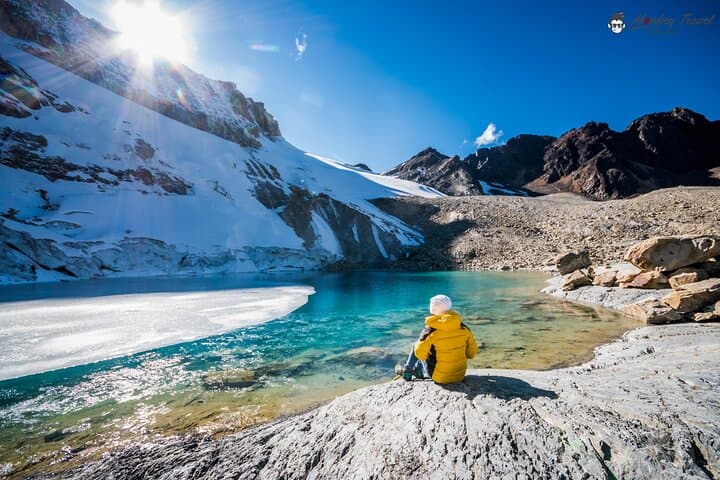
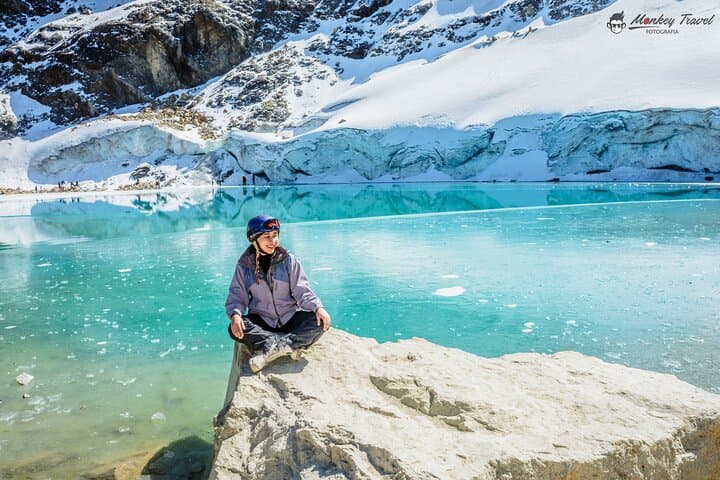
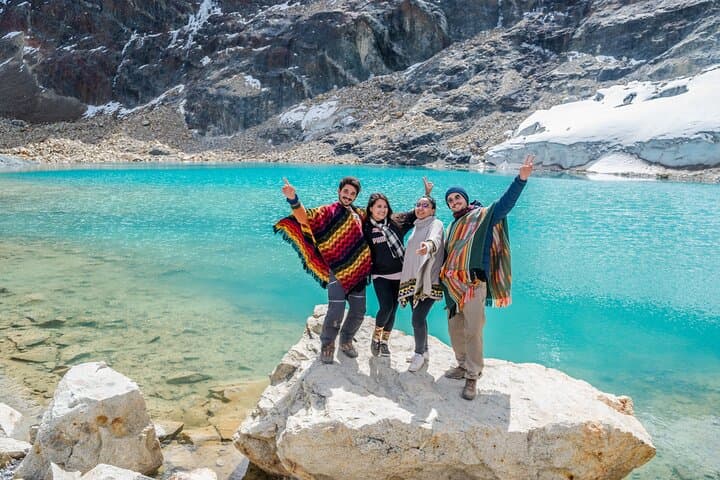
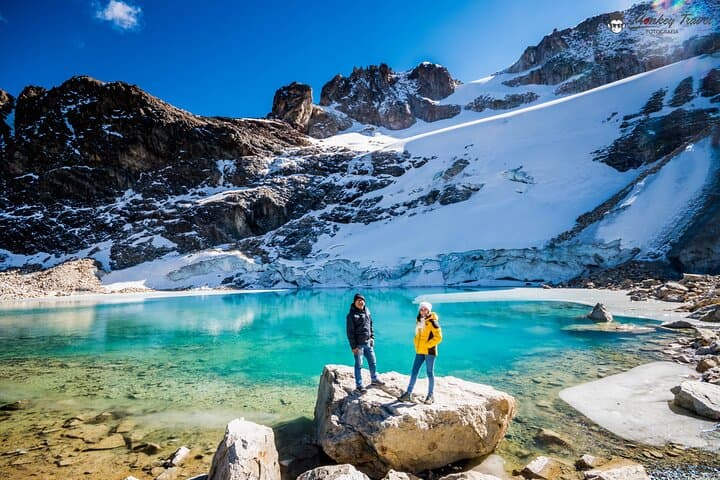
The trail opens with La Paz shrinking behind you and the high plain stretching wide — wind carving the air, scrubby bofedal grass bending like a chorus. After a short drive past the Milluni cemetery and the Jilarata viewpoint, you step out at Charquini base camp and begin the climb: a steady, honest ascent that gives way to a turquoise mirror cradled by moraine and wind-scoured ridges.
The trail opens with La Paz shrinking behind you and the high plain stretching wide — wind carving the air, scrubby bofedal grass bending like a chorus. After a short drive past the Milluni cemetery and the Jilarata viewpoint, you step out at Charquini base camp and begin the climb: a steady, honest ascent that gives way to a turquoise mirror cradled by moraine and wind-scoured ridges.
This sector of the Cordillera Real sits on uplifted volcanic and glacial deposits; the lake’s color comes from suspended minerals and glacial melt. Nearby peaks — views of Huayna Potosí and Chacaltaya punctuate the skyline — point to a mining and mountaineering past that shaped local communities. A Quechua-speaking presence still threads through villages and shepherd tracks; llamas and alpacas graze the high grasses and farmers herd in seasonal cycles.
Expect 1–1.5 hours uphill to the lagoon, an hour at the lakeshore, then a 40-minute descent to base camp. Terrain alternates between compacted dirt, rocky switchbacks, and short scree patches; altitude (well above 4,000 m) is the defining challenge. Drink early, keep your pace, and use the ecological walking stick provided if you need stability.
Plan for cool mornings, strong sun, and sudden wind. The operator includes private transport, an English–Spanish guide, entrance fee, a light brunch, and an ecological walking stick. This is a day of clear goals — walk, photograph, breathe — and the reward is simple: a glassbright lake framed by raw high-Andean landscape.