THE ADVENTURE COLLECTIVE® · Independent discovery and booking for outdoor travel

Walk from the French Quarter to the Battery on a two-hour guided tour that pairs architecture with hard-won history. Expect cobblestones, colonial-era sites, and practical local tips for seeing Charleston’s layers of culture.
Walk from the French Quarter to the Battery on a two-hour guided tour that pairs architecture with hard-won history. Expect cobblestones, colonial-era sites, and practical local tips for seeing Charleston’s layers of culture.
The city breathes along East Bay Street — gulls wheel over the harbor, weathered brick exhales warmth, and the cobblestones underfoot keep the beat of centuries. On this two-hour guided walk you move through the French Quarter’s narrow lanes, past Georgian row houses and a Gothic church whose stained-glass windows throw color across old wood. The guide points out carved ironwork and explains how mercantile wealth shaped the streets you’re on.
Verified experiences and guided adventures in the surrounding area.
Operated by Charleston Sole Walking Tours · Charleston, South Carolina
The city breathes along East Bay Street — gulls wheel over the harbor, weathered brick exhales warmth, and the cobblestones underfoot keep the beat of centuries. On this two-hour guided walk you move through the French Quarter’s narrow lanes, past Georgian row houses and a Gothic church whose stained-glass windows throw color across old wood. The guide points out carved ironwork and explains how mercantile wealth shaped the streets you’re on.
Charleston’s story is written in its buildings and its coastline. From the Old Exchange building where the Declaration was read to the gravelly edges of the Battery that watched Fort Sumter’s first shots, the tour layers colonial politics, antebellum trade — including the painful role the city played in the domestic slave trade — and 20th-century preservation efforts that rescued the town’s architectural character. Geologically, the low-lying peninsula sits on marsh-fed sediments and tidal creeks that have chiseled the harbor edge; you’ll see seawalls and public gardens that respond to that slow movement.
Culturally, the walk highlights Huguenot and Anglican legacies, Charleston stagecraft, and the continuing life of its historic neighborhoods. Local insights include where to read historic plaques without a crowd and alleys where original ironwork survives.
Practical guidance: bring sturdy shoes for cobbles, a refillable water bottle, and sun protection; tours are mostly flat but include sections of uneven pavement and steps into garden spaces. Aim for morning or late afternoon for cooler temperatures and softer light — and arrive at the Old Exchange Building (122 E Bay St) a few minutes early to meet the guide.
easy.
2 hours.
Light walking fitness; able to stand and walk for two hours on uneven pavement with occasional steps.
Meet outside on the north side of the Old Exchange Building at 122 East Bay St next to the tree and benches on Gillon Street.
The tour is described as wheelchair accessible, but some garden entries and cobblestone streets may be uneven — call ahead to confirm accommodations.
Infants and small children can ride in a stroller; keep in mind sidewalks and cobblestones may make pushing difficult in places.
Most exterior stops are included; entrance into certain museums or houses (like the Nathaniel Russell House interior) depends on availability and is not included with the basic tour.
Charleston’s Old Exchange hosted the reading of the Declaration in 1776 and later was used as a British prison; the city’s architecture reflects its 18th- and 19th-century mercantile prominence and preservation movement.
Rising tides and coastal erosion are active concerns for Charleston; support responsible tourism by staying on marked paths and choosing tours that advocate for local preservation efforts.
Charleston Sole Walking Tours operates guided outdoor trips and adventures with an emphasis on safety, stewardship, and memorable experiences.

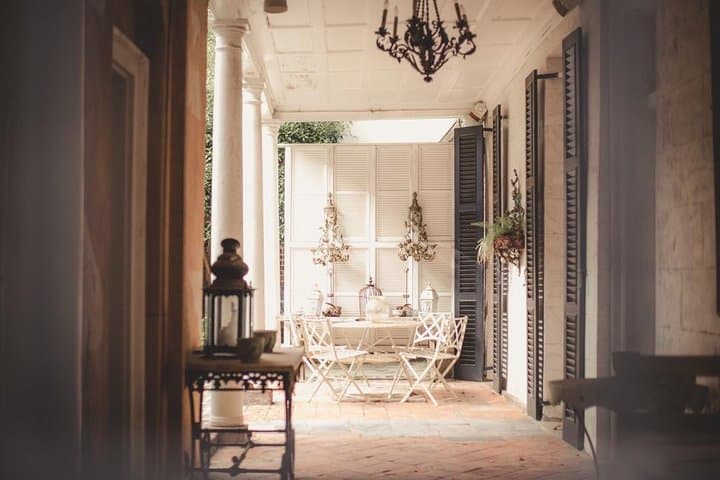
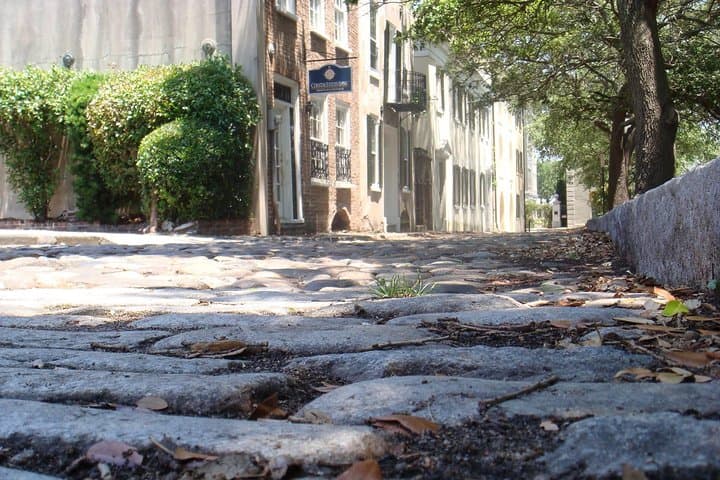
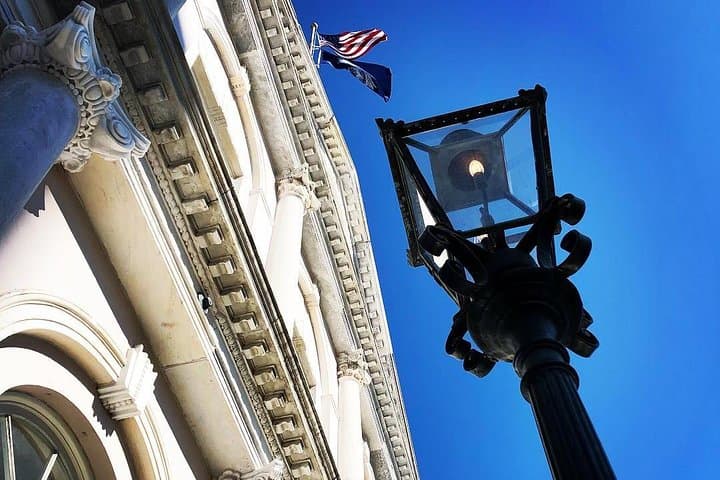
The city breathes along East Bay Street — gulls wheel over the harbor, weathered brick exhales warmth, and the cobblestones underfoot keep the beat of centuries. On this two-hour guided walk you move through the French Quarter’s narrow lanes, past Georgian row houses and a Gothic church whose stained-glass windows throw color across old wood. The guide points out carved ironwork and explains how mercantile wealth shaped the streets you’re on.
The city breathes along East Bay Street — gulls wheel over the harbor, weathered brick exhales warmth, and the cobblestones underfoot keep the beat of centuries. On this two-hour guided walk you move through the French Quarter’s narrow lanes, past Georgian row houses and a Gothic church whose stained-glass windows throw color across old wood. The guide points out carved ironwork and explains how mercantile wealth shaped the streets you’re on.
Charleston’s story is written in its buildings and its coastline. From the Old Exchange building where the Declaration was read to the gravelly edges of the Battery that watched Fort Sumter’s first shots, the tour layers colonial politics, antebellum trade — including the painful role the city played in the domestic slave trade — and 20th-century preservation efforts that rescued the town’s architectural character. Geologically, the low-lying peninsula sits on marsh-fed sediments and tidal creeks that have chiseled the harbor edge; you’ll see seawalls and public gardens that respond to that slow movement.
Culturally, the walk highlights Huguenot and Anglican legacies, Charleston stagecraft, and the continuing life of its historic neighborhoods. Local insights include where to read historic plaques without a crowd and alleys where original ironwork survives.
Practical guidance: bring sturdy shoes for cobbles, a refillable water bottle, and sun protection; tours are mostly flat but include sections of uneven pavement and steps into garden spaces. Aim for morning or late afternoon for cooler temperatures and softer light — and arrive at the Old Exchange Building (122 E Bay St) a few minutes early to meet the guide.