THE ADVENTURE COLLECTIVE® · Independent discovery and booking for outdoor travel

Explore a five-hour Lowcountry loop from a photo at the Angel Oak to a guided tour of America’s tea fields and a stop at Deep Water Vineyard. Expect factory tours, unlimited tea tasting, and optional wine sampling at a relaxed pace.
Explore a five-hour Lowcountry loop from a photo at the Angel Oak to a guided tour of America’s tea fields and a stop at Deep Water Vineyard. Expect factory tours, unlimited tea tasting, and optional wine sampling at a relaxed pace.
You step off the air-conditioned van beneath a sky that leans toward salt and sun, the lowcountry marshes opening to rows of tea bushes and a cathedral-like live oak that seems to hold centuries in its limbs.
Verified experiences and guided adventures in the surrounding area.
Operated by Crafted Travel · Charleston, South Carolina
You step off the air-conditioned van beneath a sky that leans toward salt and sun, the lowcountry marshes opening to rows of tea bushes and a cathedral-like live oak that seems to hold centuries in its limbs.
The tour begins with a group photo at the Angel Oak, a sprawling southern live oak aged several hundred years, then moves across tidal waterways to Wadmalaw Island where America’s only large-scale tea plantation quietly hums. At the Charleston Tea Garden visitors follow the factory line—learning how camellia sinensis becomes black and green tea—while the guide and founder Bill Hall narrate cultivation and processing. The landscape is flat, a patchwork of wind-swept fields, marsh channels and the neat geometry of tea rows; Deep Water Vineyard sits nearby, its vines low to the ground and exposed to the same maritime breeze that shapes the island’s agriculture.
Geology here is gentle: sandy, well-drained soils over tidal marsh deposits, ideal for both tea and vines. Culturally, the tour threads Gullah influences, plantation-era landscapes and modern small-scale agriculture into a short, readable story about Lowcountry foodways.
Practical guidance: expect five hours total with up to two hours traveling between stops; bring sun protection and comfortable shoes for short walks, and plan to pay for wine tastings on-site. Photo ops are plentiful at the Angel Oak, the tea factory windmill and between the vineyard rows. The pace favors easy exploration—listen, sip, and leave room for slow walking and unexpected marshlight moments.
moderate.
5 hours.
Moderate fitness for short walks, standing during tours and getting on/off the vehicle
Yes—unlimited freshly brewed hot and cold tea is included at the Charleston Tea Garden; specialty trolley tours and some tastings may cost extra.
No—Deep Water Vineyard’s wine tasting tickets are purchased on-site and are not included in the tour price.
The tour uses an air-conditioned vehicle and offers generally flat grounds at the tea factory; however, some grassy areas and the Angel Oak site may be uneven—check with the operator for specific accessibility needs.
All sales are final according to the tour terms; the operator may cancel for bad weather or low bookings, but bookings are non-refundable.
The tour visits the Angel Oak, a live oak centuries old, and Wadmalaw Island’s tea fields—America’s only large-scale tea plantation—where commercial tea cultivation developed in the 20th century.
Stay on paths and avoid climbing roots at Angel Oak; the tea garden and vineyard emphasize sustainable, small-scale agriculture and reduced-waste tastings where possible.
Crafted Travel operates guided outdoor trips and adventures with an emphasis on safety, stewardship, and memorable experiences.


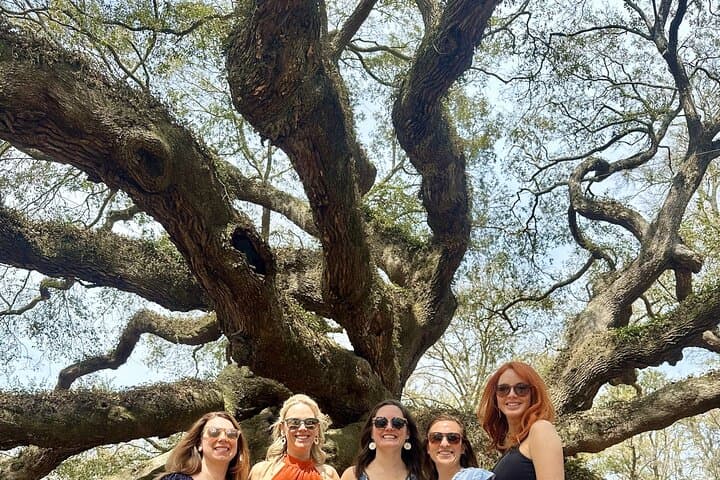

You step off the air-conditioned van beneath a sky that leans toward salt and sun, the lowcountry marshes opening to rows of tea bushes and a cathedral-like live oak that seems to hold centuries in its limbs.
You step off the air-conditioned van beneath a sky that leans toward salt and sun, the lowcountry marshes opening to rows of tea bushes and a cathedral-like live oak that seems to hold centuries in its limbs.
The tour begins with a group photo at the Angel Oak, a sprawling southern live oak aged several hundred years, then moves across tidal waterways to Wadmalaw Island where America’s only large-scale tea plantation quietly hums. At the Charleston Tea Garden visitors follow the factory line—learning how camellia sinensis becomes black and green tea—while the guide and founder Bill Hall narrate cultivation and processing. The landscape is flat, a patchwork of wind-swept fields, marsh channels and the neat geometry of tea rows; Deep Water Vineyard sits nearby, its vines low to the ground and exposed to the same maritime breeze that shapes the island’s agriculture.
Geology here is gentle: sandy, well-drained soils over tidal marsh deposits, ideal for both tea and vines. Culturally, the tour threads Gullah influences, plantation-era landscapes and modern small-scale agriculture into a short, readable story about Lowcountry foodways.
Practical guidance: expect five hours total with up to two hours traveling between stops; bring sun protection and comfortable shoes for short walks, and plan to pay for wine tastings on-site. Photo ops are plentiful at the Angel Oak, the tea factory windmill and between the vineyard rows. The pace favors easy exploration—listen, sip, and leave room for slow walking and unexpected marshlight moments.