THE ADVENTURE COLLECTIVE® · Independent discovery and booking for outdoor travel

Trace three centuries of Charleston in 90 minutes, from tucked alleys and wrought-iron gates to the cannon-lined Battery and pastel Rainbow Row. This guided walk balances lively storytelling with grounded history and practical tips for first-time visitors.
Trace three centuries of Charleston in 90 minutes, from tucked alleys and wrought-iron gates to the cannon-lined Battery and pastel Rainbow Row. This guided walk balances lively storytelling with grounded history and practical tips for first-time visitors.
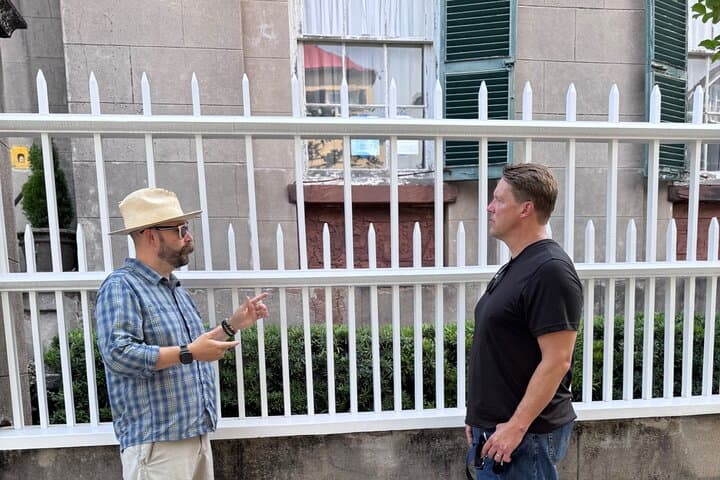
Morning light pushes between brick facades as a small group gathers at the Shepheards Tavern marker on Broad and Meeting. Guides with city maps and practiced lines invite questions, then the party steps into streets first laid out in the 1670s Grand Modell, where cobbles and ironwork steer footsteps toward the harbor.
Verified experiences and guided adventures in the surrounding area.
Operated by Learn Charleston · Charleston, South Carolina
Morning light pushes between brick facades as a small group gathers at the Shepheards Tavern marker on Broad and Meeting. Guides with city maps and practiced lines invite questions, then the party steps into streets first laid out in the 1670s Grand Modell, where cobbles and ironwork steer footsteps toward the harbor.
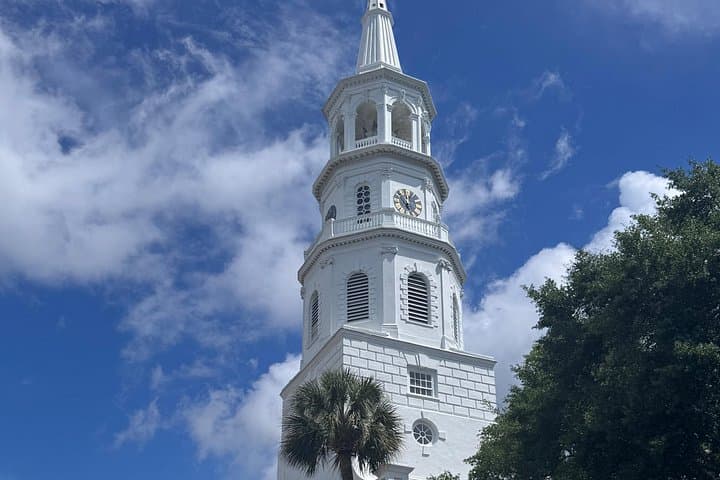
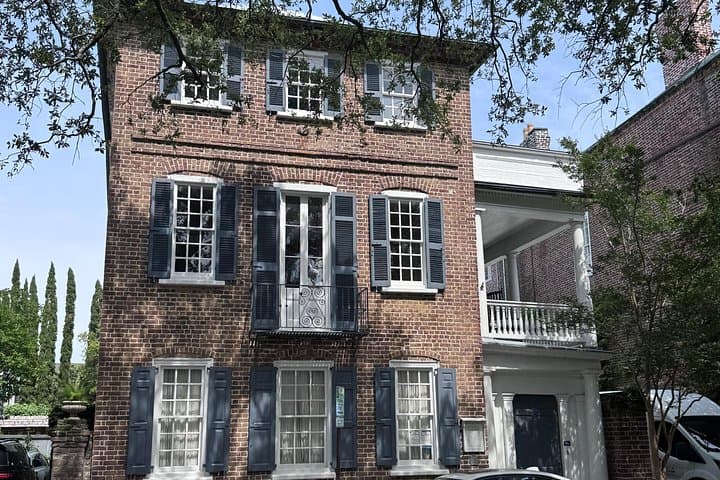
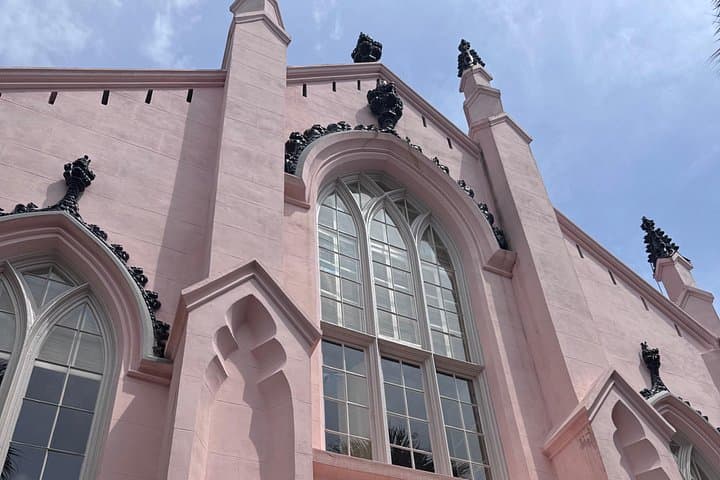
The route threads Stoll’s Alley, East Bay’s sea wall and the cannon-lined White Point Gardens, telling stories that span colonial commerce, antebellum wealth and the difficult legacies of slavery. Geological details are quiet here — low, sandy soils and tidal influence shaped the city’s fingered coastline — but architectural variety reads like an open book: Georgian townhouses, ornate iron gates by Philip Simmons, and the pastel facades of Rainbow Row.
Culturally the guide balances civic pride with hard history: the Old Exchange’s Revolutionary-era role, Chalmers Street’s painful past as one of the last auction sites, and family homes still occupied by descendants of early American figures. The harbor seems to dare you to look outward, while live oaks along the Battery shade a slower tempo.
Practicalities: this is a 90-minute, mostly flat, paved walk that suits most fitness levels and is stroller-accessible. Wear supportive shoes, bring a refillable water bottle and sun protection in warmer months, and plan to arrive 10–15 minutes early for check-in. Tours adjust to guest interests, so bring questions — and a respectful curiosity about the city’s complex past.
easy.
1.5 hours (90 minutes).
Light walking ability required — able to stand and stroll on paved/cobbled streets for up to 90 minutes.
The tour meets at the Shepheards Tavern marker at 46 Broad Street (corner of Broad and Meeting). Arrive 10–15 minutes early for check-in.
Yes — the route is mostly flat and paved; infants can use strollers. Notify the operator in advance for special accessibility needs.
Yes — the approximately 90-minute tour concludes near Rainbow Row after visits to the Battery, White Point Gardens and several historic streets.
Service animals are allowed; pets that are not service animals are not permitted on the guided tour.
Charleston’s street grid traces back to the 1670s Grand Modell; the city grew as a port and became a focal point in Revolutionary and Civil War history. Many antebellum homes and public spaces still shape its urban story.
The historic district is protected by preservation ordinances; visitors are asked to respect private property, avoid touching architectural features and carry out all trash to limit wear on streets and greenspaces.
Learn Charleston operates guided outdoor trips and adventures with an emphasis on safety, stewardship, and memorable experiences.
Morning light pushes between brick facades as a small group gathers at the Shepheards Tavern marker on Broad and Meeting. Guides with city maps and practiced lines invite questions, then the party steps into streets first laid out in the 1670s Grand Modell, where cobbles and ironwork steer footsteps toward the harbor.
Morning light pushes between brick facades as a small group gathers at the Shepheards Tavern marker on Broad and Meeting. Guides with city maps and practiced lines invite questions, then the party steps into streets first laid out in the 1670s Grand Modell, where cobbles and ironwork steer footsteps toward the harbor.
The route threads Stoll’s Alley, East Bay’s sea wall and the cannon-lined White Point Gardens, telling stories that span colonial commerce, antebellum wealth and the difficult legacies of slavery. Geological details are quiet here — low, sandy soils and tidal influence shaped the city’s fingered coastline — but architectural variety reads like an open book: Georgian townhouses, ornate iron gates by Philip Simmons, and the pastel facades of Rainbow Row.
Culturally the guide balances civic pride with hard history: the Old Exchange’s Revolutionary-era role, Chalmers Street’s painful past as one of the last auction sites, and family homes still occupied by descendants of early American figures. The harbor seems to dare you to look outward, while live oaks along the Battery shade a slower tempo.
Practicalities: this is a 90-minute, mostly flat, paved walk that suits most fitness levels and is stroller-accessible. Wear supportive shoes, bring a refillable water bottle and sun protection in warmer months, and plan to arrive 10–15 minutes early for check-in. Tours adjust to guest interests, so bring questions — and a respectful curiosity about the city’s complex past.