THE ADVENTURE COLLECTIVE® · Independent discovery and booking for outdoor travel

Walk the waterfront and Battery with a guide who shapes the story around your questions. This relaxed 2.5-hour tour mixes cobbled streets, live oaks, and layered history for a clear, local view of Charleston’s past.
Walk the waterfront and Battery with a guide who shapes the story around your questions. This relaxed 2.5-hour tour mixes cobbled streets, live oaks, and layered history for a clear, local view of Charleston’s past.
You step out from the shade of Spanish moss into the river air at Waterfront Park, the spray of the Pineapple Fountain sending a fine mist over brick promenades. The guide frames the day with a question—what do you want to know?—and the group moves south at a conversational pace, pausing where cobbles dip and live oaks throw cool pockets of shade.
Verified experiences and guided adventures in the surrounding area.
Operated by Chucktown Walking Tours · Charleston, South Carolina
You step out from the shade of Spanish moss into the river air at Waterfront Park, the spray of the Pineapple Fountain sending a fine mist over brick promenades. The guide frames the day with a question—what do you want to know?—and the group moves south at a conversational pace, pausing where cobbles dip and live oaks throw cool pockets of shade.
Charleston was founded as Charles Towne in 1670; the Battery, once a colonial fortification, became a promenade of antebellum homes and hundred-year-old live oaks. Geologically the peninsula is reclaimed marsh and oyster-shell ridge, which explains the raised sidewalks, tidal creeks, and long history of adaptation to storms and sea-level change.
Culturally the city is layered: Gullah traditions, maritime commerce, Revolutionary and Civil War sites, and more recent preservation efforts. The route threads through Tradd Street’s 18th-century footprints, the old fish market blocks, and the intimate alleys like Stoll’s Alley—small spaces that reveal larger stories about trade, slavery, and civic life.
Practical notes: the tour is conversational rather than rushed—expect many stops and some narrow sidewalks. Bring water, sun protection, and shoes with good tread; Charleston’s heat and humidity can press hard in summer. Public transit and parking options are nearby, and tours typically end close to the starting point, making logistics simple. If you’re curious beyond façades, ask about the neighborhoods you pass; guides tailor the story to your interests, turning streets into a living classroom rather than a static timeline.
easy.
2–3 hours.
Suitable for most fitness levels; you should be able to walk 2–3 miles at an easy pace and manage short staircases/curbs.
The meeting point is Waterfront Park across from the Harborview Inn; the tour returns near the same spot for easy pickup or onward plans.
Narrow sidewalks and uneven surfaces make wheelchairs and walkers difficult; strollers are possible but may need extra attention on cobbles.
You can get a full refund by canceling at least 24 hours before departure; check the operator’s specific policy for exceptions.
Yes—guides ask about your interests at the start and will tailor stops and commentary to match the group's questions.
Charleston began as Charles Towne (1670) and grew as a major colonial port; the Battery’s seawall and mansions reflect both maritime wealth and antebellum architecture.
Coastal flooding and erosion are active concerns—stay on designated paths, avoid trampling root zones of live oaks, and pack out trash to support local preservation efforts.
Chucktown Walking Tours operates guided outdoor trips and adventures with an emphasis on safety, stewardship, and memorable experiences.

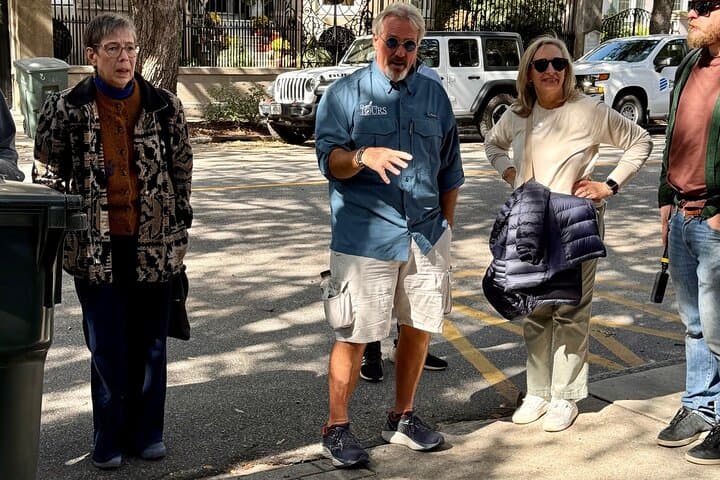

You step out from the shade of Spanish moss into the river air at Waterfront Park, the spray of the Pineapple Fountain sending a fine mist over brick promenades. The guide frames the day with a question—what do you want to know?—and the group moves south at a conversational pace, pausing where cobbles dip and live oaks throw cool pockets of shade.
You step out from the shade of Spanish moss into the river air at Waterfront Park, the spray of the Pineapple Fountain sending a fine mist over brick promenades. The guide frames the day with a question—what do you want to know?—and the group moves south at a conversational pace, pausing where cobbles dip and live oaks throw cool pockets of shade.
Charleston was founded as Charles Towne in 1670; the Battery, once a colonial fortification, became a promenade of antebellum homes and hundred-year-old live oaks. Geologically the peninsula is reclaimed marsh and oyster-shell ridge, which explains the raised sidewalks, tidal creeks, and long history of adaptation to storms and sea-level change.
Culturally the city is layered: Gullah traditions, maritime commerce, Revolutionary and Civil War sites, and more recent preservation efforts. The route threads through Tradd Street’s 18th-century footprints, the old fish market blocks, and the intimate alleys like Stoll’s Alley—small spaces that reveal larger stories about trade, slavery, and civic life.
Practical notes: the tour is conversational rather than rushed—expect many stops and some narrow sidewalks. Bring water, sun protection, and shoes with good tread; Charleston’s heat and humidity can press hard in summer. Public transit and parking options are nearby, and tours typically end close to the starting point, making logistics simple. If you’re curious beyond façades, ask about the neighborhoods you pass; guides tailor the story to your interests, turning streets into a living classroom rather than a static timeline.