THE ADVENTURE COLLECTIVE® · Independent discovery and booking for outdoor travel

Explore Charleston’s Historic District on a focused two-hour small-group walk led by a certified guide. Expect colonial homes, City Hall’s Four Corners of Law, and local stories that bring the city’s layered past to life.
Explore Charleston’s Historic District on a focused two-hour small-group walk led by a certified guide. Expect colonial homes, City Hall’s Four Corners of Law, and local stories that bring the city’s layered past to life.
Morning light hits the brick and iron of Charleston’s Historic District and the city exhales a salty breeze that seems to know every story carved into its streets.
Verified experiences and guided adventures in the surrounding area.
Operated by Walk It! Charleston · Charleston, South Carolina
Morning light hits the brick and iron of Charleston’s Historic District and the city exhales a salty breeze that seems to know every story carved into its streets.
On this two-hour small-group walk, a certified local guide threads you through narrow alleys, past clapboard houses and grand brick mansions—some buildings standing since before the Revolution—while the cobbles underfoot keep time with the past. You’ll begin at City Hall, the famous Four Corners of Law, and move between public squares, churches and hidden courtyards where layers of colonial, antebellum, and early American life remain visible in ironwork, garden walls and street layouts.
Geology here is coastal plain: low elevations, tidal creeks and marsh edges shaped the city’s growth and defensive choices. Culturally, Charleston is a port city shaped by trade, enslaved and free Black artisans, and evolving preservation efforts; guides contextualize architecture alongside stories of commerce, conflict and community resilience.
Practical guidance: wear well-broken-in shoes for cobbles and occasional uneven sidewalks, bring a small water bottle and sun protection, and plan for two hours at an easy pace with frequent stops. Tours are suitable for most fitness levels but not for those with severe spinal conditions; service animals are allowed. Expect conversational history—dates, names and civic turning points—woven with local insights about restaurants and quieter backstreets to explore after the tour. Aim for morning or late afternoon to avoid peak heat and to catch the best light for photos.
easy.
2 hours.
Suitable for most fitness levels; requires standing and walking on uneven pavement for two hours.
Most departures meet at Charleston City Hall near the Four Corners of Law; the route is a loop that returns nearby to the start.
Yes—children who can comfortably walk for two hours can join, though parents should account for cobblestones and heat.
Service animals are welcome; pets beyond service animals are generally not permitted—check with the operator beforehand.
The tour does not automatically cancel for light rain; cancelation policies allow a full refund up to 24 hours prior if you need to change plans.
Charleston’s downtown was a colonial port and a strategic locus in both the Revolutionary and Civil Wars; many residences and churches predate American independence.
Ongoing preservation programs manage historic structures while seawall and marsh restoration efforts address rising tides and coastal erosion.
Walk It! Charleston operates guided outdoor trips and adventures with an emphasis on safety, stewardship, and memorable experiences.



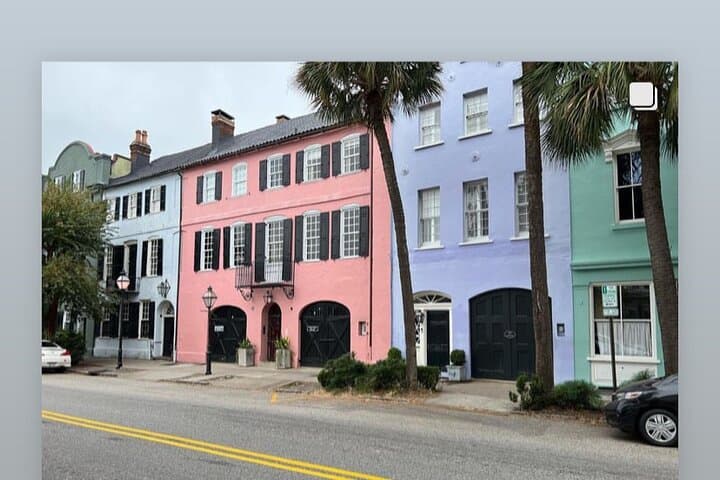
Morning light hits the brick and iron of Charleston’s Historic District and the city exhales a salty breeze that seems to know every story carved into its streets.
Morning light hits the brick and iron of Charleston’s Historic District and the city exhales a salty breeze that seems to know every story carved into its streets.
On this two-hour small-group walk, a certified local guide threads you through narrow alleys, past clapboard houses and grand brick mansions—some buildings standing since before the Revolution—while the cobbles underfoot keep time with the past. You’ll begin at City Hall, the famous Four Corners of Law, and move between public squares, churches and hidden courtyards where layers of colonial, antebellum, and early American life remain visible in ironwork, garden walls and street layouts.
Geology here is coastal plain: low elevations, tidal creeks and marsh edges shaped the city’s growth and defensive choices. Culturally, Charleston is a port city shaped by trade, enslaved and free Black artisans, and evolving preservation efforts; guides contextualize architecture alongside stories of commerce, conflict and community resilience.
Practical guidance: wear well-broken-in shoes for cobbles and occasional uneven sidewalks, bring a small water bottle and sun protection, and plan for two hours at an easy pace with frequent stops. Tours are suitable for most fitness levels but not for those with severe spinal conditions; service animals are allowed. Expect conversational history—dates, names and civic turning points—woven with local insights about restaurants and quieter backstreets to explore after the tour. Aim for morning or late afternoon to avoid peak heat and to catch the best light for photos.