THE ADVENTURE COLLECTIVE® · Independent discovery and booking for outdoor travel

Walk Charleston’s cooler streets after dusk and hear the city’s darker stories told by licensed guides. This 90-minute evening tour links Rainbow Row, the City Market and the Battery with first-hand history and spine-tingling local lore.
Walk Charleston’s cooler streets after dusk and hear the city’s darker stories told by licensed guides. This 90-minute evening tour links Rainbow Row, the City Market and the Battery with first-hand history and spine-tingling local lore.
The tour begins where the city's light softens and streetlamps pick out ironwork and brick: Washington Square Park, a small circle behind City Hall where a guide lowers their voice and the stones seem to lean in.
Verified experiences and guided adventures in the surrounding area.
Operated by Revolutionary Charleston: Ghost & History Walking Tours · Charleston, South Carolina
The tour begins where the city's light softens and streetlamps pick out ironwork and brick: Washington Square Park, a small circle behind City Hall where a guide lowers their voice and the stones seem to lean in.
Over 90 minutes you move through Charleston’s historic spine — past Rainbow Row’s painted facades, the market’s old stalls, the low sea wall that looks toward Fort Sumter — while stories of loss, vengeance and lingering grief push against the bright antebellum veneer.
Charleston’s layers are tangible here: 17th- and 18th-century mercantile wealth, the grim reality of the transatlantic slave trade with sites like the former Ryan’s Mart, and the city’s Civil War role visible across the harbor. The geology is simple — low coastal plain, tidal creeks and a flat peninsula — but the human history is complex, and guides pair archival detail with local lore.
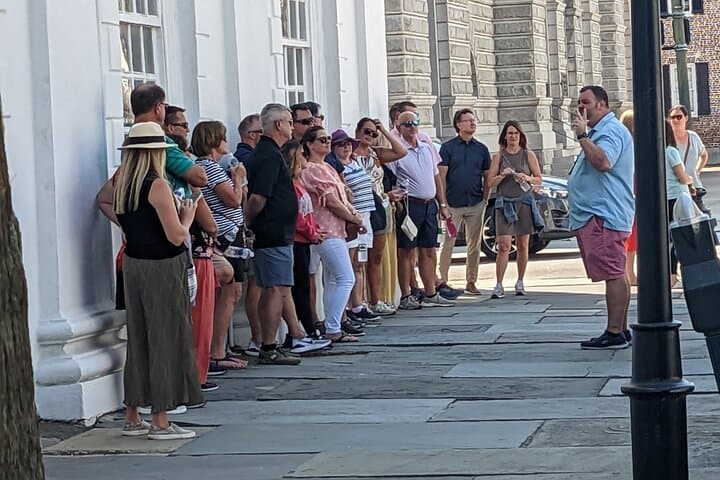
Expect an easy, mostly flat walk on paved streets and brick sidewalks with frequent stops for storytelling. The route is accessible for wheelchairs and strollers, but narrow sidewalks and evening crowds mean pace can slow.
Practical tips: arrive 10 minutes early to find the meeting monument in Washington Square; dress for humidity and a nighttime breeze off the harbor; bring a charged phone flashlight rather than a bulky torch. The tour is a useful primer on Charleston’s contested past and makes a compact evening outing — equal parts history lesson and atmospheric stroll through a city that still carries its stories in plain sight.
easy.
1–1.5 hours.
Suitable for most fitness levels; requires walking 1–1.5 miles on mostly flat, paved surfaces.
Yes — the route and meeting area are wheelchair accessible, though some sidewalks can be narrow and crowds may slow movement.
No — this is a walking storytelling tour that passes key sites and viewpoints; admissions are not included.
Yes — families are welcome; content includes historic accounts that can be intense, so parental discretion is advised for very young children.
Tours may be canceled if conditions are unsafe; check your booking details and the operator’s cancellation policy before you travel.
Charleston’s historic peninsula was a major colonial port and a flashpoint in the Civil War; sites on the route reference the slave trade, mercantile wealth, and wartime fortifications.
Respect for fragile historic fabric and busy urban habitats matters — stick to sidewalks, avoid touching delicate ironwork, and follow local trash and recycling rules.
Revolutionary Charleston: Ghost & History Walking Tours operates guided outdoor trips and adventures with an emphasis on safety, stewardship, and memorable experiences.
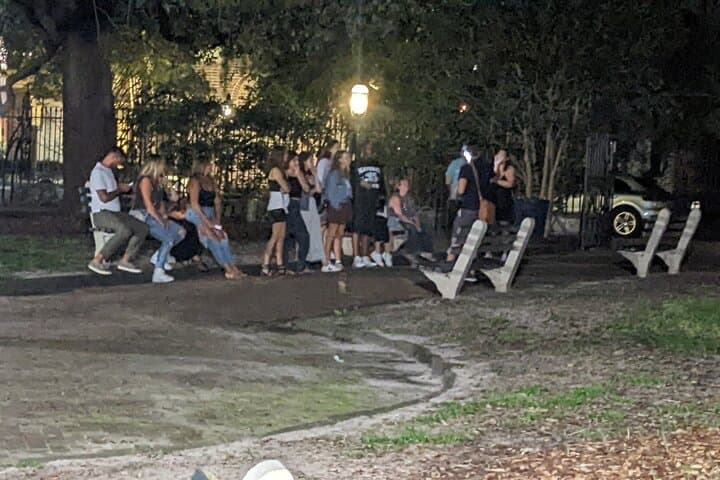
The tour begins where the city's light softens and streetlamps pick out ironwork and brick: Washington Square Park, a small circle behind City Hall where a guide lowers their voice and the stones seem to lean in.
The tour begins where the city's light softens and streetlamps pick out ironwork and brick: Washington Square Park, a small circle behind City Hall where a guide lowers their voice and the stones seem to lean in.
Over 90 minutes you move through Charleston’s historic spine — past Rainbow Row’s painted facades, the market’s old stalls, the low sea wall that looks toward Fort Sumter — while stories of loss, vengeance and lingering grief push against the bright antebellum veneer.
Charleston’s layers are tangible here: 17th- and 18th-century mercantile wealth, the grim reality of the transatlantic slave trade with sites like the former Ryan’s Mart, and the city’s Civil War role visible across the harbor. The geology is simple — low coastal plain, tidal creeks and a flat peninsula — but the human history is complex, and guides pair archival detail with local lore.
Expect an easy, mostly flat walk on paved streets and brick sidewalks with frequent stops for storytelling. The route is accessible for wheelchairs and strollers, but narrow sidewalks and evening crowds mean pace can slow.
Practical tips: arrive 10 minutes early to find the meeting monument in Washington Square; dress for humidity and a nighttime breeze off the harbor; bring a charged phone flashlight rather than a bulky torch. The tour is a useful primer on Charleston’s contested past and makes a compact evening outing — equal parts history lesson and atmospheric stroll through a city that still carries its stories in plain sight.