THE ADVENTURE COLLECTIVE® · Independent discovery and booking for outdoor travel

Two boat dives off Chania take certified divers from the shallow Elephant Cave to the WWI wreck Minnewaska and a modern artificial-reef park. Expect clear water, archaeological interest, and full equipment provided.
Two boat dives off Chania take certified divers from the shallow Elephant Cave to the WWI wreck Minnewaska and a modern artificial-reef park. Expect clear water, archaeological interest, and full equipment provided.
The day begins at the marina as a light breeze lifts the harbor glass; the boat cuts through Souda Bay and the coastline opens into chalky cliffs and small coves. Salt and diesel mix with the nervous chatter of divers checking gauges—below, the sea keeps its secrets. You drop in for two boat dives that move from shallow, cathedral-like slabs into deeper relics where history holds still.
Verified experiences and guided adventures in the surrounding area.
Operated by Omega Divers · Chania, Crete
The day begins at the marina as a light breeze lifts the harbor glass; the boat cuts through Souda Bay and the coastline opens into chalky cliffs and small coves. Salt and diesel mix with the nervous chatter of divers checking gauges—below, the sea keeps its secrets. You drop in for two boat dives that move from shallow, cathedral-like slabs into deeper relics where history holds still.
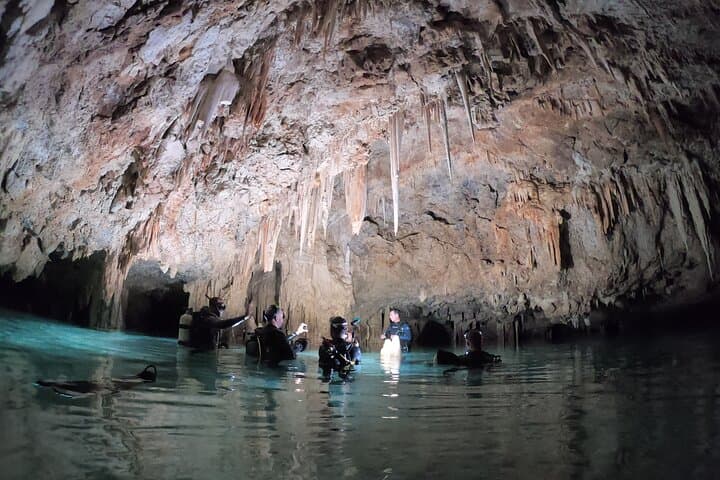
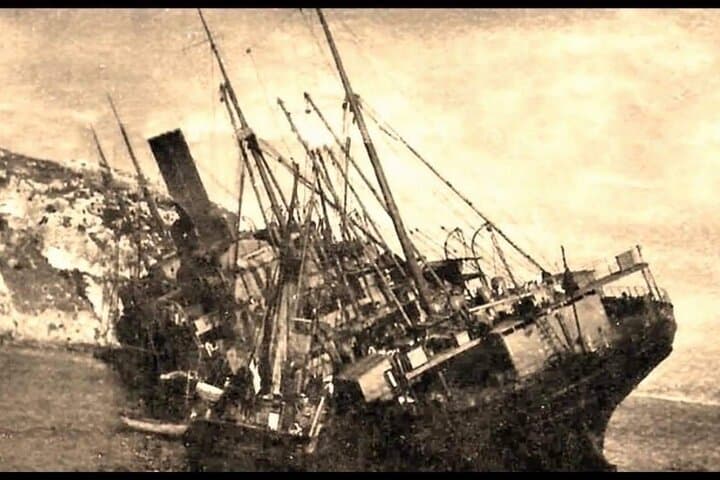
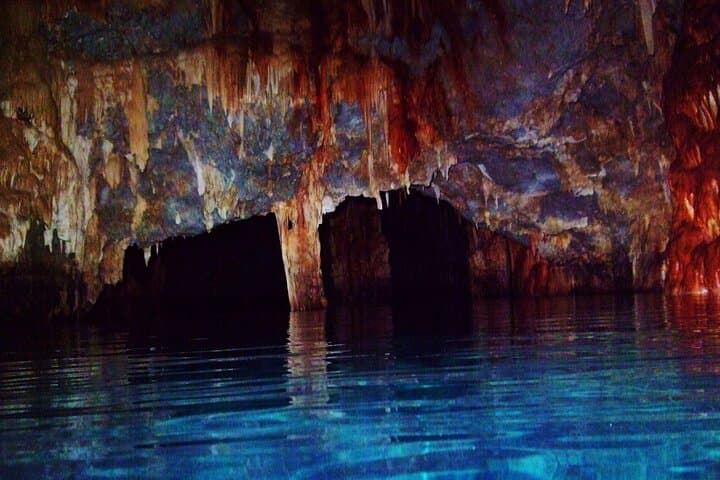
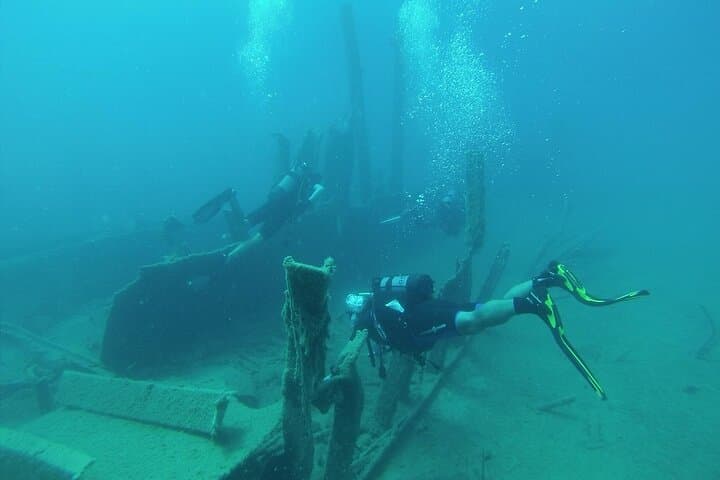
This route threads living geology and human story: the Elephant Cave’s low-slung chambers reveal Pleistocene fossils in nearly translucent water at 1–12 meters, while offshore lies the century-old British liner Minnewaska, a White Star Line steamer sunk in 1916 by a WWI mine at roughly 20 meters. Newer interventions like the Apokoronas Diving Park and the intentionally-sunk Tugboat Nestor (placed 2025) have turned steel and concrete into fast-growing reef structure, drawing groupers, octopus, and dense schools of bream.
Culturally, Crete’s northern coast blends wartime memory with fishing village life—expect olive groves on the hills and small taverna snacks between dives. Geologically the seabed shifts from limestone caves to sandy plains, producing variable currents and pockets of excellent visibility.
Practically: this is a certified-diver program with full scuba rental, box lunch, and pickup. Plan for 2 boat dives over ~4–5 hours, check your certification and logbook, and bring a 3–5 mm wetsuit in shoulder seasons. Equalize early; currents can play and caves demand calm, deliberate buoyancy control. Surface intervals are often on shaded decks—stay hydrated and leave single-use plastic ashore.
moderate.
4–5 hours.
Moderate fitness; comfortable with repeated gear exchanges, boat work, and multiple descents to 20 m.
Yes—this program is for certified divers only; you must present your certification card and recent log entries; refresher dives may be requested for long gaps in experience.
Dives typically range from shallow chambers in the Elephant Cave (1–12 m) to wreck sites around 20 m; profiles depend on conditions and certification level.
Full scuba rental is included—BCD, regulator, tank, weights and exposure suit options—though many divers bring personal masks and computers.
The operator requires 24+ hour notice for full refunds; dives can be rescheduled or canceled for unsafe sea conditions with alternatives offered when possible.
The Minnewaska was built in Belfast in 1908 by a White Star Line constructor and sank in 1916 after striking a WWI mine; newer artificial reefs like the Nestor support recovery of local marine life.
The Apokoronas Diving Park is designed to encourage marine biodiversity; divers should follow low-impact practices—no touching wrecks or reefs, and avoid silting by careful finning.
Omega Divers operates guided outdoor trips and adventures with an emphasis on safety, stewardship, and memorable experiences.
The day begins at the marina as a light breeze lifts the harbor glass; the boat cuts through Souda Bay and the coastline opens into chalky cliffs and small coves. Salt and diesel mix with the nervous chatter of divers checking gauges—below, the sea keeps its secrets. You drop in for two boat dives that move from shallow, cathedral-like slabs into deeper relics where history holds still.
The day begins at the marina as a light breeze lifts the harbor glass; the boat cuts through Souda Bay and the coastline opens into chalky cliffs and small coves. Salt and diesel mix with the nervous chatter of divers checking gauges—below, the sea keeps its secrets. You drop in for two boat dives that move from shallow, cathedral-like slabs into deeper relics where history holds still.
This route threads living geology and human story: the Elephant Cave’s low-slung chambers reveal Pleistocene fossils in nearly translucent water at 1–12 meters, while offshore lies the century-old British liner Minnewaska, a White Star Line steamer sunk in 1916 by a WWI mine at roughly 20 meters. Newer interventions like the Apokoronas Diving Park and the intentionally-sunk Tugboat Nestor (placed 2025) have turned steel and concrete into fast-growing reef structure, drawing groupers, octopus, and dense schools of bream.
Culturally, Crete’s northern coast blends wartime memory with fishing village life—expect olive groves on the hills and small taverna snacks between dives. Geologically the seabed shifts from limestone caves to sandy plains, producing variable currents and pockets of excellent visibility.
Practically: this is a certified-diver program with full scuba rental, box lunch, and pickup. Plan for 2 boat dives over ~4–5 hours, check your certification and logbook, and bring a 3–5 mm wetsuit in shoulder seasons. Equalize early; currents can play and caves demand calm, deliberate buoyancy control. Surface intervals are often on shaded decks—stay hydrated and leave single-use plastic ashore.