THE ADVENTURE COLLECTIVE® · Independent discovery and booking for outdoor travel

Explore Arkadi Monastery’s storied courtyard, watch potters at work in Margarites, and spend free time wandering the Venetian alleys of Rethymno. This full-day trip blends history, craft, and coastal time in one practical itinerary.
Explore Arkadi Monastery’s storied courtyard, watch potters at work in Margarites, and spend free time wandering the Venetian alleys of Rethymno. This full-day trip blends history, craft, and coastal time in one practical itinerary.
Morning light slashes across the Cretan hills as the minivan eases out of Chania and the sea falls away behind you. The road threads olive groves and scrubby slopes toward Arkadi, where a stone monastery perches like a stubborn watchman over a wide, sunburnt valley.
Verified experiences and guided adventures in the surrounding area.
Operated by PLATANOS TOURS · Chania, Crete
Morning light slashes across the Cretan hills as the minivan eases out of Chania and the sea falls away behind you. The road threads olive groves and scrubby slopes toward Arkadi, where a stone monastery perches like a stubborn watchman over a wide, sunburnt valley.
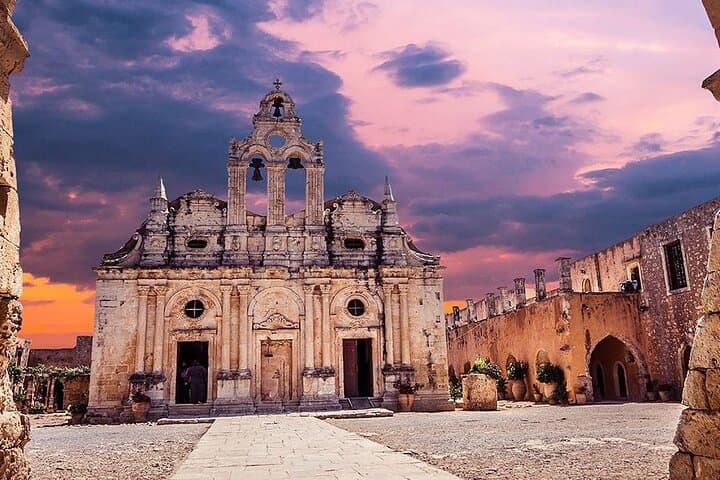
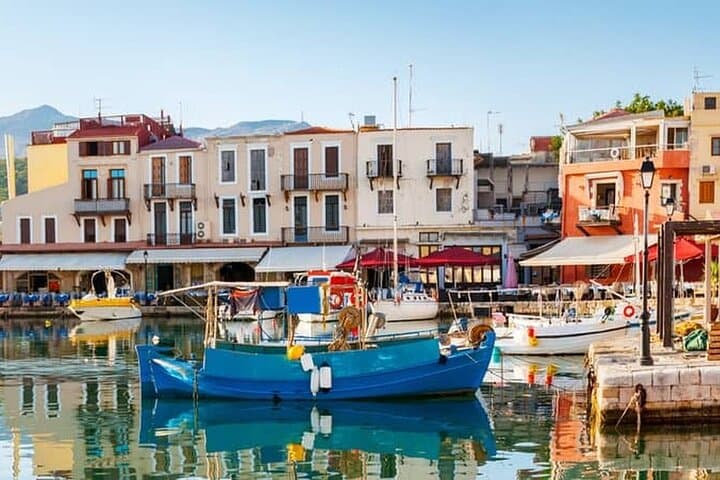
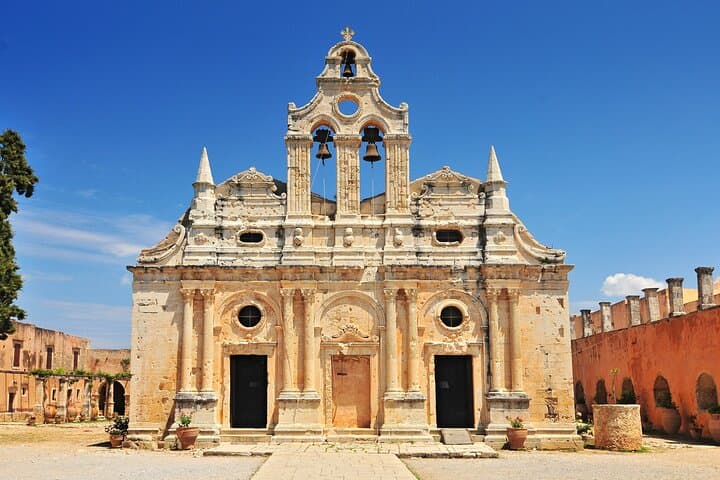
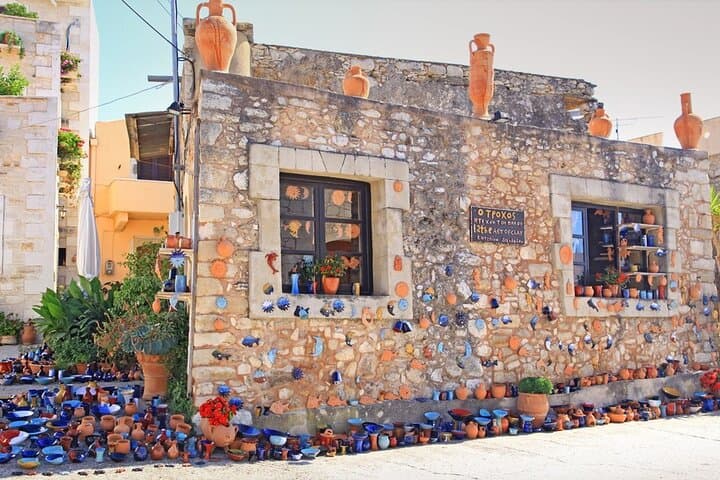
Arkadi Monastery is more than a photo stop: its 19th-century role in the Cretan uprising against Ottoman rule gives the courtyard a charged, solemn atmosphere. From there the tour drops into Margarites, a village that smells of clay and wood smoke; artisans still throw pots on traditional wheels and small workshops line the narrow lanes. The route finishes in Rethymno, whose Venetian Fortezza crowns the town and whose cobbled alleys lead to beachside tavernas and a palm-lined shore.
Geology here is simple and honest—limestone ridges cut to terraces, with fertile pockets that supported centuries of agriculture and crafts. Culturally the day balances religion, resistance history and living tradition: monasteries, fortress walls, and a craft economy that locals sustain.
Practical notes: this is a full-day (about 10 hours) guided excursion with hotel pickup across Chania districts. Expect easy walking on uneven cobbles and village streets; plan 3–4 hours free time in Rethymno to visit the Fortezza, eat, or swim at Palm Beach. Bring sun protection, comfortable shoes for cobbles, and small change for pottery purchases or site donations. Respect dress codes at religious sites and carry water—the Cretan sun is direct and insistent.
easy.
10 hours.
Suitable for most fitness levels; involves standing, short walks on uneven cobbles and stairs.
The tour runs about 10 hours and includes hotel pickup/drop-off from specified Chania areas and a professional English-speaking guide; some site admissions may not be included.
Yes—there is time allocated for a beach visit near the town center; bring swimwear and a towel in your daypack.
The Fortezza often charges a small entrance fee; Arkadi may have donation boxes—carry small change to cover these.
Yes; the tour is rated easy with moderate walking, but there are stairs and uneven surfaces—assess mobility needs when booking.
Arkadi Monastery is a focal point of the 1866 Cretan revolt against Ottoman rule; Rethymno’s Fortezza is a 16th-century Venetian fortification built to protect the harbor.
Support local artisans by buying directly from workshops, avoid plastic waste on beaches, and follow posted rules at religious and historic sites to minimize impact.
PLATANOS TOURS operates guided outdoor trips and adventures with an emphasis on safety, stewardship, and memorable experiences.
Morning light slashes across the Cretan hills as the minivan eases out of Chania and the sea falls away behind you. The road threads olive groves and scrubby slopes toward Arkadi, where a stone monastery perches like a stubborn watchman over a wide, sunburnt valley.
Morning light slashes across the Cretan hills as the minivan eases out of Chania and the sea falls away behind you. The road threads olive groves and scrubby slopes toward Arkadi, where a stone monastery perches like a stubborn watchman over a wide, sunburnt valley.
Arkadi Monastery is more than a photo stop: its 19th-century role in the Cretan uprising against Ottoman rule gives the courtyard a charged, solemn atmosphere. From there the tour drops into Margarites, a village that smells of clay and wood smoke; artisans still throw pots on traditional wheels and small workshops line the narrow lanes. The route finishes in Rethymno, whose Venetian Fortezza crowns the town and whose cobbled alleys lead to beachside tavernas and a palm-lined shore.
Geology here is simple and honest—limestone ridges cut to terraces, with fertile pockets that supported centuries of agriculture and crafts. Culturally the day balances religion, resistance history and living tradition: monasteries, fortress walls, and a craft economy that locals sustain.
Practical notes: this is a full-day (about 10 hours) guided excursion with hotel pickup across Chania districts. Expect easy walking on uneven cobbles and village streets; plan 3–4 hours free time in Rethymno to visit the Fortezza, eat, or swim at Palm Beach. Bring sun protection, comfortable shoes for cobbles, and small change for pottery purchases or site donations. Respect dress codes at religious sites and carry water—the Cretan sun is direct and insistent.