THE ADVENTURE COLLECTIVE® · Independent discovery and booking for outdoor travel

Learn to breathe and move underwater on a supervised shore dive off Chania, Crete. Small groups, professional instruction and maintained equipment make this a focused introduction to Mediterranean diving.
Learn to breathe and move underwater on a supervised shore dive off Chania, Crete. Small groups, professional instruction and maintained equipment make this a focused introduction to Mediterranean diving.
A low scrubbed wind pushes foam across a narrow beach on Crete’s Akrotiri coast as instructors check tanks and adjust masks. You feel the sun, the grit of sand in your sandals and the current of expectation; soon the sea will demand attention in a language of sound and breath.
Verified experiences and guided adventures in the surrounding area.
Operated by Salty Descents · Chania, Crete
A low scrubbed wind pushes foam across a narrow beach on Crete’s Akrotiri coast as instructors check tanks and adjust masks. You feel the sun, the grit of sand in your sandals and the current of expectation; soon the sea will demand attention in a language of sound and breath.
Chania’s coastline carries layers of history — from Minoan trade corridors to Venetian shipyards and Ottoman watchposts — and its underwater topography reflects that past: fractured limestone ledges, shallow reefs, and pockets of Posidonia seagrass that cradle small marine life. Cultural life on shore is compact and practical: a short walk from the dive center may reveal a harbor café where locals mend nets.
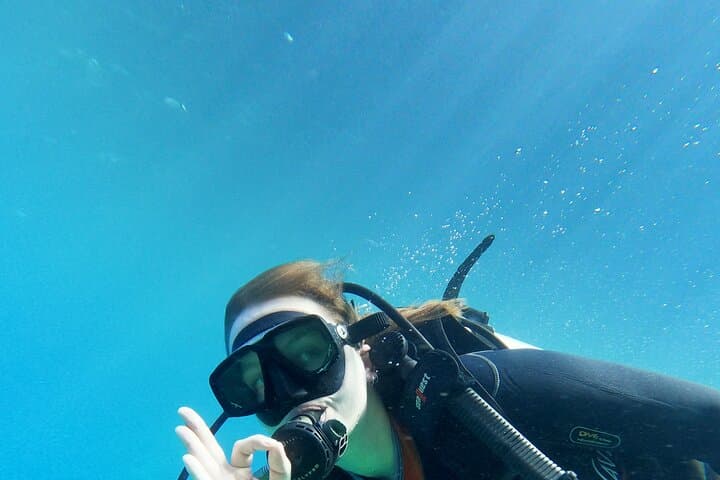
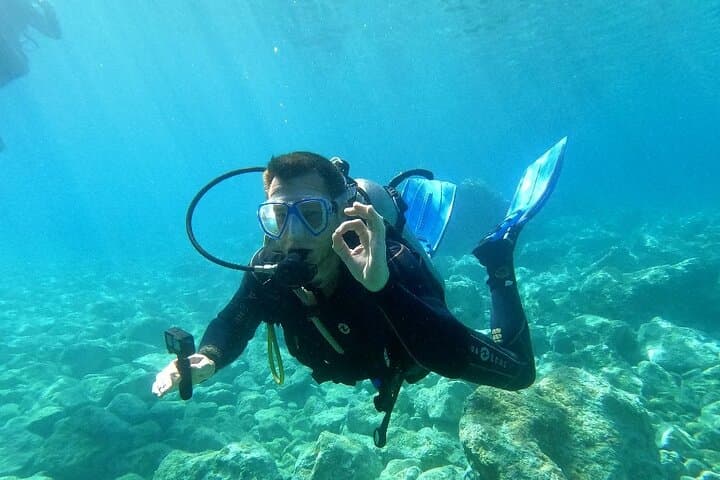
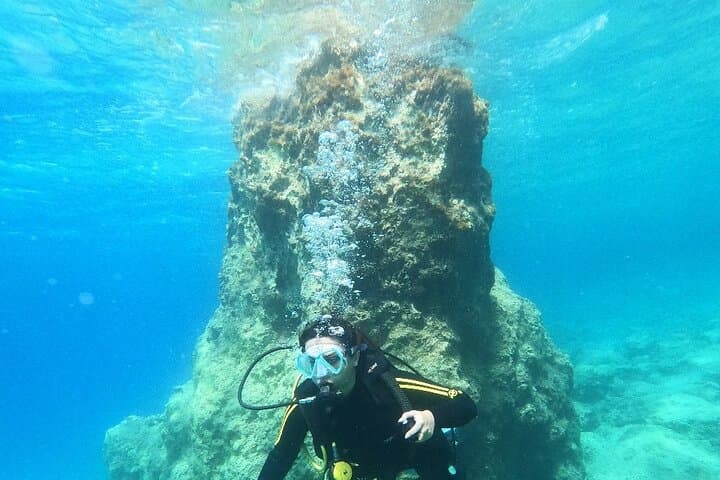
This beginner shore dive course is built for first-timers: a concise theory briefing, kit fitting, a supervised shore entry and roughly 45 minutes of guided time below the surface. Expect clarity in calm coves, intermittent surge on exposed points, and visibility that ranges with season and swell.
Practicalities matter. Wear sturdy sandals to the entry, bring a thin wetsuit or 5mm depending on season, and hydrate before you gear up—cold water can mask dehydration. Listen closely during buoyancy practice; conserving air is as much technique as calm breathing. Pay attention to the instructor, surface markers and group procedures for returns to shore.
For newcomers, the experience is both technical and immediate: the sea will push a quiet rhythm, and by the time you surface you’ll have a new vocabulary for moving through it.
easy.
2–3 hours.
Suitable for people with basic swimming ability and reasonable mobility; expect short walks and kneeling to gear up.
No — this is a beginner try-scuba shore dive designed for first-timers with instruction and supervised in-water practice.
Beginners are typically guided to shallow depths (usually 4–12 meters) where skills are practiced and visibility is best.
Basic swimming ability is recommended; instructors can adapt exercises but severe water anxiety or inability to float should be discussed before booking.
Full refund is available if you cancel at least 24 hours before the scheduled start; bad weather may also cause cancellation with refund.
Chania’s waters once served Minoan and Venetian trade routes; many coastal features were important anchorage and landing sites through history.
Posidonia meadows are vital here—avoid finning through seagrass and follow instructor guidance to minimize impact; support operators that use mooring systems rather than anchors.
Salty Descents operates guided outdoor trips and adventures with an emphasis on safety, stewardship, and memorable experiences.
A low scrubbed wind pushes foam across a narrow beach on Crete’s Akrotiri coast as instructors check tanks and adjust masks. You feel the sun, the grit of sand in your sandals and the current of expectation; soon the sea will demand attention in a language of sound and breath.
A low scrubbed wind pushes foam across a narrow beach on Crete’s Akrotiri coast as instructors check tanks and adjust masks. You feel the sun, the grit of sand in your sandals and the current of expectation; soon the sea will demand attention in a language of sound and breath.
Chania’s coastline carries layers of history — from Minoan trade corridors to Venetian shipyards and Ottoman watchposts — and its underwater topography reflects that past: fractured limestone ledges, shallow reefs, and pockets of Posidonia seagrass that cradle small marine life. Cultural life on shore is compact and practical: a short walk from the dive center may reveal a harbor café where locals mend nets.
This beginner shore dive course is built for first-timers: a concise theory briefing, kit fitting, a supervised shore entry and roughly 45 minutes of guided time below the surface. Expect clarity in calm coves, intermittent surge on exposed points, and visibility that ranges with season and swell.
Practicalities matter. Wear sturdy sandals to the entry, bring a thin wetsuit or 5mm depending on season, and hydrate before you gear up—cold water can mask dehydration. Listen closely during buoyancy practice; conserving air is as much technique as calm breathing. Pay attention to the instructor, surface markers and group procedures for returns to shore.
For newcomers, the experience is both technical and immediate: the sea will push a quiet rhythm, and by the time you surface you’ll have a new vocabulary for moving through it.