THE ADVENTURE COLLECTIVE® · Independent discovery and booking for outdoor travel

Witness London’s iconic Changing of the Guard with a guided Royal Walks tour—arrive early, expect precise drill and historic context across Buckingham Palace, St. James’s and Horse Guards Parade. This practical guide helps you plan timing, transport and what to bring.
Witness London’s iconic Changing of the Guard with a guided Royal Walks tour—arrive early, expect precise drill and historic context across Buckingham Palace, St. James’s and Horse Guards Parade. This practical guide helps you plan timing, transport and what to bring.
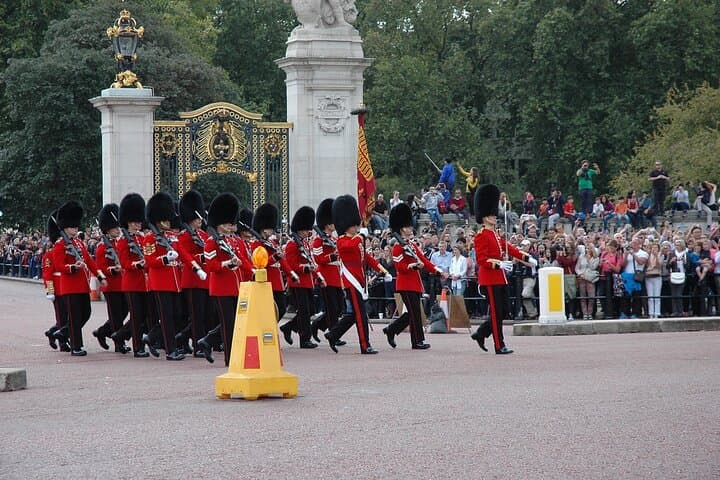
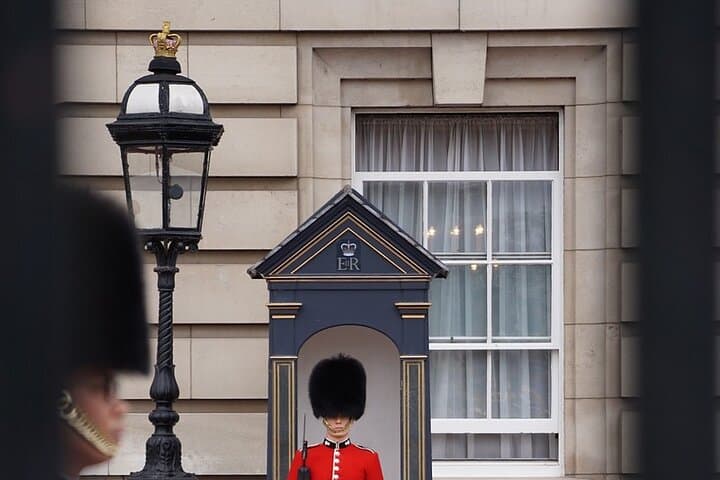
The sun lifts over The Mall and a hush settles across the paved approach to Buckingham Palace. Tourists gather in small clusters, breath visible on cool mornings, cameras raised as the band’s brass glints and the red-coated soldiers step into formation. You feel the city compress into a single, precise moment: a centuries-old ritual played out in modern London.
Verified experiences and guided adventures in the surrounding area.
Operated by Didi · London, Greater London
The sun lifts over The Mall and a hush settles across the paved approach to Buckingham Palace. Tourists gather in small clusters, breath visible on cool mornings, cameras raised as the band’s brass glints and the red-coated soldiers step into formation. You feel the city compress into a single, precise moment: a centuries-old ritual played out in modern London.
The Changing of the Guard evolved from practical troop relief into public pageantry by the 19th century, centred on Buckingham Palace since Queen Victoria’s reign. The ceremony weaves military drill, regimental music and the architecture of Westminster — Horse Guards Parade, St. James’s Palace and Trafalgar Square — each landmark bearing layers of Georgian and Victorian stonework rather than dramatic geology. Local culture treats the Guards with polite distance: they are ceremonial sentries, not props.
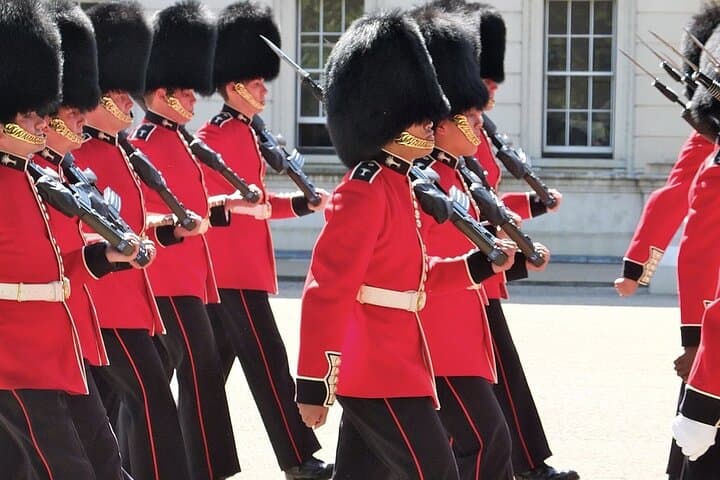
Expect crisp marching, intermittent fanfares and timed exchanges that last about 40–45 minutes within a 1.75-hour tour. Mornings are best for clearer light and fewer crowds; weekends and summer bring larger numbers and extended music performances. Guides often add context on uniforms, regiments and historic incidents that shaped the ritual.
Practical guidance: arrive at least 45–60 minutes early for prime viewing, use the Circle, District or Victoria lines to reach Green Park or St. James’s Park, and leave extra time for security and controlled access. Dress in layers—the weather can turn quickly—and bring a small bag for your essentials since ground space is limited. Respect the ceremony: no touch policy for guards, and follow steward directions for safe, unobstructed viewing.
easy.
1.5–2 hours.
No special fitness required beyond standing and short, flat walks; accessible to most people.
Viewing the ceremony in public spaces is free; guided tours sell added historical commentary and reserved viewing that can simplify positioning.
Many viewing areas and adjacent pavements are wheelchair accessible; check steward instructions and arrive early to secure a suitable spot.
You may photograph the ceremony but do not touch or pose with serving Guards; on some private tours limited photo ops may be offered with consent.
Start times vary by season and parade schedules; the core ceremony runs about 40–45 minutes within a roughly 1 hour 45 minute tour window—confirm exact times with your tour operator.
Buckingham Palace has been the monarch’s official London residence since 1837; the guard ceremony formalised over the 18th and 19th centuries as troop movements became public spectacle.
Heavy foot traffic in central parks requires visitors to stay on paths, dispose of waste responsibly and use public transport to reduce local congestion and emissions.
Didi operates guided outdoor trips and adventures with an emphasis on safety, stewardship, and memorable experiences.
The sun lifts over The Mall and a hush settles across the paved approach to Buckingham Palace. Tourists gather in small clusters, breath visible on cool mornings, cameras raised as the band’s brass glints and the red-coated soldiers step into formation. You feel the city compress into a single, precise moment: a centuries-old ritual played out in modern London.
The sun lifts over The Mall and a hush settles across the paved approach to Buckingham Palace. Tourists gather in small clusters, breath visible on cool mornings, cameras raised as the band’s brass glints and the red-coated soldiers step into formation. You feel the city compress into a single, precise moment: a centuries-old ritual played out in modern London.
The Changing of the Guard evolved from practical troop relief into public pageantry by the 19th century, centred on Buckingham Palace since Queen Victoria’s reign. The ceremony weaves military drill, regimental music and the architecture of Westminster — Horse Guards Parade, St. James’s Palace and Trafalgar Square — each landmark bearing layers of Georgian and Victorian stonework rather than dramatic geology. Local culture treats the Guards with polite distance: they are ceremonial sentries, not props.
Expect crisp marching, intermittent fanfares and timed exchanges that last about 40–45 minutes within a 1.75-hour tour. Mornings are best for clearer light and fewer crowds; weekends and summer bring larger numbers and extended music performances. Guides often add context on uniforms, regiments and historic incidents that shaped the ritual.
Practical guidance: arrive at least 45–60 minutes early for prime viewing, use the Circle, District or Victoria lines to reach Green Park or St. James’s Park, and leave extra time for security and controlled access. Dress in layers—the weather can turn quickly—and bring a small bag for your essentials since ground space is limited. Respect the ceremony: no touch policy for guards, and follow steward directions for safe, unobstructed viewing.