THE ADVENTURE COLLECTIVE® · Independent discovery and booking for outdoor travel

Experience the Changing of the Guard with a personal guide who avoids the worst crowds and explains the ceremony’s history. See Buckingham Palace, Horseguards, St James’s Park and more on this two-hour walking exploration.
Experience the Changing of the Guard with a personal guide who avoids the worst crowds and explains the ceremony’s history. See Buckingham Palace, Horseguards, St James’s Park and more on this two-hour walking exploration.
Standing at the railings outside Buckingham Palace, the procession arrives like a metronome—boots tapping, flags inclined, a band winding into a military march that commands the square.
Verified experiences and guided adventures in the surrounding area.
Operated by The Great Weekender Experiences · London, Greater London
Standing at the railings outside Buckingham Palace, the procession arrives like a metronome—boots tapping, flags inclined, a band winding into a military march that commands the square.
This guided experience threads you through Royal London: Buckingham Palace’s forecourt, the Horseguards’ ceremonial entrance, St James’s Park and Trafalgar Square. Those places carry layered history—Trafalgar’s naval memory, Westminster’s medieval stones and St James’s Palace, originally a hunting lodge rebuilt by Henry VIII—while the city’s clay-and-terrace geology shapes the broad avenues and green pockets where crowds gather.
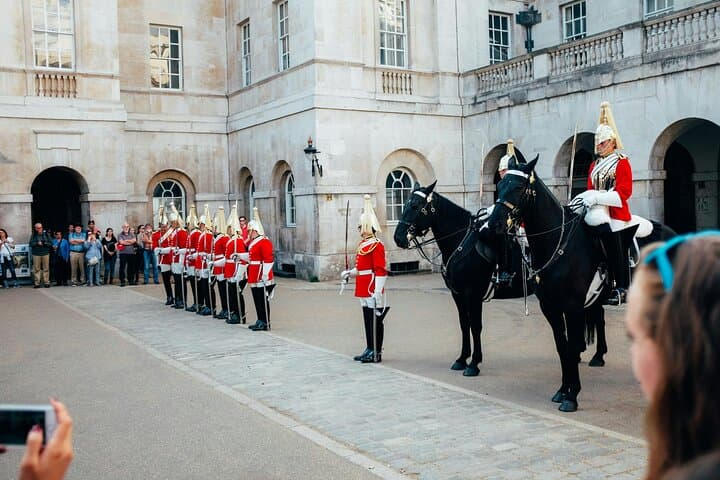
Your guide separates context from crowd: why the bearskins were adopted in the 19th century, how Horseguards Parade served state occasions, and how the ceremony sits in modern ceremonial life. Cultural notes include military pageantry, public access to royal precincts, and photo etiquette during the procession.
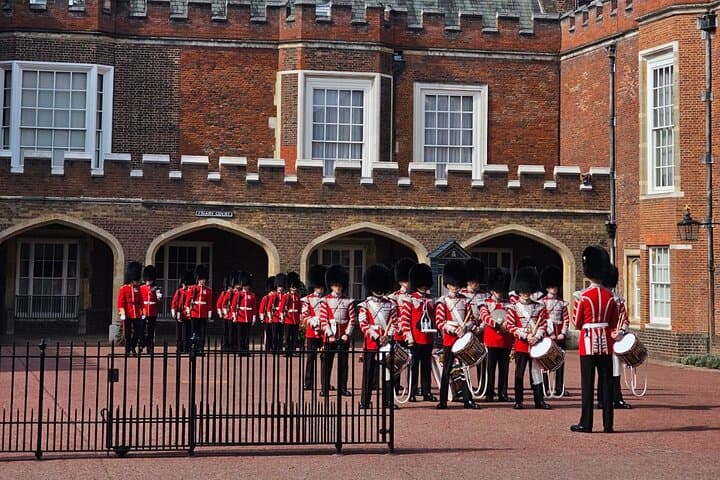
Practical guidance: expect two hours on foot with periods of standing; the route covers short walks between viewpoints and timed stops near Friary Court and the Horseguards. Public transport is the sensible choice—Westminster and St James’s Park Tube stations are within a 10–15 minute walk. Bring a lightweight rain shell, plan to arrive early for the best vantage, and prepare for security checks and dense crowds. Mobility-limited visitors should check access options in advance because ground can be uneven near curbs and parade areas.
This tour blends living history with usable logistics: it’s an urban, sensory ceremony—brass, cadence and cobbles—that rewards preparation more than luck.
moderate.
2 hours.
Be able to stand for 30–60 minutes and walk short distances on paved, sometimes uneven surfaces; moderate fitness recommended.
No—viewing the ceremony at public locations like Buckingham Palace is free, but guided tours provide reserved vantage points, historical context and route navigation.
Yes, but it involves standing and short walks; those with mobility challenges should advise the operator in advance and may need additional assistance.
Photography is allowed; however, follow guide directions during key moments and be mindful of other visitors’ sightlines and any restricted zones.
Full refund available if you cancel at least 24 hours before the scheduled departure; last-minute cancellations are not refundable.
Buckingham Palace evolved from a private townhouse in the 18th century into the monarch’s official London residence; Horseguards and St James’s have roots in Tudor and Georgian ceremonial life.
High foot traffic stresses greenspaces; stick to designated paths in parks, dispose of waste properly and respect fenced-off lawns to protect historic landscapes.
The Great Weekender Experiences operates guided outdoor trips and adventures with an emphasis on safety, stewardship, and memorable experiences.
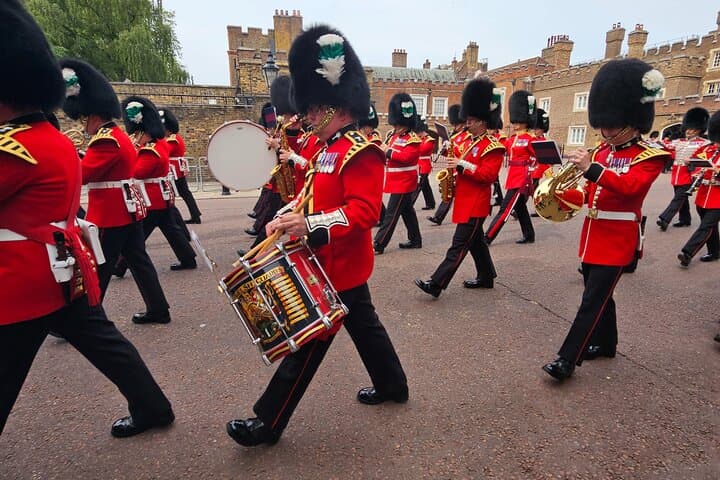
Standing at the railings outside Buckingham Palace, the procession arrives like a metronome—boots tapping, flags inclined, a band winding into a military march that commands the square.
Standing at the railings outside Buckingham Palace, the procession arrives like a metronome—boots tapping, flags inclined, a band winding into a military march that commands the square.
This guided experience threads you through Royal London: Buckingham Palace’s forecourt, the Horseguards’ ceremonial entrance, St James’s Park and Trafalgar Square. Those places carry layered history—Trafalgar’s naval memory, Westminster’s medieval stones and St James’s Palace, originally a hunting lodge rebuilt by Henry VIII—while the city’s clay-and-terrace geology shapes the broad avenues and green pockets where crowds gather.
Your guide separates context from crowd: why the bearskins were adopted in the 19th century, how Horseguards Parade served state occasions, and how the ceremony sits in modern ceremonial life. Cultural notes include military pageantry, public access to royal precincts, and photo etiquette during the procession.
Practical guidance: expect two hours on foot with periods of standing; the route covers short walks between viewpoints and timed stops near Friary Court and the Horseguards. Public transport is the sensible choice—Westminster and St James’s Park Tube stations are within a 10–15 minute walk. Bring a lightweight rain shell, plan to arrive early for the best vantage, and prepare for security checks and dense crowds. Mobility-limited visitors should check access options in advance because ground can be uneven near curbs and parade areas.
This tour blends living history with usable logistics: it’s an urban, sensory ceremony—brass, cadence and cobbles—that rewards preparation more than luck.