THE ADVENTURE COLLECTIVE® · Independent discovery and booking for outdoor travel

Short, steep and richly rewarding, the Chandragiri Hill day hike tops the Kathmandu skyline with Himalayan views and a hilltop temple. Expect forested switchbacks, birdlife, and a sunrise that frames peaks from Langtang to Kanchenjunga.
Short, steep and richly rewarding, the Chandragiri Hill day hike tops the Kathmandu skyline with Himalayan views and a hilltop temple. Expect forested switchbacks, birdlife, and a sunrise that frames peaks from Langtang to Kanchenjunga.
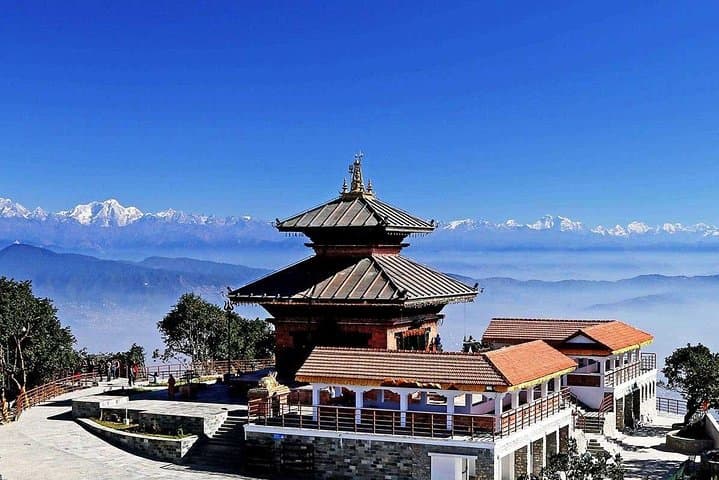
A pre-dawn climb up Chandragiri Hill begins with the city lights shrinking behind you and a cool, pine-scented slope pushing you forward. By first light the skyline of Kathmandu opens below, and the western ridge becomes a stage for rising sun and distant white peaks—Langtang, Manaslu, Ganesh and beyond—stacked like a faraway range of sentinels.
Verified experiences and guided adventures in the surrounding area.
Operated by De Himalaya · Kathmandu, Bagmati Province
A pre-dawn climb up Chandragiri Hill begins with the city lights shrinking behind you and a cool, pine-scented slope pushing you forward. By first light the skyline of Kathmandu opens below, and the western ridge becomes a stage for rising sun and distant white peaks—Langtang, Manaslu, Ganesh and beyond—stacked like a faraway range of sentinels.
The hill stands at about 2,540 m and has long been a local landmark, anchored by the Bhaleshawor Mahadev temple that draws pilgrims and day-trippers alike. Geologically, the rise is part of the Lesser Himalaya’s folded slopes—steep enough to test legs but short enough for a day outing. Vegetation mixes oak, rhododendron and a noted diversity of medicinal plants; birdlife and butterflies are common in the understory.
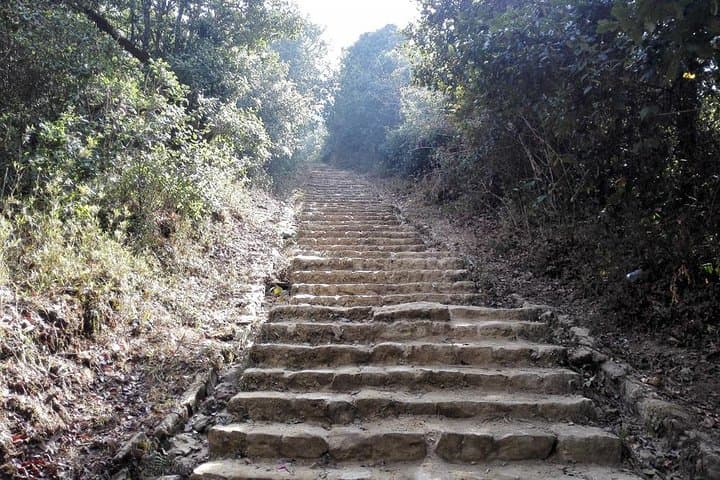
Culturally, a visit usually includes a stop at the hilltop temple and views across the Kathmandu Valley’s human mosaic—terraced fields, suburbs, and the distant city grid. Practically, expect a hike of roughly 6–10 km round-trip with around 900–1,200 m of cumulative ascent depending on your start point, on dirt trails that range from compact switchbacks to root-strewn singletrack.
Start early for clear views and lower crowds, carry layered clothing for temperature swings, and bring water and sun protection—peak visibility comes in late autumn and winter mornings. Respect temple customs and nearby vegetation: the area supports traditional plant-use knowledge, so avoid collecting specimens.
Whether you knock it out as a sunrise push or a tempered daywalk, Chandragiri delivers efficient altitude, sweeping panoramas and a close encounter with the ecology and faith practices that shape the Kathmandu hills.
easy.
6 hours.
Suitable for most recreational hikers who can handle steady uphill walking for several hours; casual fitness recommended.
Most visitors take 4–6 hours round-trip depending on start location, with steady uphill sections; it’s commonly rated easy to moderate and suitable for varied fitness levels.
Yes—there is a cable car that serves Chandragiri Hill from the lower station, offering an alternative ascent or descent for those who prefer to avoid the full hike.
There may be an entrance fee for the hilltop area and temple; tours often include surface transport and entrance fees, so carry some local currency for incidental costs.
Late autumn through winter typically offers the clearest visibility, with early mornings providing the sharpest Himalayan views.
Chandragiri has long been a local pilgrimage and lookout site; the hilltop temple is an active Hindu shrine that links contemporary visitors with regional religious traditions.
Visitors should stick to marked trails, avoid removing plants (the area hosts many medicinal species), and take waste back to Kathmandu—tourism pressure can impact fragile slopes and local biodiversity.
De Himalaya operates guided outdoor trips and adventures with an emphasis on safety, stewardship, and memorable experiences.
A pre-dawn climb up Chandragiri Hill begins with the city lights shrinking behind you and a cool, pine-scented slope pushing you forward. By first light the skyline of Kathmandu opens below, and the western ridge becomes a stage for rising sun and distant white peaks—Langtang, Manaslu, Ganesh and beyond—stacked like a faraway range of sentinels.
A pre-dawn climb up Chandragiri Hill begins with the city lights shrinking behind you and a cool, pine-scented slope pushing you forward. By first light the skyline of Kathmandu opens below, and the western ridge becomes a stage for rising sun and distant white peaks—Langtang, Manaslu, Ganesh and beyond—stacked like a faraway range of sentinels.
The hill stands at about 2,540 m and has long been a local landmark, anchored by the Bhaleshawor Mahadev temple that draws pilgrims and day-trippers alike. Geologically, the rise is part of the Lesser Himalaya’s folded slopes—steep enough to test legs but short enough for a day outing. Vegetation mixes oak, rhododendron and a noted diversity of medicinal plants; birdlife and butterflies are common in the understory.
Culturally, a visit usually includes a stop at the hilltop temple and views across the Kathmandu Valley’s human mosaic—terraced fields, suburbs, and the distant city grid. Practically, expect a hike of roughly 6–10 km round-trip with around 900–1,200 m of cumulative ascent depending on your start point, on dirt trails that range from compact switchbacks to root-strewn singletrack.
Start early for clear views and lower crowds, carry layered clothing for temperature swings, and bring water and sun protection—peak visibility comes in late autumn and winter mornings. Respect temple customs and nearby vegetation: the area supports traditional plant-use knowledge, so avoid collecting specimens.
Whether you knock it out as a sunrise push or a tempered daywalk, Chandragiri delivers efficient altitude, sweeping panoramas and a close encounter with the ecology and faith practices that shape the Kathmandu hills.