THE ADVENTURE COLLECTIVE® · Independent discovery and booking for outdoor travel

Ride the Chandragiri cable car for sweeping Himalayan views, hike down through forested ridgelines, then explore Swayambhunath and Kathmandu Durbar Square in a compact half-day. Ideal for travelers who want big panoramas and cultural highlights without a full-day trek.
Ride the Chandragiri cable car for sweeping Himalayan views, hike down through forested ridgelines, then explore Swayambhunath and Kathmandu Durbar Square in a compact half-day. Ideal for travelers who want big panoramas and cultural highlights without a full-day trek.
The cable car glides above a tight weave of pine and rhododendron, the valley yawning beneath as the city’s rooftops shrink into a cluster of tiles and prayer flags. At the summit of Chandragiri Hill the wind pushes at you like an eager guide; the ridge opens into a 180-degree sweep of the Kathmandu Valley with distant white shoulders of Everest, Annapurna, Langtang and other ranges punctuating the horizon.
Verified experiences and guided adventures in the surrounding area.
Operated by Himalayan Social Journey · Kathmandu, Bagmati Province
The cable car glides above a tight weave of pine and rhododendron, the valley yawning beneath as the city’s rooftops shrink into a cluster of tiles and prayer flags. At the summit of Chandragiri Hill the wind pushes at you like an eager guide; the ridge opens into a 180-degree sweep of the Kathmandu Valley with distant white shoulders of Everest, Annapurna, Langtang and other ranges punctuating the horizon.
Chandragiri’s prominence is both natural and cultural: a forested ridge formed by Himalayan uplift and erosion, capped by temples and viewpoints that have drawn local pilgrims and day-trippers for generations. The cable car, now the fastest way to reach the summit, cuts a clear line through the woods and shortens what used to be a full-day climb into a compact summit experience. On a combined half-day tour the hill’s vistas are paired with two of Kathmandu’s most significant cultural sites — the ancient Swayambhunath stupa with its resident monkeys and the layered temples and palaces of Kathmandu Durbar Square — offering geology, religion and city history in a single morning or afternoon.
Practicalities matter: mornings usually provide the clearest mountain views; cloud and haze build after midday, especially in summer. Expect maintained paths for the descent and short stair sections at viewpoints. Bring layered clothing for wind and sun protection, a refillable water bottle, and a camera with a modest zoom to capture peaks that sit many kilometers away. The trip suits most fitness levels and makes a concentrated, readable introduction to both Kathmandu’s high views and its cultural core.
easy.
3–4 hours.
Suitable for most fitness levels; requires ability to walk short steep sections and descend stairs for up to an hour.
Most half-day packages include round-trip cable car transfers; confirm at booking and keep your voucher for entry.
Plan for 3–4 hours total including transfers, roughly 60–90 minutes at Chandragiri and about an hour each at Swayambhunath and Durbar Square per the itinerary.
The hike from the summit down to the Chandragiri complex is considered easy to moderate—well-maintained but with some steep sections and stairs; no technical climbing skills required.
Yes—many operators note stroller access and allow infants; however expect some steps at viewpoints and keep children supervised around steep edges and monkeys.
Swayambhunath dates back over two millennia as a Buddhist pilgrimage site; Kathmandu Durbar Square preserves the palaces and temples that trace Nepal’s medieval royal and civic history.
Stick to marked trails, avoid feeding wildlife (especially monkeys) and carry out any trash; visitor pressure during peak season has prompted local initiatives for waste management and trail maintenance.
Himalayan Social Journey operates guided outdoor trips and adventures with an emphasis on safety, stewardship, and memorable experiences.
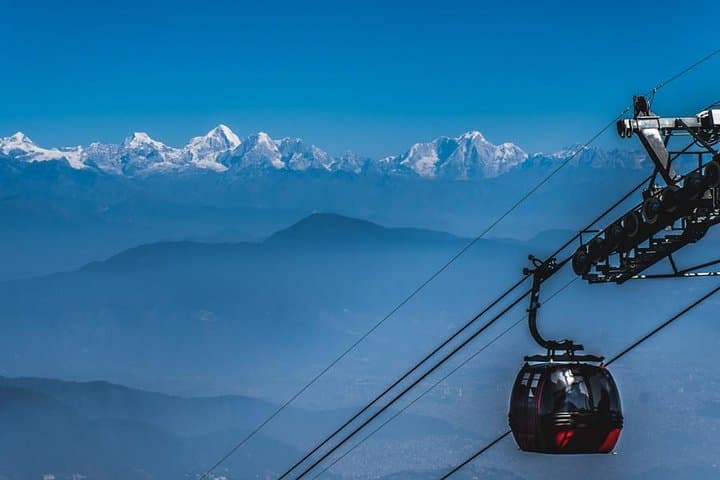


The cable car glides above a tight weave of pine and rhododendron, the valley yawning beneath as the city’s rooftops shrink into a cluster of tiles and prayer flags. At the summit of Chandragiri Hill the wind pushes at you like an eager guide; the ridge opens into a 180-degree sweep of the Kathmandu Valley with distant white shoulders of Everest, Annapurna, Langtang and other ranges punctuating the horizon.
The cable car glides above a tight weave of pine and rhododendron, the valley yawning beneath as the city’s rooftops shrink into a cluster of tiles and prayer flags. At the summit of Chandragiri Hill the wind pushes at you like an eager guide; the ridge opens into a 180-degree sweep of the Kathmandu Valley with distant white shoulders of Everest, Annapurna, Langtang and other ranges punctuating the horizon.
Chandragiri’s prominence is both natural and cultural: a forested ridge formed by Himalayan uplift and erosion, capped by temples and viewpoints that have drawn local pilgrims and day-trippers for generations. The cable car, now the fastest way to reach the summit, cuts a clear line through the woods and shortens what used to be a full-day climb into a compact summit experience. On a combined half-day tour the hill’s vistas are paired with two of Kathmandu’s most significant cultural sites — the ancient Swayambhunath stupa with its resident monkeys and the layered temples and palaces of Kathmandu Durbar Square — offering geology, religion and city history in a single morning or afternoon.
Practicalities matter: mornings usually provide the clearest mountain views; cloud and haze build after midday, especially in summer. Expect maintained paths for the descent and short stair sections at viewpoints. Bring layered clothing for wind and sun protection, a refillable water bottle, and a camera with a modest zoom to capture peaks that sit many kilometers away. The trip suits most fitness levels and makes a concentrated, readable introduction to both Kathmandu’s high views and its cultural core.