THE ADVENTURE COLLECTIVE® · Independent discovery and booking for outdoor travel

A half-day trek from Kathmandu that climbs to the Champadevi temple ridge, offering valley panoramas, rhododendron-splashed forest, and cultural stops in Pharping. Ideal for travelers seeking a short, accessible Himalayan hillwalk with local flavor.
A half-day trek from Kathmandu that climbs to the Champadevi temple ridge, offering valley panoramas, rhododendron-splashed forest, and cultural stops in Pharping. Ideal for travelers seeking a short, accessible Himalayan hillwalk with local flavor.
You step out of the car in Pharping and the air shifts—earthy, cool, threaded with bird song. The trail climbs through mixed pine and rhododendron forest, switchbacks that test your rhythm and open to sudden terraces where the Kathmandu Valley stretches below like a living map. The summit hosts a small temple and a scatter of prayer flags; on a clear day the foothills and distant snow peaks puncture the horizon.
Verified experiences and guided adventures in the surrounding area.
Operated by Across Himalaya Tours & Treks Pvt. Ltd · Pharping, Bagmati Province
You step out of the car in Pharping and the air shifts—earthy, cool, threaded with bird song. The trail climbs through mixed pine and rhododendron forest, switchbacks that test your rhythm and open to sudden terraces where the Kathmandu Valley stretches below like a living map. The summit hosts a small temple and a scatter of prayer flags; on a clear day the foothills and distant snow peaks puncture the horizon.
Champadevi sits on a folded ridge of the Lesser Himalaya, where slates and river-worn sediments tilt and weather into the hill’s stepped slopes. Pharping’s Buddhist monasteries and meditation caves sit nearby, and local Newar and Tamang communities maintain small shrines—the hill is both a natural waypoint and a quiet cultural landmark.
Expect 3–4 hours of hiking on defined trails and stone steps, roughly 6–8 km roundtrip with 400–600 m of ascent depending on your route. The path alternates forested cover with exposed viewpoints; monsoon rains make sections slippery, while autumn delivers the clearest panoramas. Birds take advantage of spring bloom and farmers tend terraced fields below, offering a chance to observe daily life.
Practicalities: start early for light and views, carry at least 1–2 liters of water, and wear grippy footwear—stone steps are common. Respect temple etiquette (modest dress, quiet voices) and pack out waste. A local guide adds cultural context and handles navigation—but the route is straightforward for moderately fit hikers.
moderate.
5–6 hours.
Suitable for moderately fit travellers who can manage sustained uphill walking and stairs; occasional breaks make the climb accessible.
The walking portion typically takes 3–4 hours roundtrip depending on pace and chosen route; with transfers and lunch expect a 5–6 hour outing.
No—routes are clear and popular, but a local guide adds cultural insights, handles logistics, and can tailor the pace for your group.
October–December and March–May are prime for clear skies and flowering rhododendrons; monsoon brings lush green but slipperier trails.
Many families and older hikers complete the route; assess mobility for stairs and uphill sections and plan for frequent rests if needed.
Champadevi is named for a local goddess and has been a pilgrimage site for centuries; Pharping nearby is known for Buddhist meditation caves and Newar village culture.
Trails are popular—practice leave-no-trace, avoid single-use plastics, and hire local guides to support community income and sustainable tourism.
Across Himalaya Tours & Treks Pvt. Ltd operates guided outdoor trips and adventures with an emphasis on safety, stewardship, and memorable experiences.
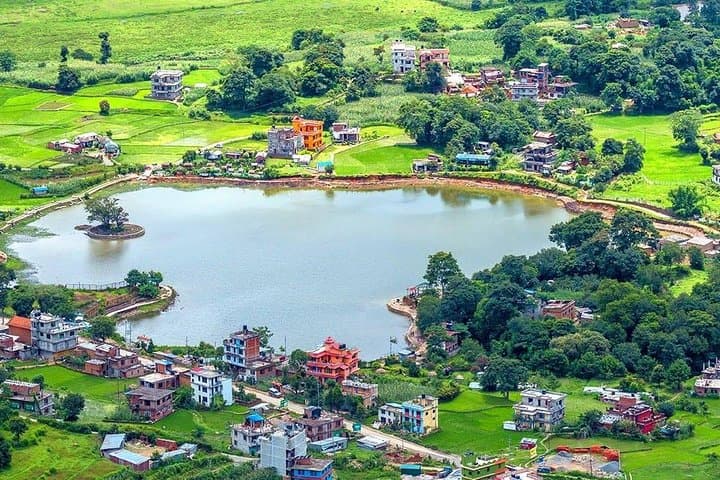
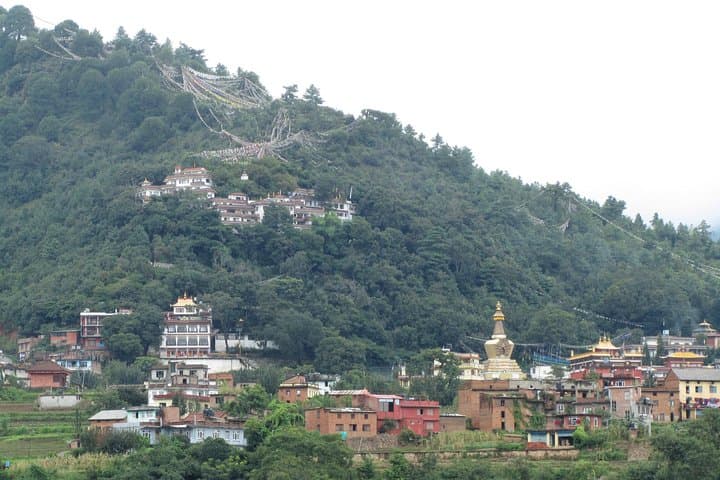
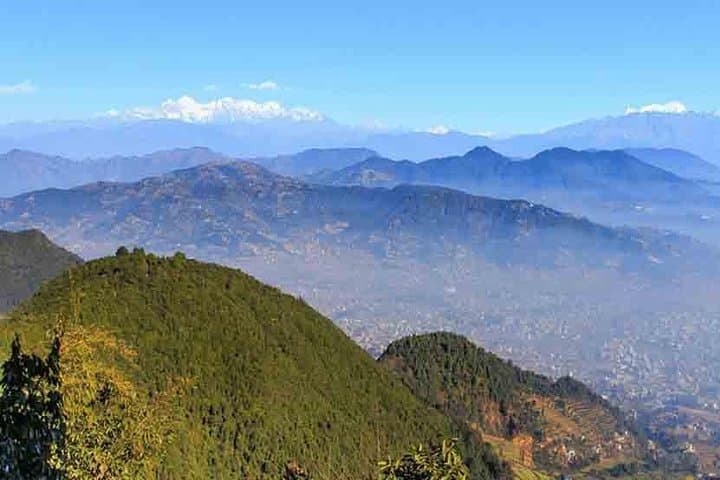
You step out of the car in Pharping and the air shifts—earthy, cool, threaded with bird song. The trail climbs through mixed pine and rhododendron forest, switchbacks that test your rhythm and open to sudden terraces where the Kathmandu Valley stretches below like a living map. The summit hosts a small temple and a scatter of prayer flags; on a clear day the foothills and distant snow peaks puncture the horizon.
You step out of the car in Pharping and the air shifts—earthy, cool, threaded with bird song. The trail climbs through mixed pine and rhododendron forest, switchbacks that test your rhythm and open to sudden terraces where the Kathmandu Valley stretches below like a living map. The summit hosts a small temple and a scatter of prayer flags; on a clear day the foothills and distant snow peaks puncture the horizon.
Champadevi sits on a folded ridge of the Lesser Himalaya, where slates and river-worn sediments tilt and weather into the hill’s stepped slopes. Pharping’s Buddhist monasteries and meditation caves sit nearby, and local Newar and Tamang communities maintain small shrines—the hill is both a natural waypoint and a quiet cultural landmark.
Expect 3–4 hours of hiking on defined trails and stone steps, roughly 6–8 km roundtrip with 400–600 m of ascent depending on your route. The path alternates forested cover with exposed viewpoints; monsoon rains make sections slippery, while autumn delivers the clearest panoramas. Birds take advantage of spring bloom and farmers tend terraced fields below, offering a chance to observe daily life.
Practicalities: start early for light and views, carry at least 1–2 liters of water, and wear grippy footwear—stone steps are common. Respect temple etiquette (modest dress, quiet voices) and pack out waste. A local guide adds cultural context and handles navigation—but the route is straightforward for moderately fit hikers.