THE ADVENTURE COLLECTIVE® · Independent discovery and booking for outdoor travel

A full-day excursion from Geneva that pairs a dizzying cable car ascent to Aiguille du Midi with an afternoon cogwheel train to Mer de Glace. Expect high-alpine views, short summit walking, and free time in Chamonix.
A full-day excursion from Geneva that pairs a dizzying cable car ascent to Aiguille du Midi with an afternoon cogwheel train to Mer de Glace. Expect high-alpine views, short summit walking, and free time in Chamonix.
You step off the bus into thin, cold air and the peaks pull into focus—Aiguille du Midi towers at 3,842 m, ice-edged and unapologetic. A cable car climbs you through wind-sketched sky to a narrow terrace where the Alps unfold: Mont Blanc to the south, the Grandes Jorasses and even the Matterhorn breaking the horizon. The summit walk is short but crisp; the wind talks back as you scan serrated ridgelines.
Verified experiences and guided adventures in the surrounding area.
Operated by Niels · Chamonix, Auvergne-Rhône-Alpes
You step off the bus into thin, cold air and the peaks pull into focus—Aiguille du Midi towers at 3,842 m, ice-edged and unapologetic. A cable car climbs you through wind-sketched sky to a narrow terrace where the Alps unfold: Mont Blanc to the south, the Grandes Jorasses and even the Matterhorn breaking the horizon. The summit walk is short but crisp; the wind talks back as you scan serrated ridgelines.
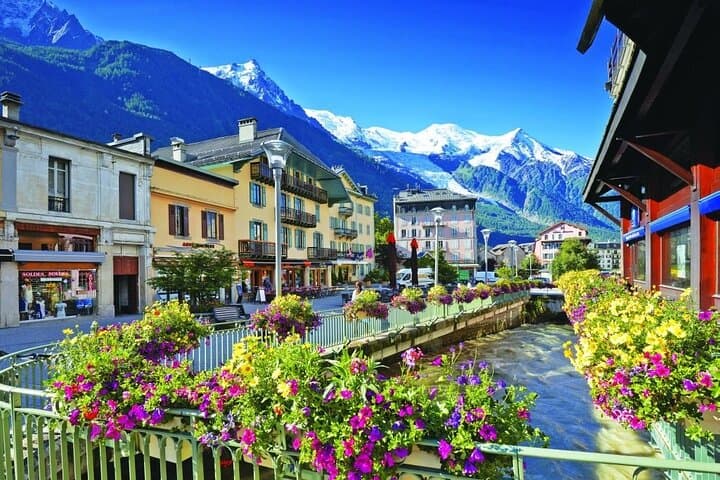
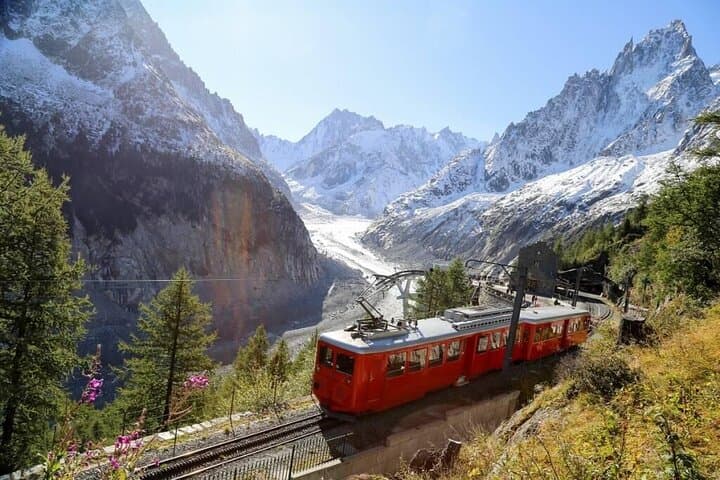
This route sits where geology and human ambition meet. Mont Blanc is an uplifted granite massif sculpted by repeated glaciation; Mer de Glace, France’s largest glacier, has carved the valley below for millennia. Chamonix grew as an alpine service town in the 19th century when mountaineering and early tourism brought guides and hotels. Today the cogwheel train—an early engineering response to steep alpine transit—still climbs to the glacier’s viewing point, where, in season, visitors can enter carved ice caves.
Practical edge: the day is long (8–9 hours) and altitude is real—expect rapid weather changes between village and summit. Bring layered insulation, sturdy footwear for the optional 200-stair descent to the glacier, and a passport for border checks if you begin in Geneva. Lunch is free in Chamonix so plan cash or card; timing is tight if you want the ice cave.
This tour balances spectacle and logistics: fast ascents, short walks at altitude, cultural interludes in a working alpine town, and a classic rail climb to a living glacier—an intense, accessible alpine day trip.
moderate.
8–9 hours.
Moderate fitness; able to stand and walk short distances at altitude and manage a few hundred stairs if doing the glacier option.
Yes — the tour departs from Geneva (Switzerland) and crosses into France, so a valid passport is required.
No — the ice cave is seasonal and weather-dependent; availability is usually in summer months and may be closed if conditions are unsafe.
Walking on the Aiguille du Midi is light (about 20 minutes of walking and standing); the Mer de Glace option includes a hike and roughly 200 steps down to the glacier and back up.
Children can attend, but the tour is not recommended for travelers with serious cardiovascular or respiratory issues due to rapid altitude change.
Chamonix became a hub of alpine tourism in the 19th century as scientists and climbers mapped alpine routes; early cogwheel and cable systems enabled mass access to high terrain.
Glaciers here are receding—follow marked trails, avoid collecting ice samples, and support local guides who practice low-impact tourism.
Niels operates guided outdoor trips and adventures with an emphasis on safety, stewardship, and memorable experiences.
You step off the bus into thin, cold air and the peaks pull into focus—Aiguille du Midi towers at 3,842 m, ice-edged and unapologetic. A cable car climbs you through wind-sketched sky to a narrow terrace where the Alps unfold: Mont Blanc to the south, the Grandes Jorasses and even the Matterhorn breaking the horizon. The summit walk is short but crisp; the wind talks back as you scan serrated ridgelines.
You step off the bus into thin, cold air and the peaks pull into focus—Aiguille du Midi towers at 3,842 m, ice-edged and unapologetic. A cable car climbs you through wind-sketched sky to a narrow terrace where the Alps unfold: Mont Blanc to the south, the Grandes Jorasses and even the Matterhorn breaking the horizon. The summit walk is short but crisp; the wind talks back as you scan serrated ridgelines.
This route sits where geology and human ambition meet. Mont Blanc is an uplifted granite massif sculpted by repeated glaciation; Mer de Glace, France’s largest glacier, has carved the valley below for millennia. Chamonix grew as an alpine service town in the 19th century when mountaineering and early tourism brought guides and hotels. Today the cogwheel train—an early engineering response to steep alpine transit—still climbs to the glacier’s viewing point, where, in season, visitors can enter carved ice caves.
Practical edge: the day is long (8–9 hours) and altitude is real—expect rapid weather changes between village and summit. Bring layered insulation, sturdy footwear for the optional 200-stair descent to the glacier, and a passport for border checks if you begin in Geneva. Lunch is free in Chamonix so plan cash or card; timing is tight if you want the ice cave.
This tour balances spectacle and logistics: fast ascents, short walks at altitude, cultural interludes in a working alpine town, and a classic rail climb to a living glacier—an intense, accessible alpine day trip.