THE ADVENTURE COLLECTIVE® · Independent discovery and booking for outdoor travel

Spend a full day hiking in the Mont‑Blanc massif with a mountain guide who adapts the route to your ability, culminating in a Savoyard picnic with panoramic views. Expect mixed terrain, steady climbs and rich local history on trails that reveal glaciers, alpine meadows and high ridges.
Spend a full day hiking in the Mont‑Blanc massif with a mountain guide who adapts the route to your ability, culminating in a Savoyard picnic with panoramic views. Expect mixed terrain, steady climbs and rich local history on trails that reveal glaciers, alpine meadows and high ridges.
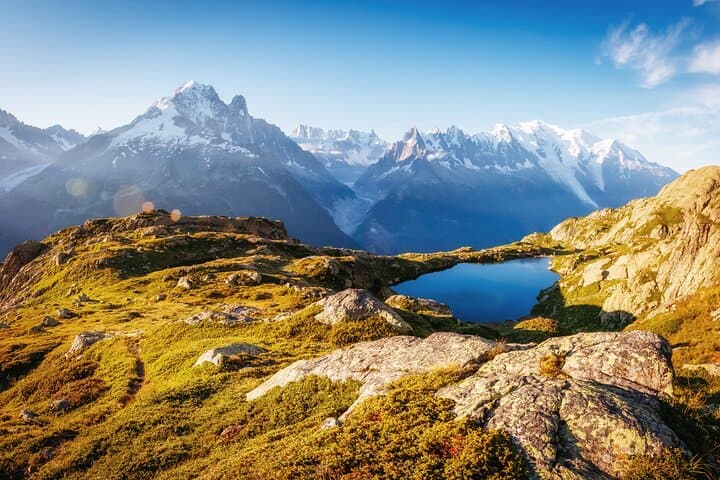
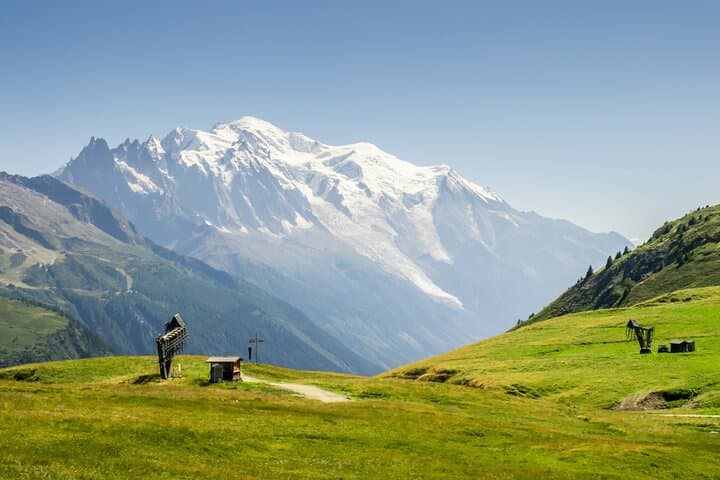
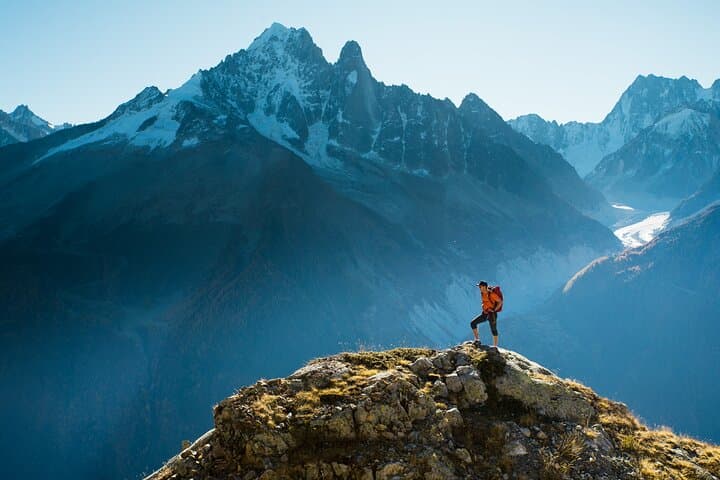
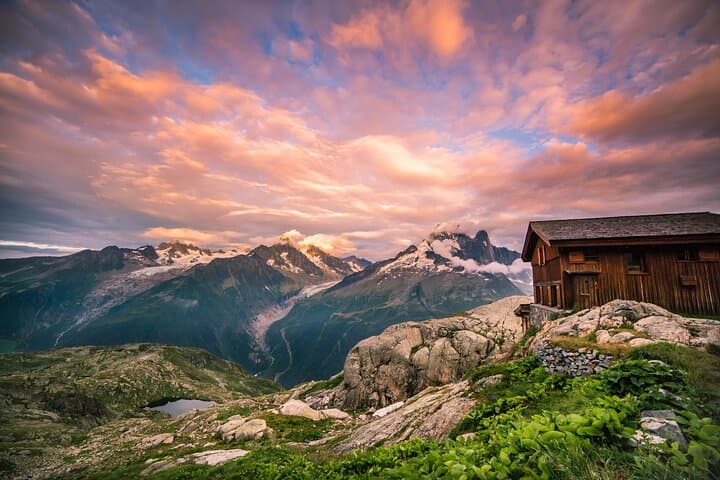
You step out beneath a high blue sky, the Mont‑Blanc massif rising like a white shoulder above the valley; the path ahead is a ribbon of stone and alpine grass, and your guide checks your pace before leading you toward a ridge with sweeping views.
Verified experiences and guided adventures in the surrounding area.
Operated by Agence 1786 · Chamonix, Auvergne-Rhône-Alpes
You step out beneath a high blue sky, the Mont‑Blanc massif rising like a white shoulder above the valley; the path ahead is a ribbon of stone and alpine grass, and your guide checks your pace before leading you toward a ridge with sweeping views.
This is a day of mountain reading — of glaciers, horns and cols — as much as it is a walk. Chamonix’s landscape was shaped by repeated glaciation; moraines and cirques record the slow scraping of ice while Aiguilles and seracs stand as the region’s rough grammar. The valley’s climbing culture dates to the golden age of alpinism in the 19th century, and the guide’s anecdotes about early expeditions and local mountain families put those peaks in human scale.
You’ll pass alpine meadows where marmots whistle and alpine ibex may appear on distant crags; you’ll breathe air scented with pine and cured cheese when the Savoyard picnic is laid out — a practical, delicious reward for steady uphill walking.
Practically: expect 6–8 hours on trail, varied terrain from forest track to rocky switchbacks, and elevation change that can reach 700–1,000 m depending on the route chosen. Wear broken‑in boots, layer for sudden weather swings, and carry at least 2 liters of water. The guide adapts route and pace to group ability, but come prepared for sustained uphill and some uneven footing. Start early for stable weather and the best light on the glaciers, and leave no trace — these slopes are fragile and changing fast.
moderate.
8 hours.
Suitable for hikers with moderate endurance who can sustain 6–8 hours of walking and handle 700–1,000 m of elevation gain if chosen.
A moderate fitness level is required—comfortable walking for 6–8 hours and managing sustained climbs; routes are adapted to the group’s ability.
Meeting location varies by chosen hike but is arranged in Chamonix town or a nearby trailhead—your guide will confirm details before the day.
Yes; guides typically use local produce and can adapt the Savoyard picnic for common dietary restrictions if notified in advance.
Tours are confirmed manually; operators monitor conditions and may offer an alternative route or reschedule—cancel at least 24 hours for a full refund.
Chamonix became a global center for alpinism in the 1800s and hosted the first Winter Olympics in 1924—local guides often pass down stories of early climbs and explorations.
The Mont‑Blanc massif is experiencing glacier retreat and sensitive alpine vegetation; stick to trails, carry out waste and support local guide services that practice low‑impact touring.
Agence 1786 operates guided outdoor trips and adventures with an emphasis on safety, stewardship, and memorable experiences.
You step out beneath a high blue sky, the Mont‑Blanc massif rising like a white shoulder above the valley; the path ahead is a ribbon of stone and alpine grass, and your guide checks your pace before leading you toward a ridge with sweeping views.
You step out beneath a high blue sky, the Mont‑Blanc massif rising like a white shoulder above the valley; the path ahead is a ribbon of stone and alpine grass, and your guide checks your pace before leading you toward a ridge with sweeping views.
This is a day of mountain reading — of glaciers, horns and cols — as much as it is a walk. Chamonix’s landscape was shaped by repeated glaciation; moraines and cirques record the slow scraping of ice while Aiguilles and seracs stand as the region’s rough grammar. The valley’s climbing culture dates to the golden age of alpinism in the 19th century, and the guide’s anecdotes about early expeditions and local mountain families put those peaks in human scale.
You’ll pass alpine meadows where marmots whistle and alpine ibex may appear on distant crags; you’ll breathe air scented with pine and cured cheese when the Savoyard picnic is laid out — a practical, delicious reward for steady uphill walking.
Practically: expect 6–8 hours on trail, varied terrain from forest track to rocky switchbacks, and elevation change that can reach 700–1,000 m depending on the route chosen. Wear broken‑in boots, layer for sudden weather swings, and carry at least 2 liters of water. The guide adapts route and pace to group ability, but come prepared for sustained uphill and some uneven footing. Start early for stable weather and the best light on the glaciers, and leave no trace — these slopes are fragile and changing fast.