THE ADVENTURE COLLECTIVE® · Independent discovery and booking for outdoor travel

Walk across a frozen river through narrow Himalayan gorges on the Chadar Trek, a demanding winter route that links remote Zanskar villages. This guide covers what to expect—terrain, altitude, logistics—and how to prepare for long days on ice.
Walk across a frozen river through narrow Himalayan gorges on the Chadar Trek, a demanding winter route that links remote Zanskar villages. This guide covers what to expect—terrain, altitude, logistics—and how to prepare for long days on ice.
The trail begins under a low gray sky; your boots crunch on sheets of ice and the canyon walls press close, throwing back the hollow sound of every step. Wind drifts across the frozen river like a moving hand, and ahead the Chadar—literally the blanket—stretches in hard, blue-white plates between cliffs.
Verified experiences and guided adventures in the surrounding area.
Operated by E Ladakh Tourism · Leh, Ladakh
The trail begins under a low gray sky; your boots crunch on sheets of ice and the canyon walls press close, throwing back the hollow sound of every step. Wind drifts across the frozen river like a moving hand, and ahead the Chadar—literally the blanket—stretches in hard, blue-white plates between cliffs.
This is winter Zanskar: a high-desert river turned highway when snowfall seals off villages. The route follows the Zanskar River through narrow gorges carved from Himalayan limestone and schist, with ice forming over rapids and waterfalls that freeze into vertical glaciers. For centuries locals used the frozen river to reach remote hamlets; today trekkers follow that same seasonal corridor, camping on ice or in natural caves and visiting tiny settlements such as Nyerak.
Expect long days at altitude (10,000–11,500 ft), often 10–15 km on uneven ice, mixed snow and rock, and overnight tents that buffer the cold. Guides set the pace; local culture is visible in village life and tea shared by stove light. Geology shows as polished rock walls and sudden narrows that funnel wind and snow; glaciers higher in side valleys remind you this corridor is temporary and fragile.
Practical guidance: travel with a vetted operator, acclimatize in Leh first, carry layered insulation, and use crampons or microspikes. Hydrate consistently—cold suppresses thirst—and protect electronics from freezing. Weather can close the route; flexibility and respect for ice conditions are essential. For experienced trekkers seeking a stark, high-altitude winter route, the Chadar is unmatched: raw, demanding, and unforgettable.
difficult.
8–9 days.
Good to excellent cardiovascular fitness and previous multi-day trekking experience at altitude are required; ability to walk 10–15 km on uneven icy terrain per day.
The Chadar is typically accessible January–February when the Zanskar River freezes solid; timing depends on winter snowfall and temperatures.
No technical climbing gear is required, but crampons or microspikes and trekking poles are essential for safe movement on ice.
The route sits around 3,000–3,500 m and requires sustained walking at altitude—acute mountain sickness is possible, so acclimatize and monitor symptoms.
Treks usually camp in insulated tents on ice or use pre-existing cave shelters in some sections; operators provide sleeping bags rated for extreme cold.
The frozen river was a traditional winter route connecting isolated Zanskar settlements; villagers relied on the Chadar when mountain passes were impassable.
The corridor is ecologically sensitive—plastic and human waste are primary concerns, so follow leave-no-trace rules and use operator-managed waste removal.
E Ladakh Tourism operates guided outdoor trips and adventures with an emphasis on safety, stewardship, and memorable experiences.

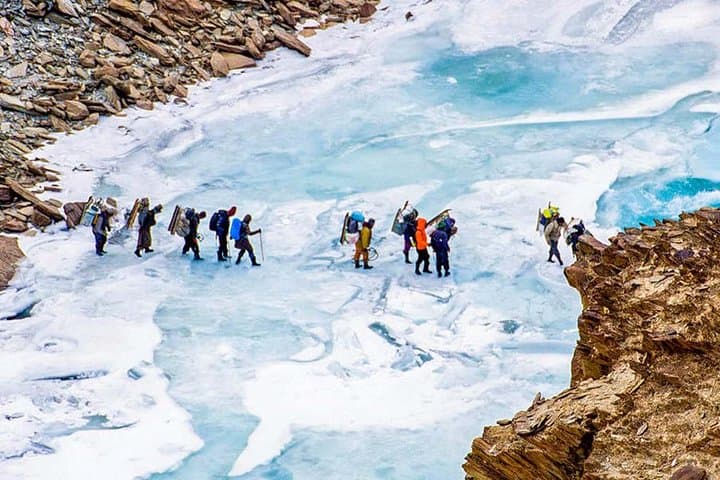
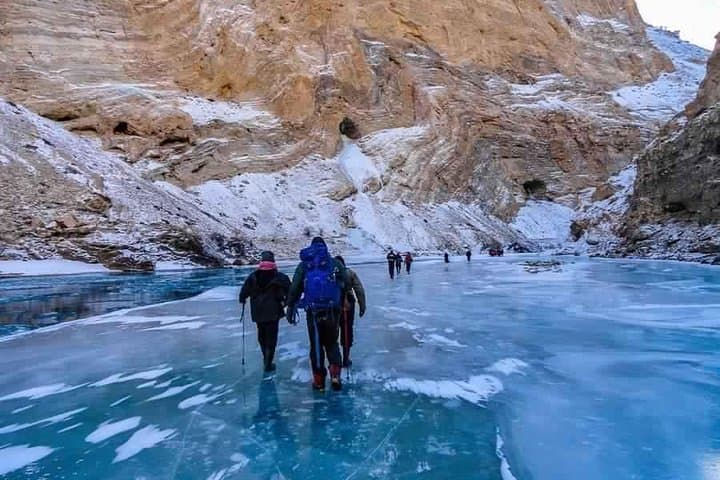
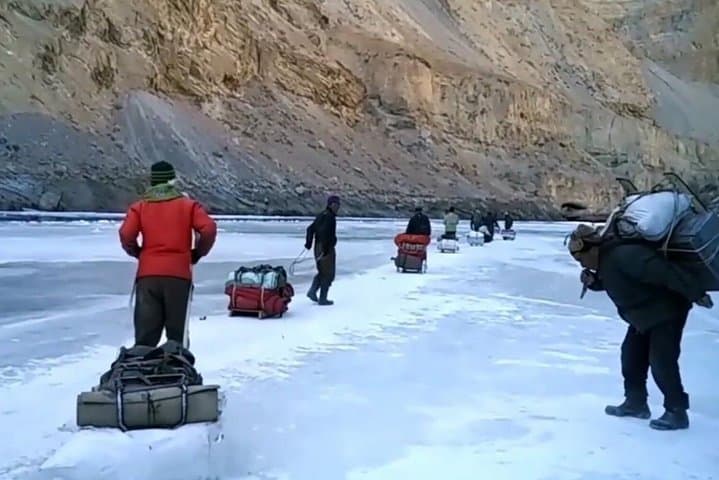
The trail begins under a low gray sky; your boots crunch on sheets of ice and the canyon walls press close, throwing back the hollow sound of every step. Wind drifts across the frozen river like a moving hand, and ahead the Chadar—literally the blanket—stretches in hard, blue-white plates between cliffs.
The trail begins under a low gray sky; your boots crunch on sheets of ice and the canyon walls press close, throwing back the hollow sound of every step. Wind drifts across the frozen river like a moving hand, and ahead the Chadar—literally the blanket—stretches in hard, blue-white plates between cliffs.
This is winter Zanskar: a high-desert river turned highway when snowfall seals off villages. The route follows the Zanskar River through narrow gorges carved from Himalayan limestone and schist, with ice forming over rapids and waterfalls that freeze into vertical glaciers. For centuries locals used the frozen river to reach remote hamlets; today trekkers follow that same seasonal corridor, camping on ice or in natural caves and visiting tiny settlements such as Nyerak.
Expect long days at altitude (10,000–11,500 ft), often 10–15 km on uneven ice, mixed snow and rock, and overnight tents that buffer the cold. Guides set the pace; local culture is visible in village life and tea shared by stove light. Geology shows as polished rock walls and sudden narrows that funnel wind and snow; glaciers higher in side valleys remind you this corridor is temporary and fragile.
Practical guidance: travel with a vetted operator, acclimatize in Leh first, carry layered insulation, and use crampons or microspikes. Hydrate consistently—cold suppresses thirst—and protect electronics from freezing. Weather can close the route; flexibility and respect for ice conditions are essential. For experienced trekkers seeking a stark, high-altitude winter route, the Chadar is unmatched: raw, demanding, and unforgettable.