THE ADVENTURE COLLECTIVE® · Independent discovery and booking for outdoor travel

Walk jungle trails to climb stepped pyramids and spot spider monkeys at Chacchoben, one of the less visited Mayan sites near Costa Maya. This guided four‑hour tour pairs archaeology with wildlife viewing and local plant lore.
Walk jungle trails to climb stepped pyramids and spot spider monkeys at Chacchoben, one of the less visited Mayan sites near Costa Maya. This guided four‑hour tour pairs archaeology with wildlife viewing and local plant lore.
You step off the shuttle into heat that smells of wet earth and crushed leaves. A narrow path pushes through low jungle and suddenly a stone pyramid rises—stained and green-edged—as if the forest is testing who will notice it first. The guide’s voice threads stories between calls of birds and the rustle of monkeys.
Verified experiences and guided adventures in the surrounding area.
Operated by Costa Maya Shore Excursions · Mahahual, Quintana Roo
You step off the shuttle into heat that smells of wet earth and crushed leaves. A narrow path pushes through low jungle and suddenly a stone pyramid rises—stained and green-edged—as if the forest is testing who will notice it first. The guide’s voice threads stories between calls of birds and the rustle of monkeys.
Chacchoben occupies an eastern pocket of the Maya world, with occupation phases beginning around 200 BCE and significant building during the Classic period. Granite and limestone platforms were dressed in stucco; erosion and time have softened edges but the structural logic—central plazas, pyramid-temple alignments—remains visible. The site sits on low coastal plain soils where seasonal rains feed broad-leaf forest that supports spider monkeys and a chorus of tropical birds.
Local guides often weave living culture into the ruins: plant lore, ceremonial uses, and oral legends that survived Spanish contact. The visit gives a compact archaeology lesson—ceremonial centers, noble residences, and stepped pyramids you can climb for canopy views.
Practical guidance: plan for a roughly four-hour excursion from Costa Maya/Port Mahahual with moderate walking on dirt trails and stone steps. Wear sturdy walking shoes, bring sun protection and insect repellent, and carry water (bottled water commonly provided). Mornings are cooler and bird activity peaks; afternoons bring heat and more insects. Stay on marked paths, follow your certified guide, and avoid touching fragile masonry. The experience pairs natural history with archaeology and is well suited to first-time visitors who want a short, interpretive window into Maya life framed by jungle and wildlife.
easy.
4 hours.
Light walking on mostly flat jungle trails with some stairs—suitable for most fitness levels
The tour is approximately four hours total, including transport from the meeting point near the port and a guided site visit of about 90–120 minutes.
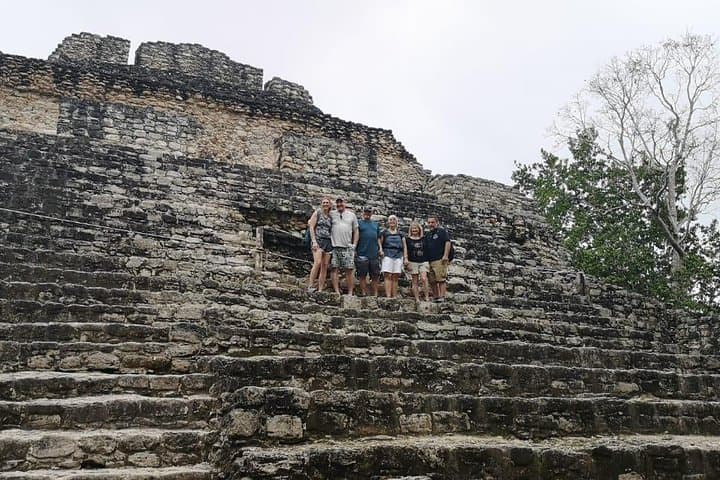
Yes—several stepped structures are open for climbing, but follow your guide and use caution on worn stone steps.
Basic restroom facilities typically exist at the visitor area; bottled water is provided, but full meal options are limited—plan accordingly.
The tour is rated easy and suitable for most ages, though participants with mobility or cardiovascular concerns should consider the stairs and uneven terrain.
Chacchoben was occupied from roughly 200 BCE and expanded through the Classic period; its plazas, temples, and residential compounds reflect a regional Maya center connected to coastal trade.
Site management emphasizes staying on paths and guided visits to limit erosion and damage; visitors help conservation by not climbing restricted areas, avoiding litter, and supporting certified local guides.
Costa Maya Shore Excursions operates guided outdoor trips and adventures with an emphasis on safety, stewardship, and memorable experiences.

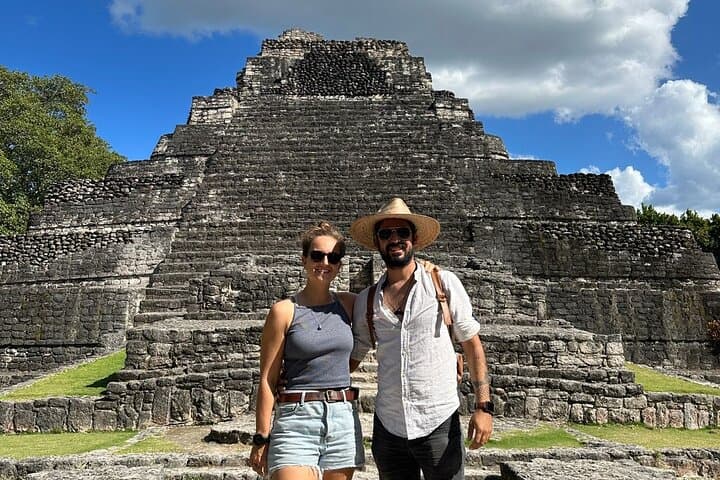
You step off the shuttle into heat that smells of wet earth and crushed leaves. A narrow path pushes through low jungle and suddenly a stone pyramid rises—stained and green-edged—as if the forest is testing who will notice it first. The guide’s voice threads stories between calls of birds and the rustle of monkeys.
You step off the shuttle into heat that smells of wet earth and crushed leaves. A narrow path pushes through low jungle and suddenly a stone pyramid rises—stained and green-edged—as if the forest is testing who will notice it first. The guide’s voice threads stories between calls of birds and the rustle of monkeys.
Chacchoben occupies an eastern pocket of the Maya world, with occupation phases beginning around 200 BCE and significant building during the Classic period. Granite and limestone platforms were dressed in stucco; erosion and time have softened edges but the structural logic—central plazas, pyramid-temple alignments—remains visible. The site sits on low coastal plain soils where seasonal rains feed broad-leaf forest that supports spider monkeys and a chorus of tropical birds.
Local guides often weave living culture into the ruins: plant lore, ceremonial uses, and oral legends that survived Spanish contact. The visit gives a compact archaeology lesson—ceremonial centers, noble residences, and stepped pyramids you can climb for canopy views.
Practical guidance: plan for a roughly four-hour excursion from Costa Maya/Port Mahahual with moderate walking on dirt trails and stone steps. Wear sturdy walking shoes, bring sun protection and insect repellent, and carry water (bottled water commonly provided). Mornings are cooler and bird activity peaks; afternoons bring heat and more insects. Stay on marked paths, follow your certified guide, and avoid touching fragile masonry. The experience pairs natural history with archaeology and is well suited to first-time visitors who want a short, interpretive window into Maya life framed by jungle and wildlife.