THE ADVENTURE COLLECTIVE® · Independent discovery and booking for outdoor travel

A 28-day private tour that threads Sri Lanka’s ancient capitals, rock fortresses and cave temples with cooler tea-country highlands and sunlit southern beaches. Travel by private vehicle and English-speaking chauffeur guide while exploring cultural landmarks and coastal escapes.
A 28-day private tour that threads Sri Lanka’s ancient capitals, rock fortresses and cave temples with cooler tea-country highlands and sunlit southern beaches. Travel by private vehicle and English-speaking chauffeur guide while exploring cultural landmarks and coastal escapes.
You step out of the humid Colombo air into a rented Toyota, the private chauffeur guiding you past coconut palms that lean toward the Indian Ocean like curious neighbors. Over 28 days the island keeps giving: stone stupas whose white domes glow at sunrise, a patina of ancient cities spread over dry plains, a rock fortress rising like a deliberate mistake in a lowland forest, and coastlines that trade the roar of surf for crystalline calm depending on the month.
Verified experiences and guided adventures in the surrounding area.
Operated by Lakpura LLC · Colombo, Western Province
You step out of the humid Colombo air into a rented Toyota, the private chauffeur guiding you past coconut palms that lean toward the Indian Ocean like curious neighbors. Over 28 days the island keeps giving: stone stupas whose white domes glow at sunrise, a patina of ancient cities spread over dry plains, a rock fortress rising like a deliberate mistake in a lowland forest, and coastlines that trade the roar of surf for crystalline calm depending on the month.
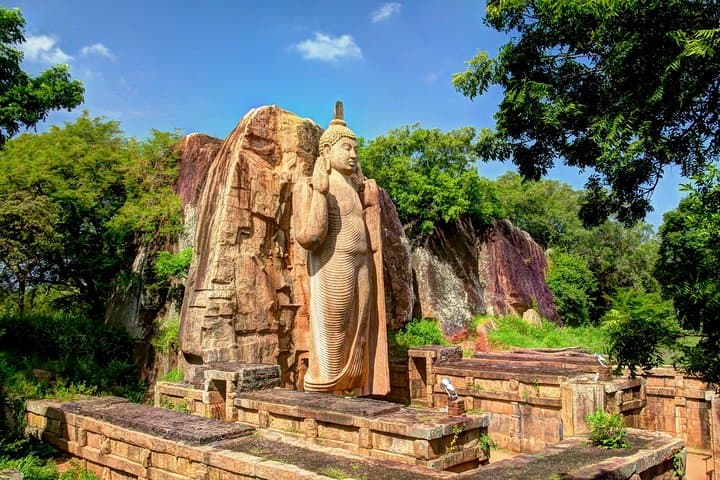
Start in the north-central plains where Anuradhapura’s brick dagobas puncture the horizon—this was Sri Lanka’s first great kingdom, founded in the 4th century BCE and threaded with irrigation tanks that still work today. A short drive southeast takes you to Sigiriya, a slab of metamorphic rock that juts roughly 200 meters above the plain; the carved staircases and mirror-walled galleries recall a 5th-century court intent on theatrical heights. Nearby, the Dambulla caves house five main temples, their low-lit interiors thick with painted Buddha figures and centuries of devotion.
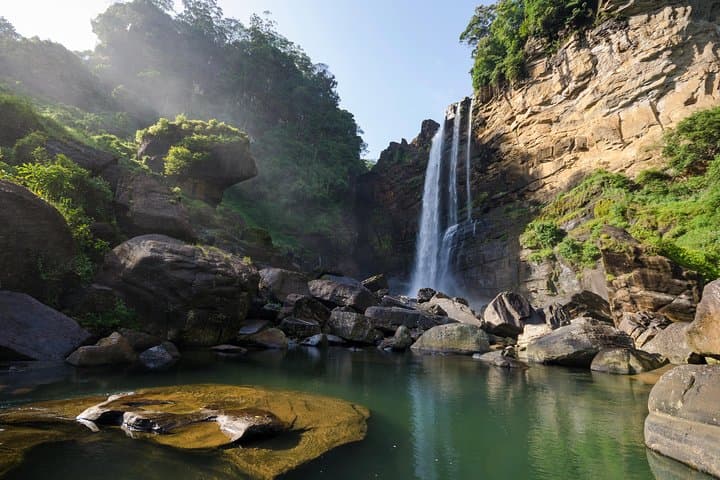
As the route bends south, the island changes: lowland scrub gives way to the cooler central highlands where tea terraces quilt steep slopes and the air can drop a full 10–15°C at night—expect elevation gains of up to 1,800–2,000 m if you include hill towns like Nuwara Eliya. The last week is coastal: golden sand and reef-protected swimming at Hikkaduwa, surf breaks off Arugam Bay or whale-watching off Mirissa when conditions are right.
This is a private, chauffeur-led itinerary—transport, taxes, and an English-speaking guide are included—so the rhythm is yours: early temple runs to avoid heat, slow midday drives, evening walks on quieter beaches. Practicalities matter: temple sites require modest dress and shoe removal; many heritage sites have uneven stone steps and sandy tracks, so sturdy shoes and a measured pace pay dividends. Cash is still king in small towns; ATMs are frequent in major centers but not universal in villages.
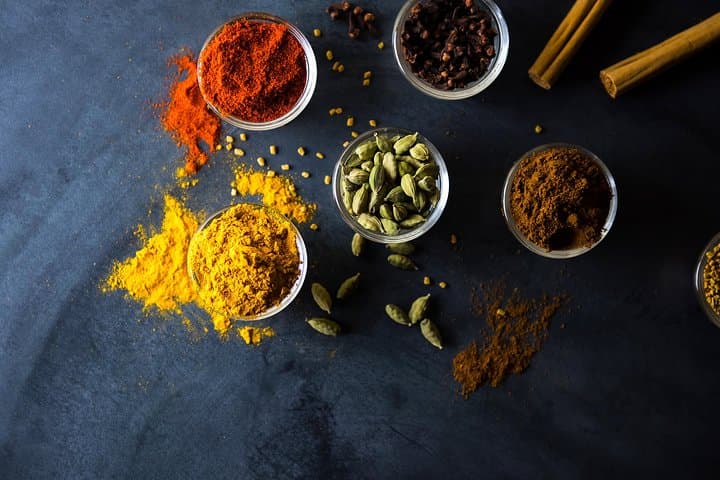
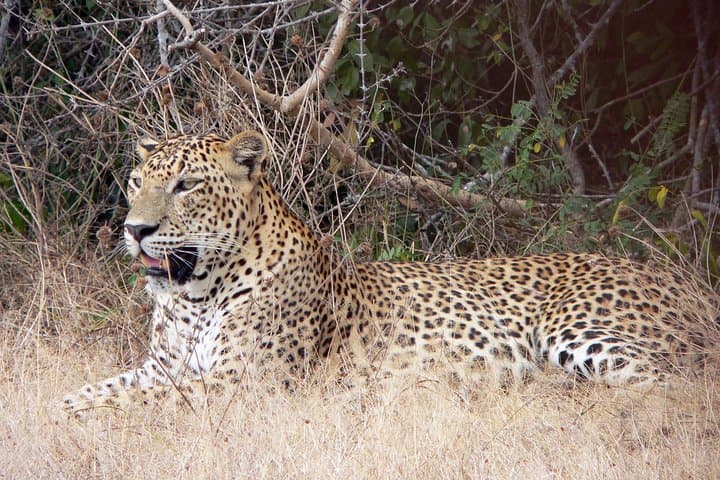
Culture runs close to the surface here. Offerings of jasmine and tabernanthe incense are common, while rice-and-curry dinners—served family-style—offer a lesson in the island’s spice palate. Conservationwise, Sri Lanka balances tourism with fragile habitats: national parks and marine protected areas are well-managed but visitor pressure is real. Choose licensed operators, avoid single-use plastics, and keep respectful distance from wildlife.
For planning: aim for December–March for the west/south coast, or May–September for the east; pack light layers for the highlands, strong sun protection for lowland ruins, and a rain jacket for sudden tropical downpours. This isn’t a sprint—it's a paced affair that rewards curiosity, a private corridor through Sri Lanka’s layered history and shoreline.
moderate.
28 days.
Moderate fitness: comfortable walking for several hours, occasional stair climbs (Sigiriya ~200 m ascent) and uneven surfaces at archaeological sites.
A private vehicle with an English-speaking chauffeur-guide, transport costs (fuel, parking, tolls), and prevailing taxes and service charges are included; accommodations and some activities may be extra depending on booking specifics.
Most travelers require an Electronic Travel Authorization (ETA) obtained online before arrival—check your nationality’s requirements well ahead of travel.
Children can participate, but infants must sit on laps per provider policy; specialized infant seats are available on request—confirm when booking.
Not recommended for travelers with serious spinal, heart or pregnancy-related conditions due to some climbing and uneven terrain; consult the operator and your physician if concerned.
December–March is best for the west and south coasts (Hikkaduwa, Mirissa) and for whale-watching season; eastern beaches are at their best May–September.
Tipping is customary but modest; remove shoes in temples, dress modestly in religious sites, and ask before photographing people in rural communities.
Anuradhapura and Polonnaruwa were early centers of Sinhalese civilisation, with sophisticated irrigation systems and Buddhist monastic complexes dating back over two millennia.
Sri Lanka protects terrestrial and marine reserves, but rising visitor numbers pressure fragile coastal reefs and dry-zone parks—use licensed guides and avoid feeding wildlife.
Lakpura LLC operates guided outdoor trips and adventures with an emphasis on safety, stewardship, and memorable experiences.
You step out of the humid Colombo air into a rented Toyota, the private chauffeur guiding you past coconut palms that lean toward the Indian Ocean like curious neighbors. Over 28 days the island keeps giving: stone stupas whose white domes glow at sunrise, a patina of ancient cities spread over dry plains, a rock fortress rising like a deliberate mistake in a lowland forest, and coastlines that trade the roar of surf for crystalline calm depending on the month.
You step out of the humid Colombo air into a rented Toyota, the private chauffeur guiding you past coconut palms that lean toward the Indian Ocean like curious neighbors. Over 28 days the island keeps giving: stone stupas whose white domes glow at sunrise, a patina of ancient cities spread over dry plains, a rock fortress rising like a deliberate mistake in a lowland forest, and coastlines that trade the roar of surf for crystalline calm depending on the month.
Start in the north-central plains where Anuradhapura’s brick dagobas puncture the horizon—this was Sri Lanka’s first great kingdom, founded in the 4th century BCE and threaded with irrigation tanks that still work today. A short drive southeast takes you to Sigiriya, a slab of metamorphic rock that juts roughly 200 meters above the plain; the carved staircases and mirror-walled galleries recall a 5th-century court intent on theatrical heights. Nearby, the Dambulla caves house five main temples, their low-lit interiors thick with painted Buddha figures and centuries of devotion.
As the route bends south, the island changes: lowland scrub gives way to the cooler central highlands where tea terraces quilt steep slopes and the air can drop a full 10–15°C at night—expect elevation gains of up to 1,800–2,000 m if you include hill towns like Nuwara Eliya. The last week is coastal: golden sand and reef-protected swimming at Hikkaduwa, surf breaks off Arugam Bay or whale-watching off Mirissa when conditions are right.
This is a private, chauffeur-led itinerary—transport, taxes, and an English-speaking guide are included—so the rhythm is yours: early temple runs to avoid heat, slow midday drives, evening walks on quieter beaches. Practicalities matter: temple sites require modest dress and shoe removal; many heritage sites have uneven stone steps and sandy tracks, so sturdy shoes and a measured pace pay dividends. Cash is still king in small towns; ATMs are frequent in major centers but not universal in villages.
Culture runs close to the surface here. Offerings of jasmine and tabernanthe incense are common, while rice-and-curry dinners—served family-style—offer a lesson in the island’s spice palate. Conservationwise, Sri Lanka balances tourism with fragile habitats: national parks and marine protected areas are well-managed but visitor pressure is real. Choose licensed operators, avoid single-use plastics, and keep respectful distance from wildlife.
For planning: aim for December–March for the west/south coast, or May–September for the east; pack light layers for the highlands, strong sun protection for lowland ruins, and a rain jacket for sudden tropical downpours. This isn’t a sprint—it's a paced affair that rewards curiosity, a private corridor through Sri Lanka’s layered history and shoreline.