THE ADVENTURE COLLECTIVE® · Independent discovery and booking for outdoor travel

Climb Nicaragua’s most active volcano and surf down its black sand on a private sandboarding trip from León. Expect a steep, sandy hike up, a wind-exposed crater rim with volcanic views, and a thrilling short descent back to the base.
Climb Nicaragua’s most active volcano and surf down its black sand on a private sandboarding trip from León. Expect a steep, sandy hike up, a wind-exposed crater rim with volcanic views, and a thrilling short descent back to the base.
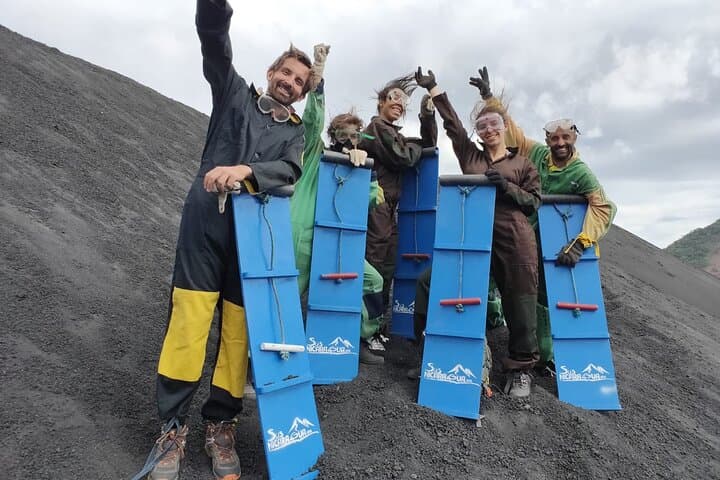
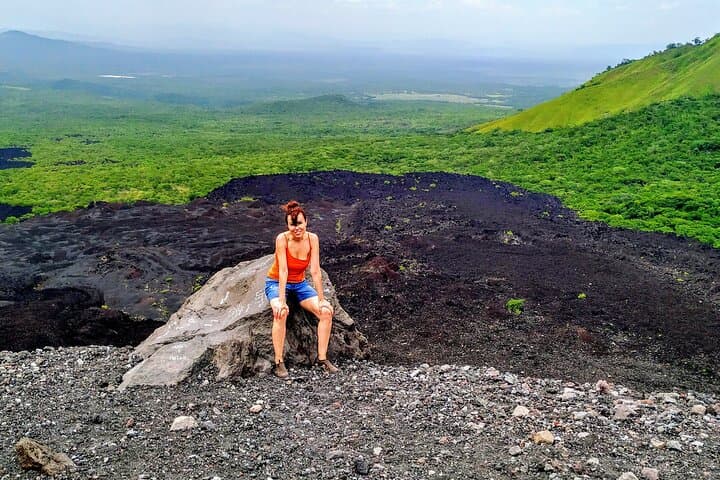
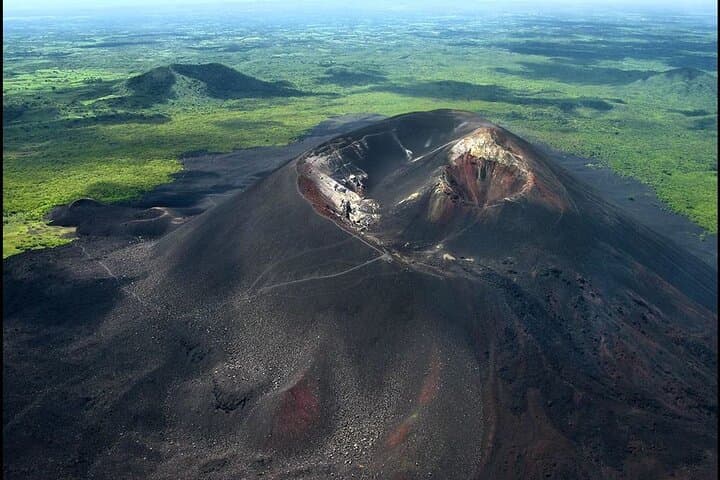
The hike begins on black grit under a high, open sky — boots bite into loose scoria as the slope gains and León’s lowlands pull away beneath you. Wind finds the crater rim and the air tastes faintly of sulfur; from the summit the Pilas–El Hoyo complex and the smoking cone of Telica frame a view that explains why people come to Cerro Negro: to climb a living volcano and then ride its face back to the base.
Verified experiences and guided adventures in the surrounding area.
Operated by Sos Nicaragua Travel · León, León Department
The hike begins on black grit under a high, open sky — boots bite into loose scoria as the slope gains and León’s lowlands pull away beneath you. Wind finds the crater rim and the air tastes faintly of sulfur; from the summit the Pilas–El Hoyo complex and the smoking cone of Telica frame a view that explains why people come to Cerro Negro: to climb a living volcano and then ride its face back to the base.
Cerro Negro is Nicaragua’s youngest and most active volcanic cone, formed of dark volcanic ash and fragmented lava that erodes into fine, fast sand. The route follows a rough path of loose rock and sand used for local sandboarding operations; local guide knowledge and community-run services are part of the visit, and small stalls sometimes sell refreshments near trailheads. Geologically, the crater’s heat, fumaroles and recent lava flows are reminders this is an active system — visitors are warned to stay on established tracks.
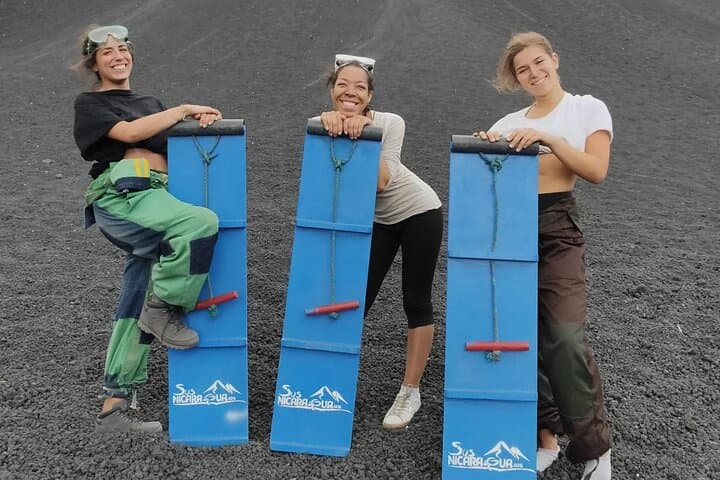
Practically, expect roughly 1–1.5 hours to ascend at a steady pace and under 10 minutes for the sandboard descent, though speeds can vary widely. Bring sun protection, carry water, and use gloves to control the board; knees and lower back absorb the landing. Tours typically include transport from León, a board and protective gear, and a bilingual guide. Avoid the volcano during heavy rain: the slope becomes unstable. For photographers, sunrise or late afternoon light gives contrast to the black sand and plume-lit sky. Respect local guides, keep to the trail, and don’t remove volcanic rock — Cerro Negro’s black slope is the reason you’re here.
moderate.
4–5 hours.
Moderate fitness: able to sustain a steady uphill on loose volcanic sand for ~1–1.5 hours and manage short fast descents.
Expect roughly 1 to 1.5 hours each way depending on pace and fitness; the climb is steep on loose volcanic material.
Yes — basic instruction and protective gear are provided, but riders should be comfortable with speed and potential falls.
Most tours include private transport from León, a guide, sandboard and basic protective gear; confirm exact inclusions with your operator.
Not recommended for pregnant travelers or those with serious back, neck, or heart conditions; disclose medical issues when booking.
Cerro Negro is the youngest cone in the León volcanic field and one of Nicaragua’s most active volcanoes, with frequent eruptions since its 19th-century formation.
Stay on established trails, avoid collecting volcanic rock, and follow guides’ instructions to minimize erosion and disturbance to local vegetation.
Sos Nicaragua Travel operates guided outdoor trips and adventures with an emphasis on safety, stewardship, and memorable experiences.
The hike begins on black grit under a high, open sky — boots bite into loose scoria as the slope gains and León’s lowlands pull away beneath you. Wind finds the crater rim and the air tastes faintly of sulfur; from the summit the Pilas–El Hoyo complex and the smoking cone of Telica frame a view that explains why people come to Cerro Negro: to climb a living volcano and then ride its face back to the base.
The hike begins on black grit under a high, open sky — boots bite into loose scoria as the slope gains and León’s lowlands pull away beneath you. Wind finds the crater rim and the air tastes faintly of sulfur; from the summit the Pilas–El Hoyo complex and the smoking cone of Telica frame a view that explains why people come to Cerro Negro: to climb a living volcano and then ride its face back to the base.
Cerro Negro is Nicaragua’s youngest and most active volcanic cone, formed of dark volcanic ash and fragmented lava that erodes into fine, fast sand. The route follows a rough path of loose rock and sand used for local sandboarding operations; local guide knowledge and community-run services are part of the visit, and small stalls sometimes sell refreshments near trailheads. Geologically, the crater’s heat, fumaroles and recent lava flows are reminders this is an active system — visitors are warned to stay on established tracks.
Practically, expect roughly 1–1.5 hours to ascend at a steady pace and under 10 minutes for the sandboard descent, though speeds can vary widely. Bring sun protection, carry water, and use gloves to control the board; knees and lower back absorb the landing. Tours typically include transport from León, a board and protective gear, and a bilingual guide. Avoid the volcano during heavy rain: the slope becomes unstable. For photographers, sunrise or late afternoon light gives contrast to the black sand and plume-lit sky. Respect local guides, keep to the trail, and don’t remove volcanic rock — Cerro Negro’s black slope is the reason you’re here.