THE ADVENTURE COLLECTIVE® · Independent discovery and booking for outdoor travel

Climb Monterrey’s emblematic peak on a guided hike that mixes steep granite ridges with wide city panoramas. This full-day route offers hands-on local knowledge, biodiversity insights, and practical route choices for varied hikers.
Climb Monterrey’s emblematic peak on a guided hike that mixes steep granite ridges with wide city panoramas. This full-day route offers hands-on local knowledge, biodiversity insights, and practical route choices for varied hikers.
Thin air and city grid meet on the final ridge of Cerro de la Silla, where granite knobs push skyward and the skyline of Monterrey unfurls below like a map. The trail climbs through scrub oak and cactus, then narrows into rock steps that test footing and resolve—each breath earned is repaid with broader panoramas.
Verified experiences and guided adventures in the surrounding area.
Thin air and city grid meet on the final ridge of Cerro de la Silla, where granite knobs push skyward and the skyline of Monterrey unfurls below like a map. The trail climbs through scrub oak and cactus, then narrows into rock steps that test footing and resolve—each breath earned is repaid with broader panoramas.
The mountain’s distinctive saddle silhouette gave it its name and long-standing place in Nuevo León identity. Geologically it’s a product of igneous intrusions and erosion—steep, fractured rock faces with shallow soils that support drought-tolerant flora. Locals have used its slopes for decades for exercise and ceremony; the area became an officially protected natural park in the late 20th century to preserve views and biodiversity.
Culturally, the peak is a common weekend ritual: groups gather at dawn, vendors sell aguas frescas at trailheads, and guides point out city neighborhoods, industrial corridors, and distant Cerro de la Silla ridgelines that shape Monterrey’s horizon.
Practical guidance: start early to avoid midday heat and late-afternoon storms. Expect steep ascents, exposed ridgelines, and sections of loose scree—good boots and steady knees matter. Hydration and salt replacement are essential; there are no services above the trailhead. A guided tour typically lasts most of the day and includes paced breaks and local knowledge about route choices and emergency exits. Respect closure signs—vegetation and soils recover slowly here. Reach the highest viewpoints for uninterrupted city panoramas and, on clear days, a wide sweep of the Sierra Madre Oriental.
challenging.
6–8 hours.
Good aerobic fitness and experience with sustained uphill hiking; able to handle steep, uneven terrain and occasional scrambling.
The route is classified as challenging due to sustained steep sections, loose rock, and exposed ridgelines; guided tours pace the group and provide route knowledge.
No general permit is required for day hiking, but follow posted park rules and any guided-tour regulations set by operators.
Early morning in spring or fall offers the best balance of cool temperatures and clear views; avoid peak midday heat in summer and late afternoons when storms build.
Older children with hiking experience and good fitness can join; younger kids may struggle on steep, exposed sections—ask the guide about route alternatives.
The saddle-shaped peak has been a Monterrey landmark for centuries and was set aside as a protected area in the late 20th century to conserve its natural and cultural values.
Soils are thin and trails erode quickly; stick to marked paths, pack out waste, and minimize group size to reduce impact.
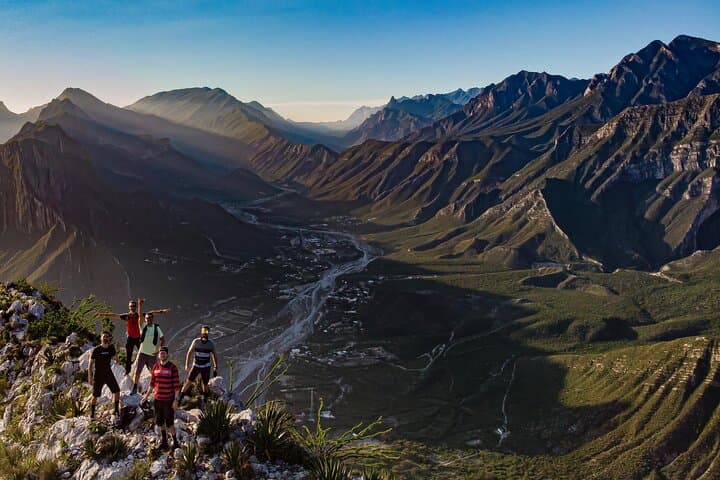
Thin air and city grid meet on the final ridge of Cerro de la Silla, where granite knobs push skyward and the skyline of Monterrey unfurls below like a map. The trail climbs through scrub oak and cactus, then narrows into rock steps that test footing and resolve—each breath earned is repaid with broader panoramas.
Thin air and city grid meet on the final ridge of Cerro de la Silla, where granite knobs push skyward and the skyline of Monterrey unfurls below like a map. The trail climbs through scrub oak and cactus, then narrows into rock steps that test footing and resolve—each breath earned is repaid with broader panoramas.
The mountain’s distinctive saddle silhouette gave it its name and long-standing place in Nuevo León identity. Geologically it’s a product of igneous intrusions and erosion—steep, fractured rock faces with shallow soils that support drought-tolerant flora. Locals have used its slopes for decades for exercise and ceremony; the area became an officially protected natural park in the late 20th century to preserve views and biodiversity.
Culturally, the peak is a common weekend ritual: groups gather at dawn, vendors sell aguas frescas at trailheads, and guides point out city neighborhoods, industrial corridors, and distant Cerro de la Silla ridgelines that shape Monterrey’s horizon.
Practical guidance: start early to avoid midday heat and late-afternoon storms. Expect steep ascents, exposed ridgelines, and sections of loose scree—good boots and steady knees matter. Hydration and salt replacement are essential; there are no services above the trailhead. A guided tour typically lasts most of the day and includes paced breaks and local knowledge about route choices and emergency exits. Respect closure signs—vegetation and soils recover slowly here. Reach the highest viewpoints for uninterrupted city panoramas and, on clear days, a wide sweep of the Sierra Madre Oriental.