THE ADVENTURE COLLECTIVE® · Independent discovery and booking for outdoor travel

Leave the city behind for a short climb up Cerro Ancón to raw rainforest, canal views, and possible sloth or monkey sightings. This 2–3 hour guided walk mixes natural history, vantage points of the Panama Canal, and accessible urban hiking.
Leave the city behind for a short climb up Cerro Ancón to raw rainforest, canal views, and possible sloth or monkey sightings. This 2–3 hour guided walk mixes natural history, vantage points of the Panama Canal, and accessible urban hiking.
You step off the shaded lane and the city noise thins—trees lean in as if to show you the way. The trail climbs through a compact urban rainforest; palms and fig trees close ranks while birdsong threads through the air. At breaks in the canopy the city and the blue arc of the Pacific appear below, the Panama Canal glinting like a ribbon carving the landscape.
Verified experiences and guided adventures in the surrounding area.
Operated by Cositas De Panamá · Panama City, Panama Province
You step off the shaded lane and the city noise thins—trees lean in as if to show you the way. The trail climbs through a compact urban rainforest; palms and fig trees close ranks while birdsong threads through the air. At breaks in the canopy the city and the blue arc of the Pacific appear below, the Panama Canal glinting like a ribbon carving the landscape.
Cerro Ancón rises roughly 199 meters above sea level and served as a vantage point throughout Panama’s canal era. Once part of the Canal Zone landscape, the hill now functions as a municipal green space and a living remnant of the isthmus’s tropical ecology. Geologically it’s a modest outcrop of hill country that resisted urban sprawl, its soils supporting mature secondary forest and a surprising diversity of birds and mammals.
Culturally, Ancón is braided with canal history—monuments and the Goethals viewpoint punctuate the walk, offering context about engineering and geopolitics as much as scenery. Locals use the paths for morning exercise and quiet afternoons; patience here often rewards you with sloth sightings or curious monkeys.
Practical guidance: plan 2–3 hours for a relaxed round trip with stops. Expect about 150–250 m of elevation gain on uneven dirt and occasional stone steps—sturdy walking shoes are recommended. Bring sun protection and insect repellent, and go early in the day for cooler temps and the best wildlife activity. Stay on marked trails, keep a respectful distance from wildlife, and carry water—the route is short but exposure and humidity add effort. The payoff is straightforward: wide panorama, close wildlife encounters, and a quick escape from the city’s bustle.
moderate.
2–3 hours.
Suitable for most people with moderate fitness; requires ability to manage short steep sections and uneven footing.
The guided experience typically takes 2–3 hours round trip, including stops at viewpoints and historical markers.
Yes—most sections are manageable for children and active seniors, though a moderate fitness level is recommended and infants should be in carriers or strollers where paths permit.
Cerro Ancón is a municipal green space; guided tours may include private transport or guide fees but there is no general park entrance fee.
Wildlife sightings are common—sloths, capuchin monkeys and many bird species—but sightings depend on time of day, season and luck; mornings are best.
Cerro Ancón served as a strategic high point during the Canal Zone era and is linked to the social and engineering history of the Panama Canal.
Managed as a municipal nature area, Cerro Ancón faces pressure from urban expansion—stick to trails, pack out waste, and avoid feeding wildlife to reduce human impact.
Cositas De Panamá operates guided outdoor trips and adventures with an emphasis on safety, stewardship, and memorable experiences.

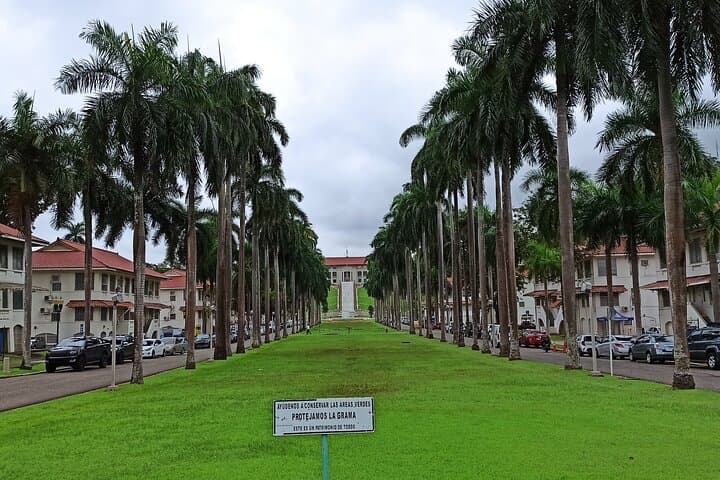


You step off the shaded lane and the city noise thins—trees lean in as if to show you the way. The trail climbs through a compact urban rainforest; palms and fig trees close ranks while birdsong threads through the air. At breaks in the canopy the city and the blue arc of the Pacific appear below, the Panama Canal glinting like a ribbon carving the landscape.
You step off the shaded lane and the city noise thins—trees lean in as if to show you the way. The trail climbs through a compact urban rainforest; palms and fig trees close ranks while birdsong threads through the air. At breaks in the canopy the city and the blue arc of the Pacific appear below, the Panama Canal glinting like a ribbon carving the landscape.
Cerro Ancón rises roughly 199 meters above sea level and served as a vantage point throughout Panama’s canal era. Once part of the Canal Zone landscape, the hill now functions as a municipal green space and a living remnant of the isthmus’s tropical ecology. Geologically it’s a modest outcrop of hill country that resisted urban sprawl, its soils supporting mature secondary forest and a surprising diversity of birds and mammals.
Culturally, Ancón is braided with canal history—monuments and the Goethals viewpoint punctuate the walk, offering context about engineering and geopolitics as much as scenery. Locals use the paths for morning exercise and quiet afternoons; patience here often rewards you with sloth sightings or curious monkeys.
Practical guidance: plan 2–3 hours for a relaxed round trip with stops. Expect about 150–250 m of elevation gain on uneven dirt and occasional stone steps—sturdy walking shoes are recommended. Bring sun protection and insect repellent, and go early in the day for cooler temps and the best wildlife activity. Stay on marked trails, keep a respectful distance from wildlife, and carry water—the route is short but exposure and humidity add effort. The payoff is straightforward: wide panorama, close wildlife encounters, and a quick escape from the city’s bustle.