THE ADVENTURE COLLECTIVE® · Independent discovery and booking for outdoor travel

A guided 5 km boardwalk walk across Cenu Purvs (Cena Bog) — Latvia’s protected moorland — offers quiet views, peatland ecology, and a central viewing tower. This short excursion is best reached by private transfer from Riga and rewards visitors with close-up bog habitats and birding.
A guided 5 km boardwalk walk across Cenu Purvs (Cena Bog) — Latvia’s protected moorland — offers quiet views, peatland ecology, and a central viewing tower. This short excursion is best reached by private transfer from Riga and rewards visitors with close-up bog habitats and birding.
You step from the minivan onto a raised wooden spine that threads the moor; mist sits low, and the peat smells faintly of earth and resin. The boardwalk at Cenu Purvs keeps you inches above a landscape that moves at its own slow pace — hummocked mosses that hold rain like memory, open pools that mirror the sky, and a viewing tower that lifts the scene into a wide, austere panorama.
Verified experiences and guided adventures in the surrounding area.
Operated by Armands Latvia Guide · Riga, Riga Municipality
You step from the minivan onto a raised wooden spine that threads the moor; mist sits low, and the peat smells faintly of earth and resin. The boardwalk at Cenu Purvs keeps you inches above a landscape that moves at its own slow pace — hummocked mosses that hold rain like memory, open pools that mirror the sky, and a viewing tower that lifts the scene into a wide, austere panorama.
Cenu Bog (Cenas tīrelis) is Latvia’s second-largest bog and part of the Natura 2000 network. It formed after the last Ice Age, when retreating glaciers left depressions that slowly filled with peat and water. Human use has ranged from limited peat cutting centuries ago to modern conservation; today the reserve protects specialized bog flora and nesting birds while offering a 5 km interpretive trail.
Expect a steady, accessible 5 km loop on raised boardwalks with a central observation platform. A guided walk includes natural-history narration: peat formation, bog-adapted plants like cloudberry and cotton grass, and the area's role in regional conservation. The trail is quiet because public transport is limited — access by private transfer or drive is common.
Practical tips: wear waterproof footwear and a windproof shell; boardwalks can be slick and sections are exposed to wind. Bring binoculars for raptors and waterbirds, and time your visit for morning or late afternoon light for better bird activity and photography. Seasonal conditions matter — spring melt and autumn rains can make approaches muddier; winter offers stark, frozen geometry but requires traction.
A guided Cenu Bog walk is compact, educational, and quietly elemental — ideal for hikers who want a close, low-impact encounter with northern peatland ecology without the crowds.
moderate.
3–4 hours.
Moderate fitness for a 5 km walk with occasional uneven footing and outdoor exposure
The interpretive boardwalk loop is about 5 km and is generally moderate — mostly flat but exposed, with some uneven sections and stairs up the tower.
Public transport access is limited; most visitors arrive via the private transfer included with guided tours or by car.
Dogs may be subject to reserve rules and can disturb breeding birds; check with the guide or reserve regulations before bringing pets.
You can expect waterbirds and passerines; raptors and waders are seasonal, and bog-specialist plants are abundant for close observation.
The bog developed after the last glaciation and was historically used for small-scale peat cutting; it is now protected as part of Latvia’s Natura 2000 network.
Cenas tīrelis is managed to protect peatland habitats and bird nesting areas; stay on boardwalks to prevent vegetation damage and peat erosion.
Armands Latvia Guide operates guided outdoor trips and adventures with an emphasis on safety, stewardship, and memorable experiences.
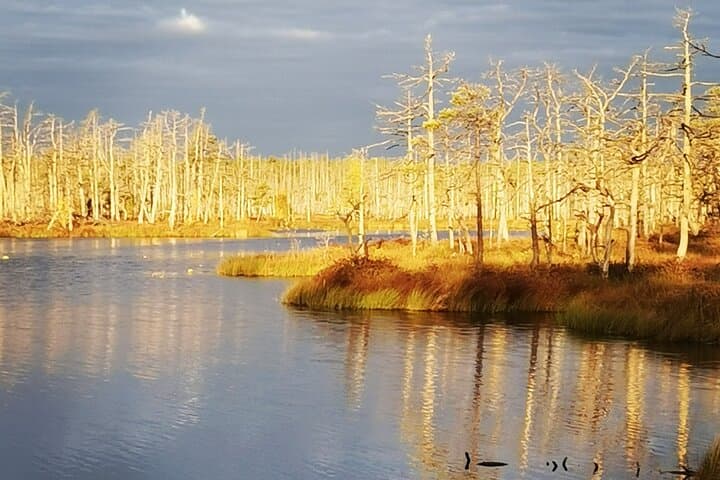
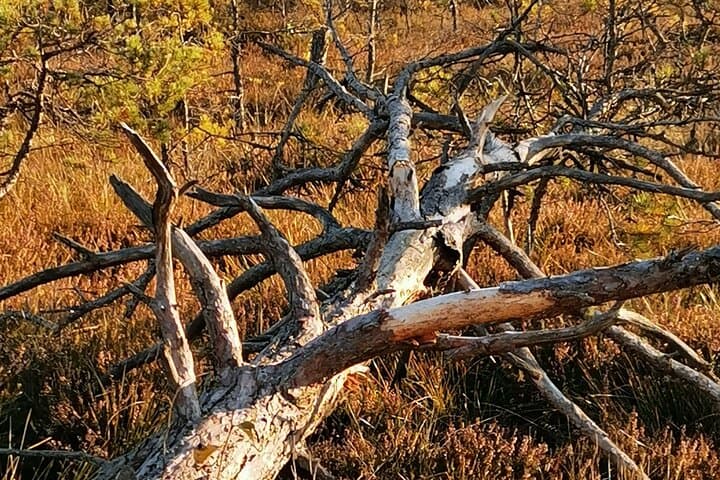
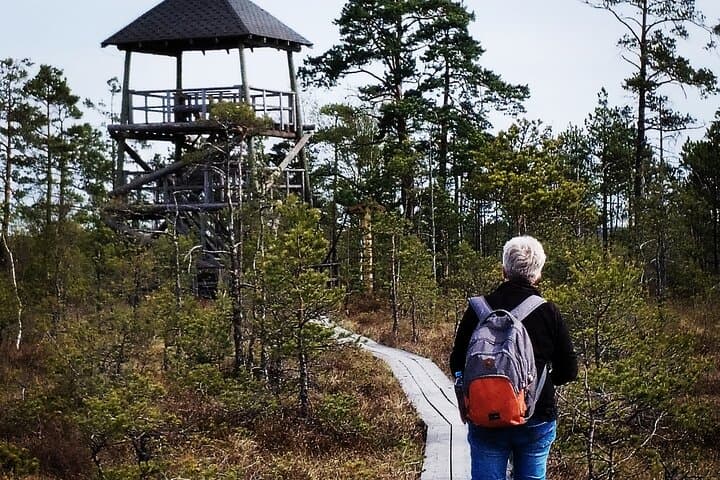
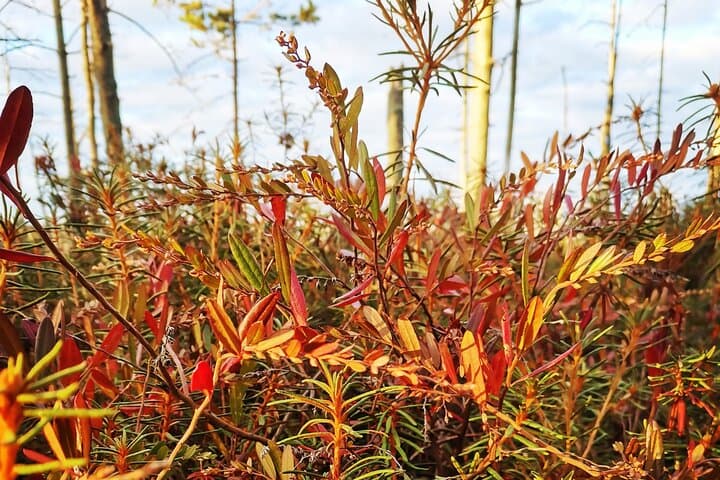
You step from the minivan onto a raised wooden spine that threads the moor; mist sits low, and the peat smells faintly of earth and resin. The boardwalk at Cenu Purvs keeps you inches above a landscape that moves at its own slow pace — hummocked mosses that hold rain like memory, open pools that mirror the sky, and a viewing tower that lifts the scene into a wide, austere panorama.
You step from the minivan onto a raised wooden spine that threads the moor; mist sits low, and the peat smells faintly of earth and resin. The boardwalk at Cenu Purvs keeps you inches above a landscape that moves at its own slow pace — hummocked mosses that hold rain like memory, open pools that mirror the sky, and a viewing tower that lifts the scene into a wide, austere panorama.
Cenu Bog (Cenas tīrelis) is Latvia’s second-largest bog and part of the Natura 2000 network. It formed after the last Ice Age, when retreating glaciers left depressions that slowly filled with peat and water. Human use has ranged from limited peat cutting centuries ago to modern conservation; today the reserve protects specialized bog flora and nesting birds while offering a 5 km interpretive trail.
Expect a steady, accessible 5 km loop on raised boardwalks with a central observation platform. A guided walk includes natural-history narration: peat formation, bog-adapted plants like cloudberry and cotton grass, and the area's role in regional conservation. The trail is quiet because public transport is limited — access by private transfer or drive is common.
Practical tips: wear waterproof footwear and a windproof shell; boardwalks can be slick and sections are exposed to wind. Bring binoculars for raptors and waterbirds, and time your visit for morning or late afternoon light for better bird activity and photography. Seasonal conditions matter — spring melt and autumn rains can make approaches muddier; winter offers stark, frozen geometry but requires traction.
A guided Cenu Bog walk is compact, educational, and quietly elemental — ideal for hikers who want a close, low-impact encounter with northern peatland ecology without the crowds.