THE ADVENTURE COLLECTIVE® · Independent discovery and booking for outdoor travel

Explore Central Park by electric scooter on a guided two-hour route that mixes landmark looks with quieter corners. Perfect for first-time visitors and locals who want a fast, fun way to cover lots of ground.
Explore Central Park by electric scooter on a guided two-hour route that mixes landmark looks with quieter corners. Perfect for first-time visitors and locals who want a fast, fun way to cover lots of ground.
The first glide into Central Park on an electric scooter feels like cutting a straight line through a living map: tree-canopied drives opening to water, a sudden view of the Manhattan skyline, and the steady rhythm of other riders and joggers sharing the lanes.
Verified experiences and guided adventures in the surrounding area.
Operated by Bike Rent NYC · New York, New York
The first glide into Central Park on an electric scooter feels like cutting a straight line through a living map: tree-canopied drives opening to water, a sudden view of the Manhattan skyline, and the steady rhythm of other riders and joggers sharing the lanes.
This two-hour guided loop covers famous landmarks — Bethesda Terrace, The Mall, and the Reservoir — while the guide threads in lesser-known corners and practical city lore. Central Park is a mid-19th century urban design by Frederick Law Olmsted and Calvert Vaux built over Manhattan’s bedrock and glacial deposits; the park’s rolling hills and ponds were shaped intentionally to feel natural while solving real engineering problems of drainage and sightlines.
Culturally, the park is both refuge and stage: performers, weekend sports, and museum-goers spill into its paths, especially near Museum Mile. Geologically the park sits on Manhattan schist with exposed rock outcrops; those granite faces make for sudden rises and panoramic perches.
Practical guidance: helmets are provided and should stay on. Expect mixed-use paths with pedestrians and cyclists — yield, announce passes, and keep moderate speeds. Battery life is ample for the 2-hour route but charge your phone and bring a portable battery if you plan extra exploring. Wear comfortable shoes for brief walk-and-ride stops and layer for wind along open stretches.
Timing matters: early morning or late afternoon light reduces crowds and gives better photos. The guide’s local tips often include off-route coffee or dessert stops if you want to extend the outing into a full city afternoon.
easy.
2 hours.
Suitable for most fitness levels; ability to stand and balance on a scooter for short periods required.
No—guides provide a short orientation and the tour is rated easy; basic balance and the ability to follow instructions are enough.
Yes, helmets are included in the tour price and their use is strongly recommended.
Yes, small backpacks are fine, but keep weight light and secure items to avoid affecting balance.
The tour provider may cancel if conditions are unsafe; check their cancellation policy and rebooking options before booking.
Central Park was designed by Olmsted and Vaux in the 1850s as one of the first major planned public parks in the United States, reshaping Manhattan’s natural contours into parkland.
High visitor numbers mean sticking to paved paths and not feeding wildlife helps protect habitats; follow park rules and pack out trash.
Bike Rent NYC operates guided outdoor trips and adventures with an emphasis on safety, stewardship, and memorable experiences.
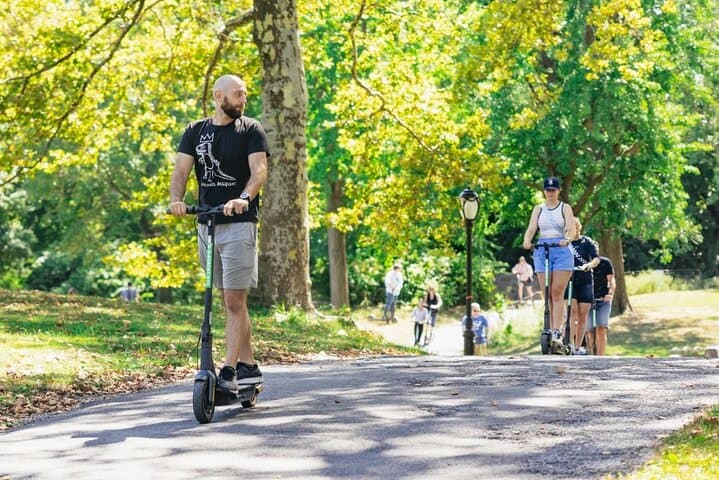
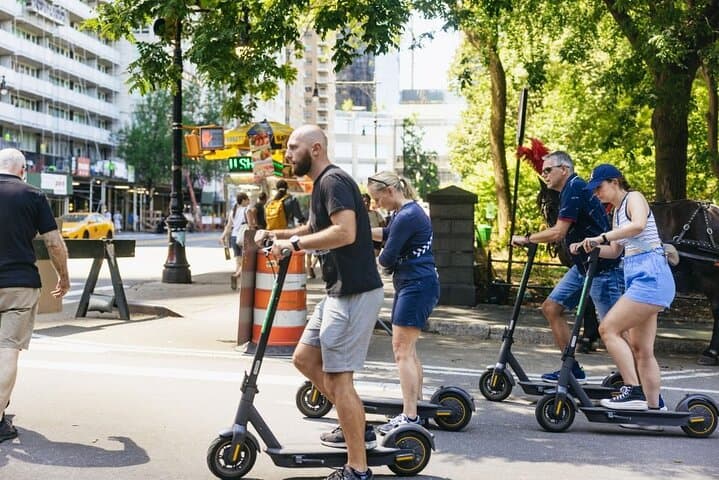
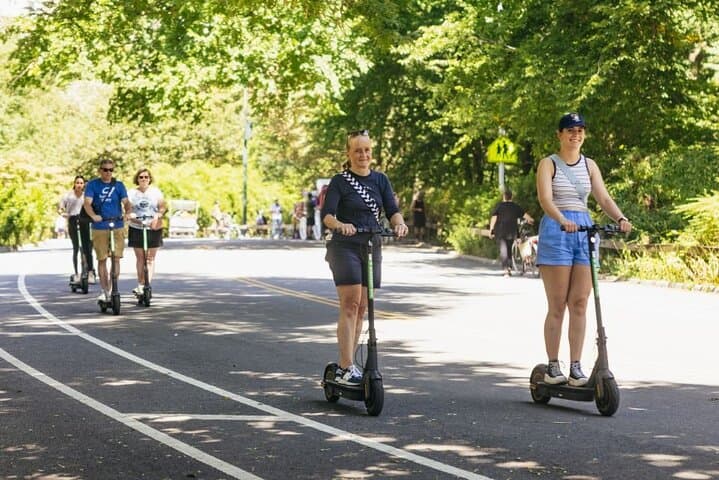
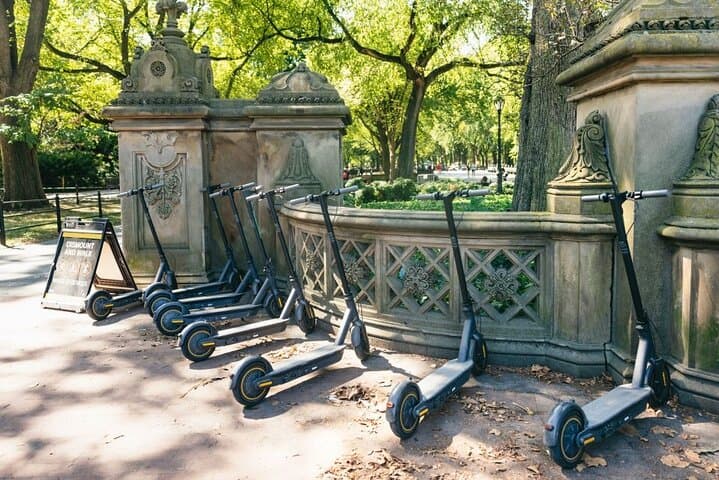
The first glide into Central Park on an electric scooter feels like cutting a straight line through a living map: tree-canopied drives opening to water, a sudden view of the Manhattan skyline, and the steady rhythm of other riders and joggers sharing the lanes.
The first glide into Central Park on an electric scooter feels like cutting a straight line through a living map: tree-canopied drives opening to water, a sudden view of the Manhattan skyline, and the steady rhythm of other riders and joggers sharing the lanes.
This two-hour guided loop covers famous landmarks — Bethesda Terrace, The Mall, and the Reservoir — while the guide threads in lesser-known corners and practical city lore. Central Park is a mid-19th century urban design by Frederick Law Olmsted and Calvert Vaux built over Manhattan’s bedrock and glacial deposits; the park’s rolling hills and ponds were shaped intentionally to feel natural while solving real engineering problems of drainage and sightlines.
Culturally, the park is both refuge and stage: performers, weekend sports, and museum-goers spill into its paths, especially near Museum Mile. Geologically the park sits on Manhattan schist with exposed rock outcrops; those granite faces make for sudden rises and panoramic perches.
Practical guidance: helmets are provided and should stay on. Expect mixed-use paths with pedestrians and cyclists — yield, announce passes, and keep moderate speeds. Battery life is ample for the 2-hour route but charge your phone and bring a portable battery if you plan extra exploring. Wear comfortable shoes for brief walk-and-ride stops and layer for wind along open stretches.
Timing matters: early morning or late afternoon light reduces crowds and gives better photos. The guide’s local tips often include off-route coffee or dessert stops if you want to extend the outing into a full city afternoon.