THE ADVENTURE COLLECTIVE® · Independent discovery and booking for outdoor travel

A full‑day, culture-and-nature loop through central Bosnia: medieval forts, a rare urban waterfall, colorful Ottoman-era mosque facades, and the calm Pliva Lakes. Expect easy town hikes, stair climbs to viewpoints, and lakeside strolls—perfect for history lovers and outdoor explorers.
A full‑day, culture-and-nature loop through central Bosnia: medieval forts, a rare urban waterfall, colorful Ottoman-era mosque facades, and the calm Pliva Lakes. Expect easy town hikes, stair climbs to viewpoints, and lakeside strolls—perfect for history lovers and outdoor explorers.
You step off the minibus and the town opens like a map folded and refolded: cobbled alleys climb toward a weathered fortress, a waterfall drops into the street, and lakes lie green and still a few kilometers away. The air carries woodsmoke, frying onions, and the sharper tang of river water daring you to follow its course.
Verified experiences and guided adventures in the surrounding area.
Operated by Art and Tours Sarajevo · Jajce, Central Bosnia Canton
You step off the minibus and the town opens like a map folded and refolded: cobbled alleys climb toward a weathered fortress, a waterfall drops into the street, and lakes lie green and still a few kilometers away. The air carries woodsmoke, frying onions, and the sharper tang of river water daring you to follow its course.
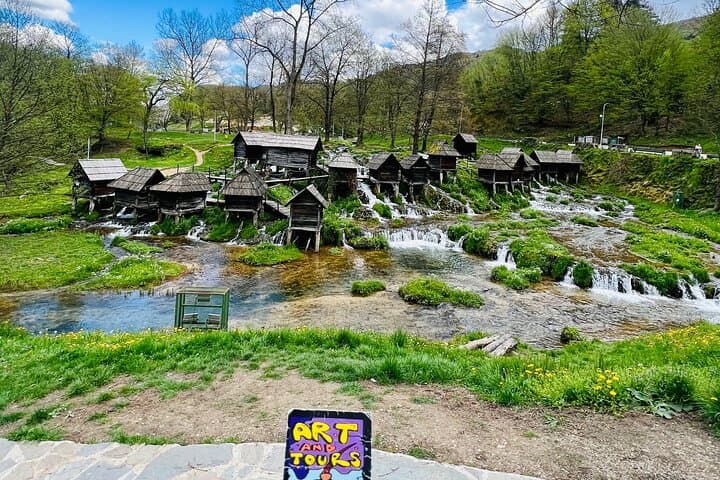
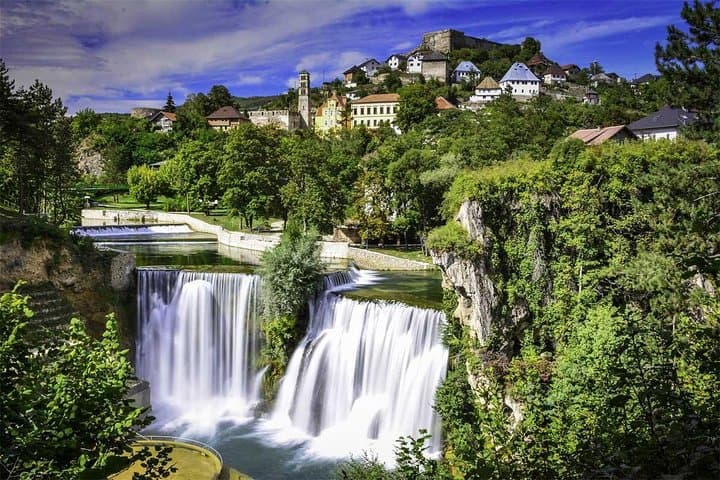
This route stitches together medieval Bosnian courts and Ottoman-era architecture. Travnik’s Kaštel fortress and the Sarena Dzamija (the multi‑colored mosque, 1757) show centuries of political and artistic exchange. Jajce, once a royal seat, perches above the 17‑metre Pliva waterfall — unique where the Pliva meets the Vrbas to form an estuary — and a ring of stone walls and castles that rise to about 470 m above sea level. Nearby Pliva Lakes and their wooden watermills speak to traditional rural life and local fishing and paddling opportunities.
Expect a full-day outing (roughly 10 hours) of short town hikes, stair climbs to fortress viewpoints, and easy lakeside walks. Trails are mostly paved or compact dirt; bring steady footwear for steps and uneven stone. Pack a windproof layer: weather in central Bosnia can shift fast between sun and sleet, especially above the town. Taste local cevapi and Bosnian coffee in Travnik to round out the cultural half of the day.
Practical pacing: plan photo stops at the waterfall, a 20–40 minute climb at the fortress, and an hour at the lakes if you want to walk or rent a kayak. Respect private properties around the mills and follow marked paths along the shoreline.
easy.
10 hours.
Suitable for people comfortable with several hours of walking and short stair climbs; not strenuous.
The itinerary is a full‑day excursion (about 10 hours) with multiple short walks, a climb to the fortress viewpoints and time at the lakes—expect a steady but unhurried pace with stops for photos and food.
Many outdoor sites are visible from public areas; specific museum or castle admissions may not be included—confirm with the operator before booking.
The operator notes stroller access for infants, but fortress climbs include steps; carriers are easier than strollers for uphill sections.
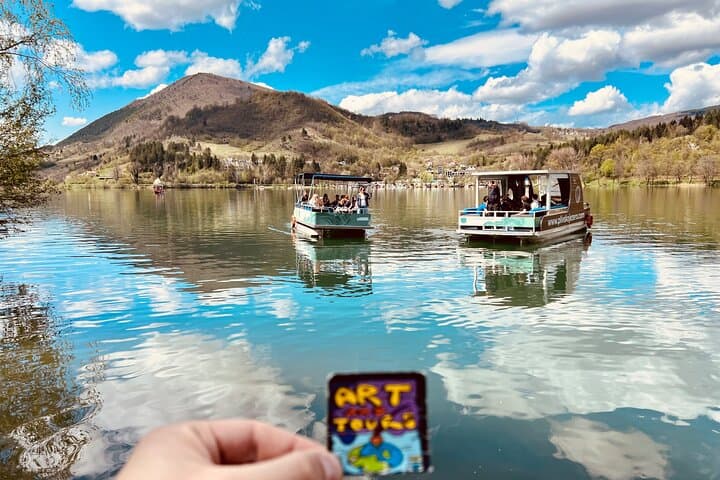
Recreational options like swimming or renting kayaks are available at the lakes, but may depend on season and extra fees—bring swimsuit and towel if you plan to join in.
Jajce served as a royal seat in the 15th century and later became a strategic Ottoman and Austro‑Hungarian site; Travnik was an administrative center noted for its fortress and multi‑cultural architecture.
The Pliva Lakes region is sensitive to tourism pressure—stay on marked paths, avoid littering, and support local businesses that follow sustainable practices.
Art and Tours Sarajevo operates guided outdoor trips and adventures with an emphasis on safety, stewardship, and memorable experiences.
You step off the minibus and the town opens like a map folded and refolded: cobbled alleys climb toward a weathered fortress, a waterfall drops into the street, and lakes lie green and still a few kilometers away. The air carries woodsmoke, frying onions, and the sharper tang of river water daring you to follow its course.
You step off the minibus and the town opens like a map folded and refolded: cobbled alleys climb toward a weathered fortress, a waterfall drops into the street, and lakes lie green and still a few kilometers away. The air carries woodsmoke, frying onions, and the sharper tang of river water daring you to follow its course.
This route stitches together medieval Bosnian courts and Ottoman-era architecture. Travnik’s Kaštel fortress and the Sarena Dzamija (the multi‑colored mosque, 1757) show centuries of political and artistic exchange. Jajce, once a royal seat, perches above the 17‑metre Pliva waterfall — unique where the Pliva meets the Vrbas to form an estuary — and a ring of stone walls and castles that rise to about 470 m above sea level. Nearby Pliva Lakes and their wooden watermills speak to traditional rural life and local fishing and paddling opportunities.
Expect a full-day outing (roughly 10 hours) of short town hikes, stair climbs to fortress viewpoints, and easy lakeside walks. Trails are mostly paved or compact dirt; bring steady footwear for steps and uneven stone. Pack a windproof layer: weather in central Bosnia can shift fast between sun and sleet, especially above the town. Taste local cevapi and Bosnian coffee in Travnik to round out the cultural half of the day.
Practical pacing: plan photo stops at the waterfall, a 20–40 minute climb at the fortress, and an hour at the lakes if you want to walk or rent a kayak. Respect private properties around the mills and follow marked paths along the shoreline.