THE ADVENTURE COLLECTIVE® · Independent discovery and booking for outdoor travel

Float between candlelit cenote caverns and the fish-rich shallows of Yalkú Lagoon on a guided snorkel tour from Cancún. Expect limestone formations, freshwater-salt mixing zones, and clear water that reveals both geology and marine life.
Float between candlelit cenote caverns and the fish-rich shallows of Yalkú Lagoon on a guided snorkel tour from Cancún. Expect limestone formations, freshwater-salt mixing zones, and clear water that reveals both geology and marine life.
You step off the air-conditioned van onto sun-warmed limestone, the jungle hush pressing close as the guide points to a dark throat in the earth — the cenote. Light slices down into crystalline water where stalactites hang like carved chandeliers and the current of an ancient aquifer nudges you forward. The day moves between tight caverns that demand quiet respect and open pools where sunlight teases schools of tropical fish.
Verified experiences and guided adventures in the surrounding area.
Operated by Landing Tours Cancun · Cancún, Quintana Roo
You step off the air-conditioned van onto sun-warmed limestone, the jungle hush pressing close as the guide points to a dark throat in the earth — the cenote. Light slices down into crystalline water where stalactites hang like carved chandeliers and the current of an ancient aquifer nudges you forward. The day moves between tight caverns that demand quiet respect and open pools where sunlight teases schools of tropical fish.
Geology here reads like a slow-motion sea withdrawal: when Pleistocene oceans receded, acidic rainwater widened fractures in the Yucatán’s porous limestone, creating sinkholes and flooded cave systems connected to the Caribbean. Cenotes were sacred to the Maya, used for water and ritual; today they offer a rare look at submerged karst and freshwater-salt mixing zones that support unique life.
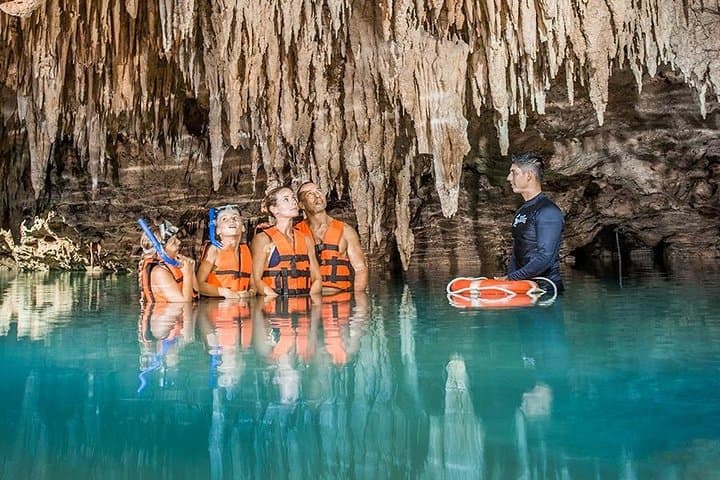
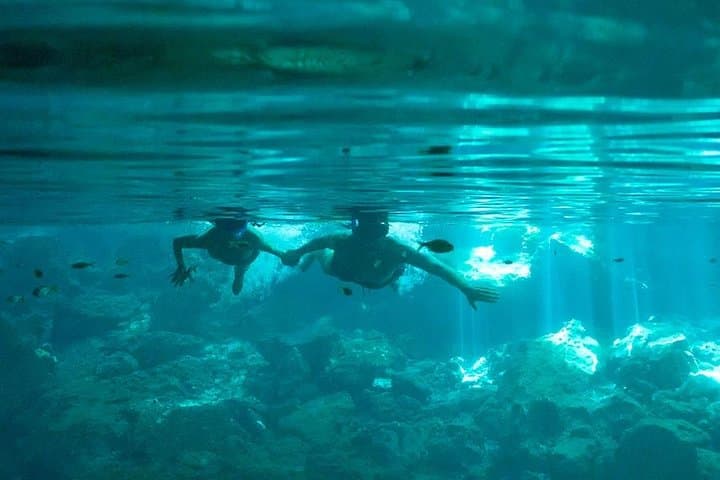
Expect guided snorkeling through cavern rims, explanations of stalactite formation, and a shallow drift into Yalkú Lagoon’s brackish shallows where sergeant majors and parrotfish inspect visitors. The route is family-friendly but requires steady swimming and comfort with enclosed spaces.
Practical guidance: arrive in sandals and bring a swimsuit beneath light clothing, use biodegradable sunscreen, and pack a dry bag and water-resistant camera. Wear a lifejacket if offered and listen to guides on where touching formations is strictly forbidden — oils from skin damage cave chemistry. Tours typically run about 3–4 hours with hotel pickup in Cancún, include snorkel gear and bottled water, and are best scheduled in the morning for calmer water and better visibility.
moderate.
3–4 hours.
Moderate fitness; comfortable swimming and short surface swims required
Guided tours use well-marked entry points and lifejackets; beginners can snorkel safely but should follow guides and avoid deep penetrations into caves.
Wear a swimsuit under light clothing, bring a towel, water shoes, biodegradable sunscreen, and a small dry bag for valuables.
Yes—many operators accommodate children who can swim; infants may need to sit on laps and lifejackets are provided.
Yes—Yalkú Lagoon hosts tropical reef fish in shallow brackish water, and cenotes often have freshwater species and clear visibility for observation.
Cenotes were central to Maya water supply and ceremonial life; many nearby sites contain archaeological finds and colonial-era coastal history.
Operators commonly ask visitors to use reef-safe products and avoid touching formations; limiting sunscreen and following guide instructions reduces human impact on fragile karst and reef systems.
Landing Tours Cancun operates guided outdoor trips and adventures with an emphasis on safety, stewardship, and memorable experiences.
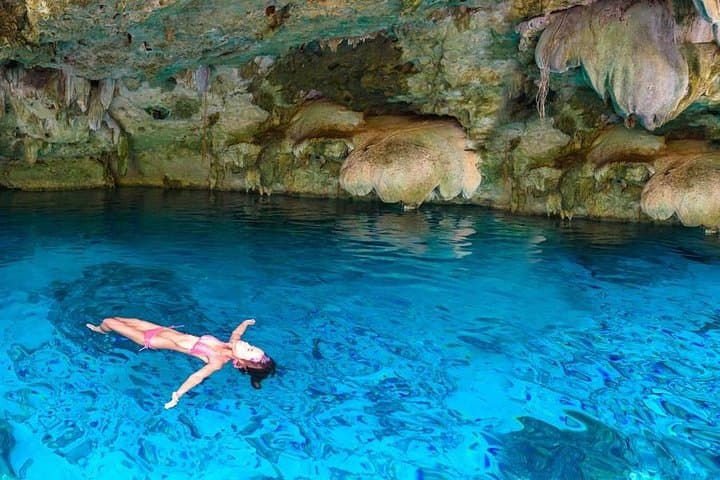
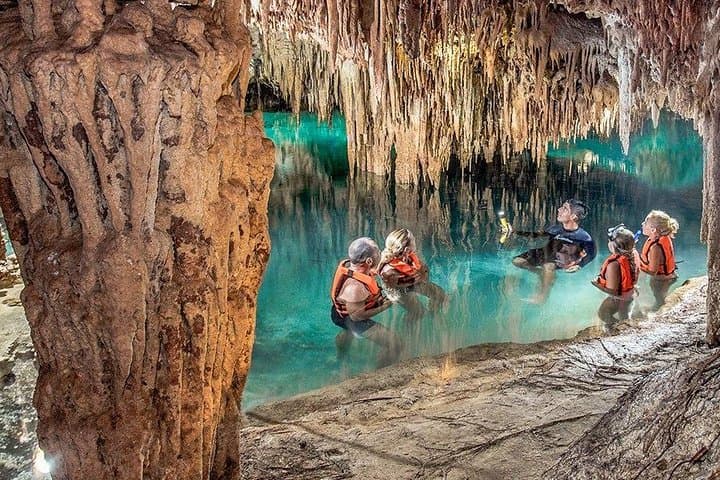
You step off the air-conditioned van onto sun-warmed limestone, the jungle hush pressing close as the guide points to a dark throat in the earth — the cenote. Light slices down into crystalline water where stalactites hang like carved chandeliers and the current of an ancient aquifer nudges you forward. The day moves between tight caverns that demand quiet respect and open pools where sunlight teases schools of tropical fish.
You step off the air-conditioned van onto sun-warmed limestone, the jungle hush pressing close as the guide points to a dark throat in the earth — the cenote. Light slices down into crystalline water where stalactites hang like carved chandeliers and the current of an ancient aquifer nudges you forward. The day moves between tight caverns that demand quiet respect and open pools where sunlight teases schools of tropical fish.
Geology here reads like a slow-motion sea withdrawal: when Pleistocene oceans receded, acidic rainwater widened fractures in the Yucatán’s porous limestone, creating sinkholes and flooded cave systems connected to the Caribbean. Cenotes were sacred to the Maya, used for water and ritual; today they offer a rare look at submerged karst and freshwater-salt mixing zones that support unique life.
Expect guided snorkeling through cavern rims, explanations of stalactite formation, and a shallow drift into Yalkú Lagoon’s brackish shallows where sergeant majors and parrotfish inspect visitors. The route is family-friendly but requires steady swimming and comfort with enclosed spaces.
Practical guidance: arrive in sandals and bring a swimsuit beneath light clothing, use biodegradable sunscreen, and pack a dry bag and water-resistant camera. Wear a lifejacket if offered and listen to guides on where touching formations is strictly forbidden — oils from skin damage cave chemistry. Tours typically run about 3–4 hours with hotel pickup in Cancún, include snorkel gear and bottled water, and are best scheduled in the morning for calmer water and better visibility.