THE ADVENTURE COLLECTIVE® · Independent discovery and booking for outdoor travel

Float between two very different worlds: the cathedral-dark caverns of Dos Ojos and the mangrove mirror of Casa Cenote (Manati). This 4.5-hour tour from downtown Tulum pairs world-class snorkeling with a concise lesson in Yucatán geology and Mayan history.
Float between two very different worlds: the cathedral-dark caverns of Dos Ojos and the mangrove mirror of Casa Cenote (Manati). This 4.5-hour tour from downtown Tulum pairs world-class snorkeling with a concise lesson in Yucatán geology and Mayan history.
The first time the light finds the water at Dos Ojos it feels deliberate — a narrow shaft that cuts through the limestone and throws a silver knife across an underground pool. You step off the platform and the water answers, cool and clear, daring you to look deeper. Around you the cave breathes in measured drafts; across the surface the mangrove-lined inlet of Casa Cenote glows green and still, reflecting roots that reach like arthritic hands into the river.
Verified experiences and guided adventures in the surrounding area.
Operated by TulumAdventure Mexico · Tulum, Quintana Roo
The first time the light finds the water at Dos Ojos it feels deliberate — a narrow shaft that cuts through the limestone and throws a silver knife across an underground pool. You step off the platform and the water answers, cool and clear, daring you to look deeper. Around you the cave breathes in measured drafts; across the surface the mangrove-lined inlet of Casa Cenote glows green and still, reflecting roots that reach like arthritic hands into the river.
These sinkholes are not accidental scenery but the result of millions of years of karst geology. The Yucatán’s bedrock is honeycombed by rain and river — a network known as the Sac Actun system that connects Dos Ojos and neighboring cenotes to an underground hydrology stretching to the sea. For the Maya, cenotes were doors to the underworld and sources of life; pottery and offerings recovered from nearby sites remind visitors that these pools were once part of a sacred landscape.
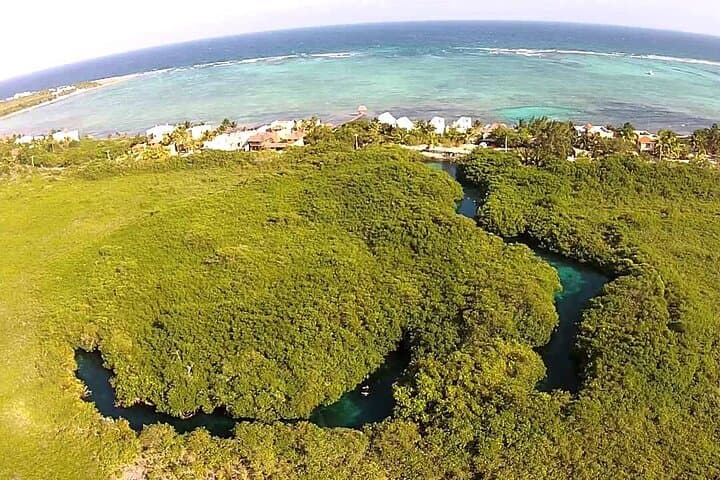
Today, Dos Ojos is prized for underwater visibility and sculpted formations: stalactites and curtains visible to snorkelers and divers. Casa Cenote (often called Cenote Manatí) sits closer to the coast, where a freshwater spring meets mangrove channels and the current teases your fins. The two-site tour offers a compact contrast — the cavernous hush of Dos Ojos and the bright, reflective calm of Casa Cenote.
Practicalities are straightforward. The tour runs about 4.5 hours and begins in downtown Tulum, where the operator meets guests near Av Tulum and Av Coba. Snorkeling gear is provided and water stays a constant 24–25°C (75–77°F), so a wetsuit isn’t necessary for most visitors. That said, moderate fitness and basic swimming or snorkeling confidence are required — some entry points require a short ladder or a slip over wet stone.
Respect for the sites matters: use reef-safe sunscreen, avoid touching formations, and follow guides’ instructions in caves where fragile formations can break with a single hand. The operator supplies drinks and snacks; bring a towel, a dry bag for electronics, and a reusable water bottle.
Timing matters for photos and solitude — go early on weekdays to catch shafts of light at Dos Ojos and quieter water at Casa Cenote. If you’re curious about local history or conservation efforts, ask your guide about the Sac Actun system and current efforts to limit runoff and control visitor numbers. These cenotes are spectacular, but they are also delicate: the clearer you keep the water, the longer the caves will keep their light.
moderate.
4–5 hours.
Moderate: comfortable swimming for short distances and able to climb ladders or scramble over wet rock.
The meeting point is in downtown Tulum at the intersection of Avenida Tulum and Avenida Coba, across from the AKI supermarket; the operator’s office is nearby.
Yes — the tour includes use of snorkeling equipment, plus bottled water and a light sandwich or energy bar.
No — this tour requires you to meet at the downtown meeting point; plan transport ahead of time.
The experience requires basic swimming ability and comfort in open water; non-swimmers should discuss options with the operator before booking.
Children can join but may need supervision; check with the operator about age restrictions and life jacket availability.
Water stays around 24–25°C (75–77°F) year-round, so most people are comfortable without a wetsuit.
Maya communities revered cenotes as water sources and ritual sites; offerings and ceramics have been found in nearby sinkholes and caves.
Limiting sunscreen residue, staying on designated walkways, and following guide rules help protect stalactites and the Sac Actun groundwater system.
TulumAdventure Mexico operates guided outdoor trips and adventures with an emphasis on safety, stewardship, and memorable experiences.
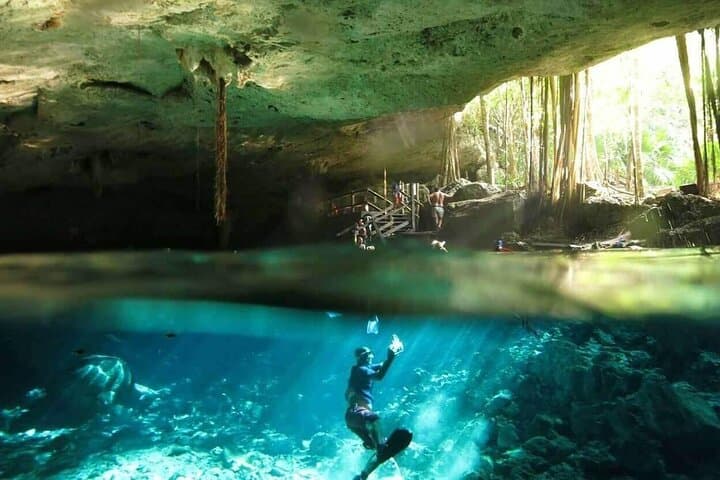
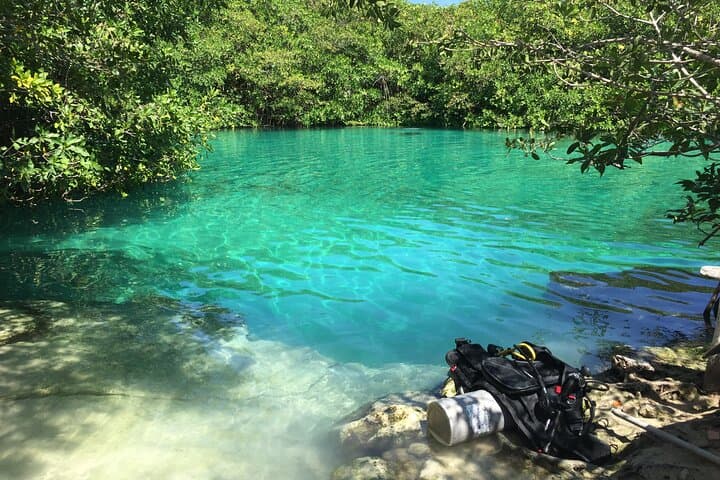
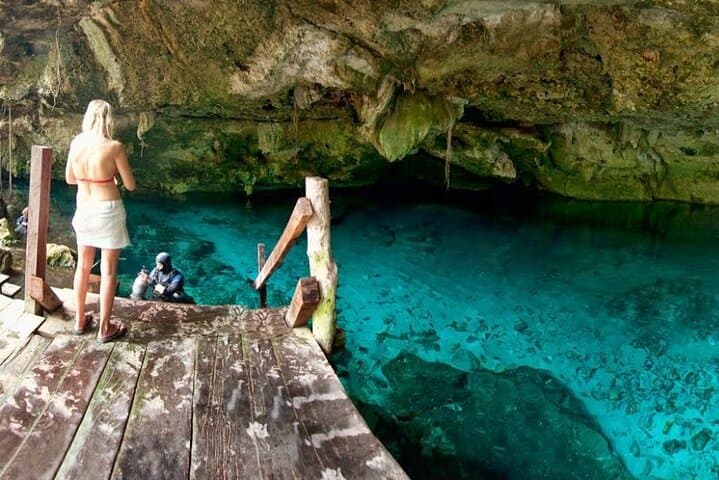
The first time the light finds the water at Dos Ojos it feels deliberate — a narrow shaft that cuts through the limestone and throws a silver knife across an underground pool. You step off the platform and the water answers, cool and clear, daring you to look deeper. Around you the cave breathes in measured drafts; across the surface the mangrove-lined inlet of Casa Cenote glows green and still, reflecting roots that reach like arthritic hands into the river.
The first time the light finds the water at Dos Ojos it feels deliberate — a narrow shaft that cuts through the limestone and throws a silver knife across an underground pool. You step off the platform and the water answers, cool and clear, daring you to look deeper. Around you the cave breathes in measured drafts; across the surface the mangrove-lined inlet of Casa Cenote glows green and still, reflecting roots that reach like arthritic hands into the river.
These sinkholes are not accidental scenery but the result of millions of years of karst geology. The Yucatán’s bedrock is honeycombed by rain and river — a network known as the Sac Actun system that connects Dos Ojos and neighboring cenotes to an underground hydrology stretching to the sea. For the Maya, cenotes were doors to the underworld and sources of life; pottery and offerings recovered from nearby sites remind visitors that these pools were once part of a sacred landscape.
Today, Dos Ojos is prized for underwater visibility and sculpted formations: stalactites and curtains visible to snorkelers and divers. Casa Cenote (often called Cenote Manatí) sits closer to the coast, where a freshwater spring meets mangrove channels and the current teases your fins. The two-site tour offers a compact contrast — the cavernous hush of Dos Ojos and the bright, reflective calm of Casa Cenote.
Practicalities are straightforward. The tour runs about 4.5 hours and begins in downtown Tulum, where the operator meets guests near Av Tulum and Av Coba. Snorkeling gear is provided and water stays a constant 24–25°C (75–77°F), so a wetsuit isn’t necessary for most visitors. That said, moderate fitness and basic swimming or snorkeling confidence are required — some entry points require a short ladder or a slip over wet stone.
Respect for the sites matters: use reef-safe sunscreen, avoid touching formations, and follow guides’ instructions in caves where fragile formations can break with a single hand. The operator supplies drinks and snacks; bring a towel, a dry bag for electronics, and a reusable water bottle.
Timing matters for photos and solitude — go early on weekdays to catch shafts of light at Dos Ojos and quieter water at Casa Cenote. If you’re curious about local history or conservation efforts, ask your guide about the Sac Actun system and current efforts to limit runoff and control visitor numbers. These cenotes are spectacular, but they are also delicate: the clearer you keep the water, the longer the caves will keep their light.