THE ADVENTURE COLLECTIVE® · Independent discovery and booking for outdoor travel

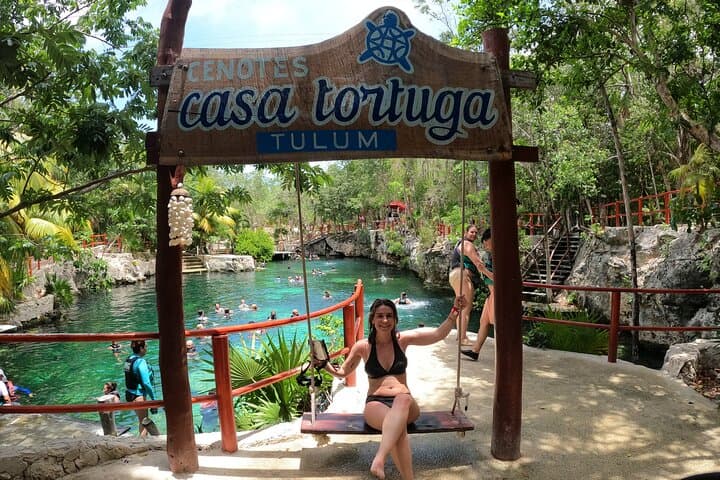
Visit four distinct cenotes—two semi-open and two open—at Cenotes Casa Tortuga, about 15 minutes south of Tulum. This 90–120 minute guided visit teaches the difference between open and underground cenotes while offering clear, buoyant swims in jade water.
Visit four distinct cenotes—two semi-open and two open—at Cenotes Casa Tortuga, about 15 minutes south of Tulum. This 90–120 minute guided visit teaches the difference between open and underground cenotes while offering clear, buoyant swims in jade water.
You step off the highway and the air shifts—humid, green, and heavy with limestone. Sunlight slices through trees and drops like a spotlight onto jade water; the first cenote asks you to slow, to listen to dripping stone and birds that make the canopy feel alive.
Verified experiences and guided adventures in the surrounding area.
Operated by The Turtle Travel Riviera Maya · Tulum, Quintana Roo
You step off the highway and the air shifts—humid, green, and heavy with limestone. Sunlight slices through trees and drops like a spotlight onto jade water; the first cenote asks you to slow, to listen to dripping stone and birds that make the canopy feel alive.
Geology here is blunt and elegant: collapsed karst ceilings open vertical shafts into freshwater chambers fed by underground rivers. The Yucatán’s limestone bedrock and rising water table created these pools; the Maya treated similar cenotes as portals and water sources, giving them cultural as well as physical importance.
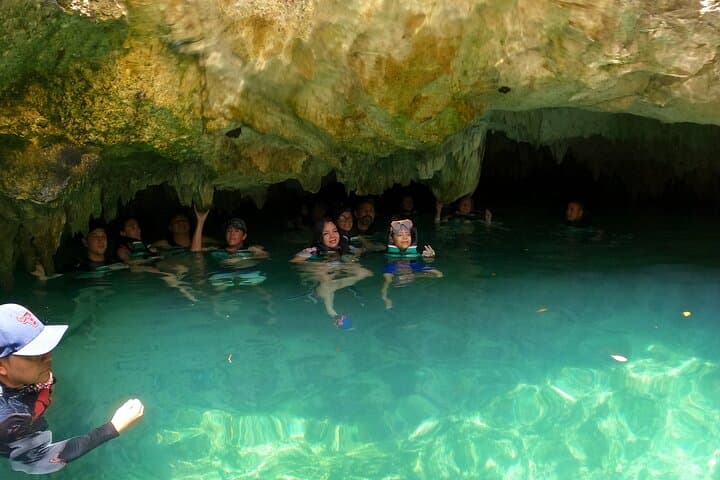
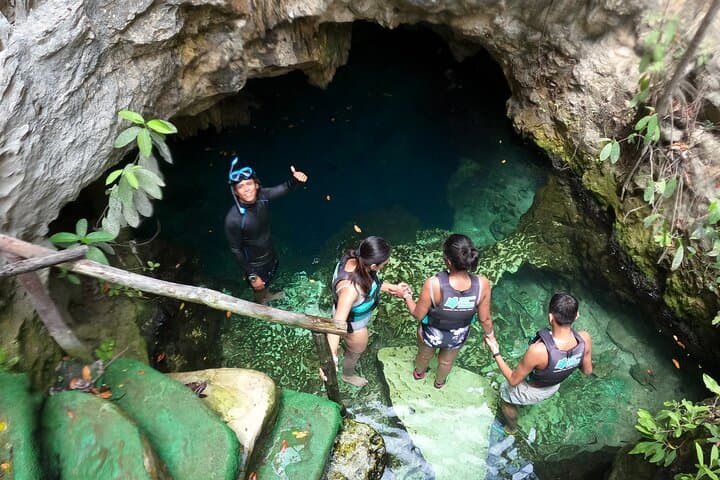
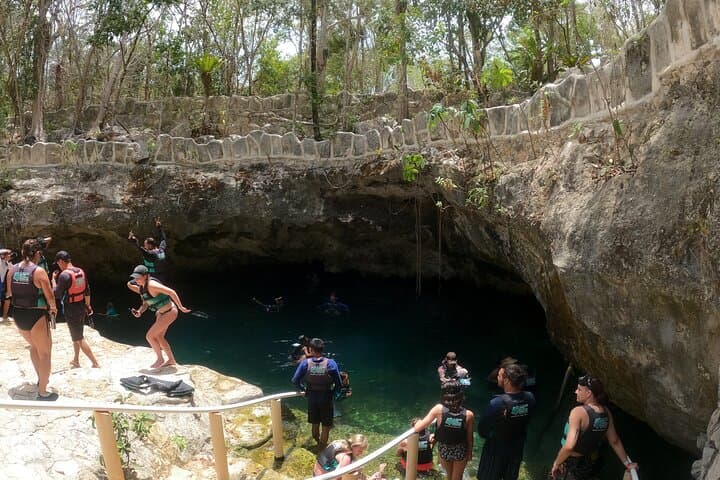
At Casa Tortuga you’ll visit four distinct sinks in 90–120 minutes: a pair of semi-open cenotes with tree-lined rims and two fully open caverns where depth ranges from about 1–8 meters at the open sites and more than 20 meters in deeper chambers. Guides show you the difference between open and underground systems, point out stalactites, and keep groups sized for safety. Expect cool, buoyant water, clear visibility in the open pools, and the muffled hush of cave walls in the darker caverns.
Practical edge: arrive early to avoid mid-day crowds, bring biodegradable sunscreen and water shoes for slick steps, and use the provided lifejackets if you’re not a strong swimmer. The site is roughly 15 minutes south of Tulum on Highway 307, with bathrooms and showers on-site. Pace your swims—freshwater can feel deceptively cold, and the strong contrast from hot jungle to cool cenote is part of the experience. Leave no trace: the karst system is fragile and local stewardship depends on visitors limiting pollutants and respecting signage.
easy.
1.5–2 hours.
Suitable for most fitness levels; basic swimming ability recommended for full enjoyment
The guided visit runs about 90–120 minutes and includes access to four cenotes with time to swim in at least one open cenote afterward.
Yes—lifejackets are provided and recommended for non-swimmers or anyone uncomfortable in deeper water.
The operator lists wheelchair accessibility, but some areas may have steps or uneven paths—check ahead for specific access needs.
Yes—children are allowed, and lifejackets and facilities are available; infants can use strollers in certain areas but check safety rules for swimming.
Cenotes formed when Yucatán’s limestone collapsed and exposed groundwater; the Maya revered many cenotes as water sources and ritual sites.
The karst aquifer is sensitive to pollution—use biodegradable products, avoid touching delicate formations, and follow site rules to protect water quality.
The Turtle Travel Riviera Maya operates guided outdoor trips and adventures with an emphasis on safety, stewardship, and memorable experiences.
You step off the highway and the air shifts—humid, green, and heavy with limestone. Sunlight slices through trees and drops like a spotlight onto jade water; the first cenote asks you to slow, to listen to dripping stone and birds that make the canopy feel alive.
You step off the highway and the air shifts—humid, green, and heavy with limestone. Sunlight slices through trees and drops like a spotlight onto jade water; the first cenote asks you to slow, to listen to dripping stone and birds that make the canopy feel alive.
Geology here is blunt and elegant: collapsed karst ceilings open vertical shafts into freshwater chambers fed by underground rivers. The Yucatán’s limestone bedrock and rising water table created these pools; the Maya treated similar cenotes as portals and water sources, giving them cultural as well as physical importance.
At Casa Tortuga you’ll visit four distinct sinks in 90–120 minutes: a pair of semi-open cenotes with tree-lined rims and two fully open caverns where depth ranges from about 1–8 meters at the open sites and more than 20 meters in deeper chambers. Guides show you the difference between open and underground systems, point out stalactites, and keep groups sized for safety. Expect cool, buoyant water, clear visibility in the open pools, and the muffled hush of cave walls in the darker caverns.
Practical edge: arrive early to avoid mid-day crowds, bring biodegradable sunscreen and water shoes for slick steps, and use the provided lifejackets if you’re not a strong swimmer. The site is roughly 15 minutes south of Tulum on Highway 307, with bathrooms and showers on-site. Pace your swims—freshwater can feel deceptively cold, and the strong contrast from hot jungle to cool cenote is part of the experience. Leave no trace: the karst system is fragile and local stewardship depends on visitors limiting pollutants and respecting signage.