THE ADVENTURE COLLECTIVE® · Independent discovery and booking for outdoor travel

Explore The Pit and Dos Ojos in a single day: two technical cave dives through dramatic light shafts, haloclines and domed chambers in the Sac Actun system. This advanced guided experience favors small groups, rigorous safety and unforgettable underwater photography.
Explore The Pit and Dos Ojos in a single day: two technical cave dives through dramatic light shafts, haloclines and domed chambers in the Sac Actun system. This advanced guided experience favors small groups, rigorous safety and unforgettable underwater photography.
You surface into a shaft of light—then descend. The Pit opens like a vertical cathedral where sunlight threads through clear water and a halocline bends the world into two tones. Later, Dos Ojos spreads horizontally: a vaulted dome peppered with stalactites and the flutter of bat wings in its darker chambers. Both sites sit within the Sac Actun–Dos Ojos system, part of the longest known underwater cave network on Earth.
Verified experiences and guided adventures in the surrounding area.
Operated by acuaticaribe · Tulum, Quintana Roo
You surface into a shaft of light—then descend. The Pit opens like a vertical cathedral where sunlight threads through clear water and a halocline bends the world into two tones. Later, Dos Ojos spreads horizontally: a vaulted dome peppered with stalactites and the flutter of bat wings in its darker chambers. Both sites sit within the Sac Actun–Dos Ojos system, part of the longest known underwater cave network on Earth.
Geology here reads like a slow-motion construction project: limestone dissolved over millennia, creating chambers, speleothems, and a salted-freshwater interface that creates the famous halocline. The Maya considered these cenotes doorways to Xibalba; today divers treat them as carefully mapped, photo-ready stages for technical exploration. Biodiversity is modest but distinct—blind shrimp, cichlids and bat colonies find niches where light fades.
Expect two guided cave dives (≈40 minutes each) reaching to about 30 meters/100 feet. Dives typically run from Playa del Carmen with small groups and a certified full-cave guide, so logistics move at a measured, safety-first pace.
Practical guidance: arrive hydrated and rested, skip sunscreen before entering water, and carry redundant air and lights. Wetsuits (3–5 mm depending on season) and precise buoyancy control matter more here than in open water; line awareness and conservative gas planning are essential. Photography is welcome but keep lanes clear for the guide and other divers. Timing your dives for midday enhances the Pit’s light beams; after dark, Dos Ojos takes on a different, intimate character.
This is advanced cave diving—rewarding for trained technical divers who value quiet, careful exploration over speed.
expert.
6 hours.
Good cardiovascular fitness and comfort with deep, confined dives; able to manage equipment and moderate surface swims.
Yes. This itinerary requires full cave diving certification and experience with guided cave penetrations.
Dives can reach about 30 meters (≈100 ft) maximum; guides plan profiles conservatively within training limits.
Yes—cameras are welcome but must be rigged to avoid lost gear and kept clear of lines and formations.
Most departures include round-trip transport from Playa del Carmen; check your booking for pickup details.
The Maya used cenotes for ritual offerings and freshwater; many sites around Tulum were considered entrances to the underworld Xibalba.
Cenote ecosystems are fragile—avoid sunscreens, use biodegradable products, and follow guide instructions to protect formations and water quality.
acuaticaribe operates guided outdoor trips and adventures with an emphasis on safety, stewardship, and memorable experiences.
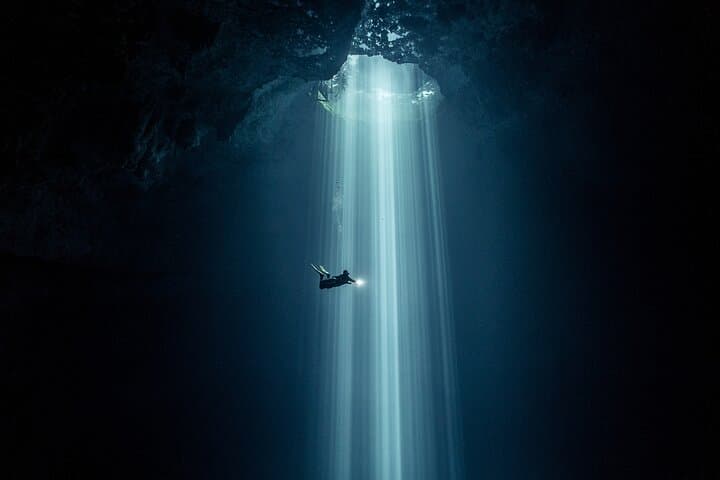
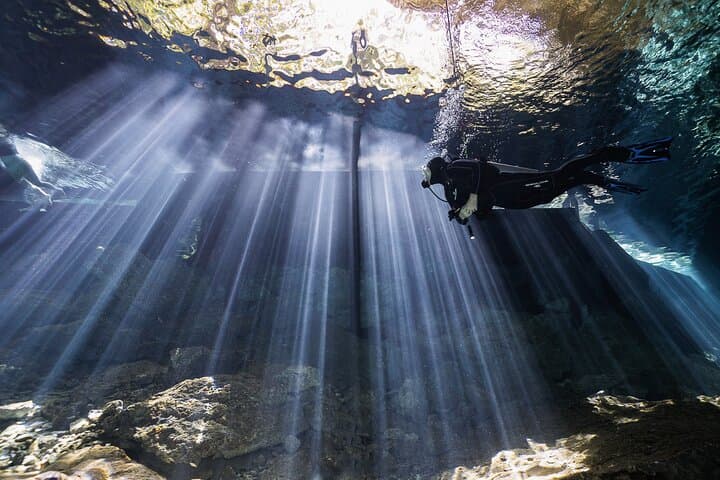
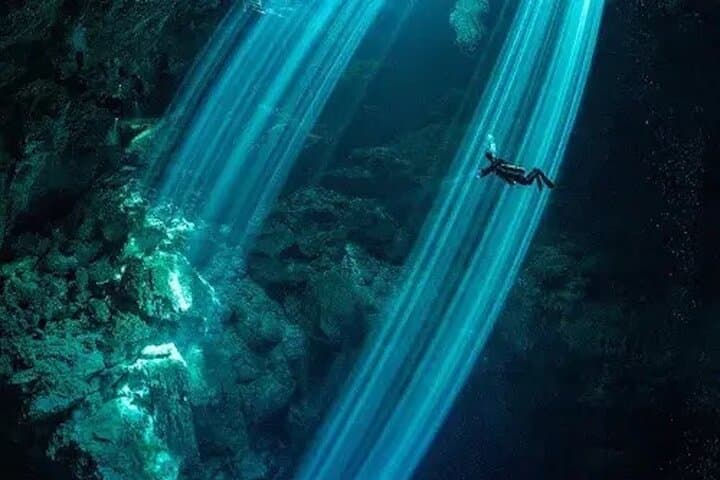
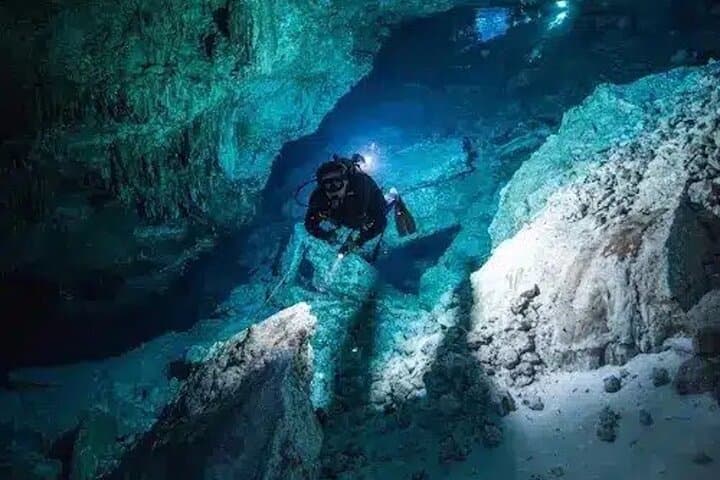
You surface into a shaft of light—then descend. The Pit opens like a vertical cathedral where sunlight threads through clear water and a halocline bends the world into two tones. Later, Dos Ojos spreads horizontally: a vaulted dome peppered with stalactites and the flutter of bat wings in its darker chambers. Both sites sit within the Sac Actun–Dos Ojos system, part of the longest known underwater cave network on Earth.
You surface into a shaft of light—then descend. The Pit opens like a vertical cathedral where sunlight threads through clear water and a halocline bends the world into two tones. Later, Dos Ojos spreads horizontally: a vaulted dome peppered with stalactites and the flutter of bat wings in its darker chambers. Both sites sit within the Sac Actun–Dos Ojos system, part of the longest known underwater cave network on Earth.
Geology here reads like a slow-motion construction project: limestone dissolved over millennia, creating chambers, speleothems, and a salted-freshwater interface that creates the famous halocline. The Maya considered these cenotes doorways to Xibalba; today divers treat them as carefully mapped, photo-ready stages for technical exploration. Biodiversity is modest but distinct—blind shrimp, cichlids and bat colonies find niches where light fades.
Expect two guided cave dives (≈40 minutes each) reaching to about 30 meters/100 feet. Dives typically run from Playa del Carmen with small groups and a certified full-cave guide, so logistics move at a measured, safety-first pace.
Practical guidance: arrive hydrated and rested, skip sunscreen before entering water, and carry redundant air and lights. Wetsuits (3–5 mm depending on season) and precise buoyancy control matter more here than in open water; line awareness and conservative gas planning are essential. Photography is welcome but keep lanes clear for the guide and other divers. Timing your dives for midday enhances the Pit’s light beams; after dark, Dos Ojos takes on a different, intimate character.
This is advanced cave diving—rewarding for trained technical divers who value quiet, careful exploration over speed.