THE ADVENTURE COLLECTIVE® · Independent discovery and booking for outdoor travel

Explore Cenote Dreamgate’s cavern passages inside the Sac Actun system on a guided two-dive trip. Expect limestone galleries, strict line discipline, and practical briefings focused on conservation and safe cavern practices.
Explore Cenote Dreamgate’s cavern passages inside the Sac Actun system on a guided two-dive trip. Expect limestone galleries, strict line discipline, and practical briefings focused on conservation and safe cavern practices.
You step off the dusty jungle road and the air changes—cool, damp, and threaded with limestone scent—then the platform drops away and the water below accepts light like a lens.
Verified experiences and guided adventures in the surrounding area.
Operated by Cave Ha Diving Mexico · Playa del Carmen, Quintana Roo
You step off the dusty jungle road and the air changes—cool, damp, and threaded with limestone scent—then the platform drops away and the water below accepts light like a lens.
Cenote Dreamgate sits inside the Sac Actun–Nohoch–Dos Ojos network, part of the world’s second-largest underwater cave system. Geologically the site is a maze of limestone, stalactites, and haloclines where fresh and marine waters meet; human history here ranges from Maya freshwater use to modern scientific mapping of submerged passages.
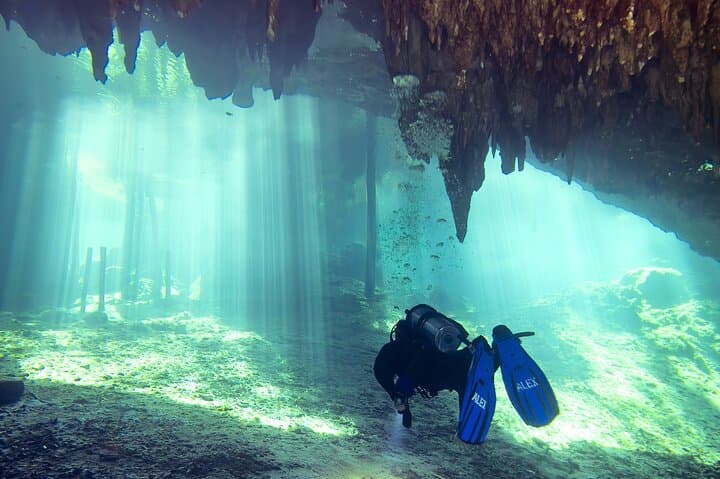
The guided two-dive itinerary usually visits both upstream and downstream cavern zones: upstream offers quieter, clearer passage and delicate formations; downstream follows the main line through broader galleries. Expect tight swim lines, silty floors that punish poor buoyancy, and sudden shafts of light from openings above. The site’s popularity has accelerated wear, so operators emphasize low-impact procedures.
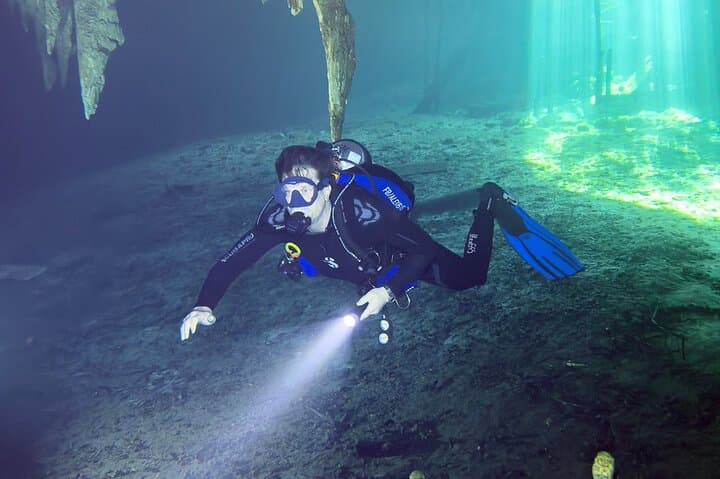
Practical guidance: certified divers (minimum Open Water) should bring a primary and backup light, practice neutral buoyancy, and plan on 4–6 hours for pickup, briefings, two dives and returns. Wear a 3mm wetsuit or shorty for warmth and protection; avoid lotions or contaminants before entering.
Timing matters—early morning trips have calmer water and fewer groups. Listen to your guide: line discipline and slow fin kicks protect fragile formations and reduce silt. If you’re curious about the system, ask about the mapped passages and local conservation efforts—operators often work with researchers to limit impact and monitor the caves.
challenging.
4–6 hours.
Moderately fit: able to carry gear, swim comfortably, and manage repeated entries and exits.
Minimum Open Water Diver certification is required; operators may require proof and a signed medical/declaration form.
Expect about 4–6 hours total including transfers, briefings, two dives, and equipment handling.
Cenote cavern dives require comfort with overhead-aware procedures and neutral buoyancy—new divers should gain experience in open water first.
Yes—expect stalactites, flowstones, and small freshwater fish; bats are often present in darker caverns near openings.
The Maya used cenotes as freshwater sources and ceremonial sites; Sac Actun is now significant both culturally and scientifically as a mapped underwater network.
The cave system is fragile—operators enforce low-impact rules, and visitors should avoid touching formations, use minimal gear chemicals, and follow guide instructions to limit erosion and contamination.
Cave Ha Diving Mexico operates guided outdoor trips and adventures with an emphasis on safety, stewardship, and memorable experiences.
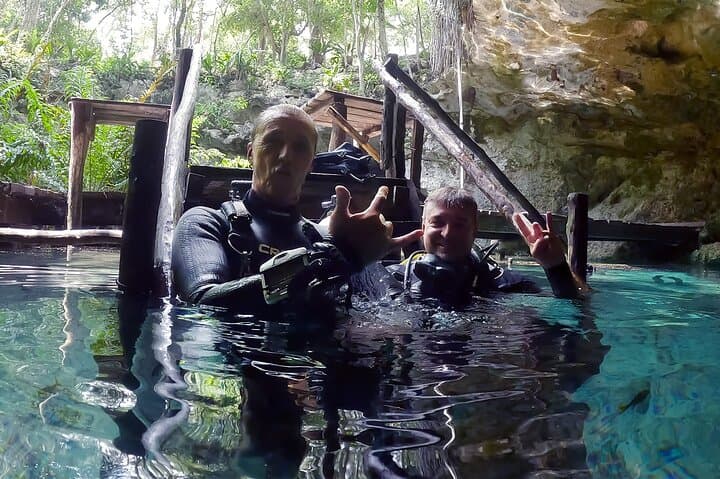

You step off the dusty jungle road and the air changes—cool, damp, and threaded with limestone scent—then the platform drops away and the water below accepts light like a lens.
You step off the dusty jungle road and the air changes—cool, damp, and threaded with limestone scent—then the platform drops away and the water below accepts light like a lens.
Cenote Dreamgate sits inside the Sac Actun–Nohoch–Dos Ojos network, part of the world’s second-largest underwater cave system. Geologically the site is a maze of limestone, stalactites, and haloclines where fresh and marine waters meet; human history here ranges from Maya freshwater use to modern scientific mapping of submerged passages.
The guided two-dive itinerary usually visits both upstream and downstream cavern zones: upstream offers quieter, clearer passage and delicate formations; downstream follows the main line through broader galleries. Expect tight swim lines, silty floors that punish poor buoyancy, and sudden shafts of light from openings above. The site’s popularity has accelerated wear, so operators emphasize low-impact procedures.
Practical guidance: certified divers (minimum Open Water) should bring a primary and backup light, practice neutral buoyancy, and plan on 4–6 hours for pickup, briefings, two dives and returns. Wear a 3mm wetsuit or shorty for warmth and protection; avoid lotions or contaminants before entering.
Timing matters—early morning trips have calmer water and fewer groups. Listen to your guide: line discipline and slow fin kicks protect fragile formations and reduce silt. If you’re curious about the system, ask about the mapped passages and local conservation efforts—operators often work with researchers to limit impact and monitor the caves.