THE ADVENTURE COLLECTIVE® · Independent discovery and booking for outdoor travel

Swim through shafts of sunlight into limestone rooms filled with stalactites and fossilized stone. These guided cenote dives near Playa del Carmen pair open-air pools with cavern chambers—ideal for certified Open Water divers seeking high-visibility, photogenic dives.
Swim through shafts of sunlight into limestone rooms filled with stalactites and fossilized stone. These guided cenote dives near Playa del Carmen pair open-air pools with cavern chambers—ideal for certified Open Water divers seeking high-visibility, photogenic dives.
Morning light slices through jungle canopy and drops into bowls of water so clear you can read the bottom like a page. In the Yucatán, cenotes are cave mouths and flooded chambers where freshwater meets limestone—places where stalactites and columns rise from the blue and shafts of sun turn water into glass. Divers slip beneath a curtain of light and swim through rooms carved over millennia, past fossilized stone and fragile speleothems that bear witness to the peninsula’s slow geology.
Verified experiences and guided adventures in the surrounding area.
Operated by Diversland Mexico · Playa del Carmen, Quintana Roo
Morning light slices through jungle canopy and drops into bowls of water so clear you can read the bottom like a page. In the Yucatán, cenotes are cave mouths and flooded chambers where freshwater meets limestone—places where stalactites and columns rise from the blue and shafts of sun turn water into glass. Divers slip beneath a curtain of light and swim through rooms carved over millennia, past fossilized stone and fragile speleothems that bear witness to the peninsula’s slow geology.
These cenotes were sacred to the Maya; sinkholes provided water and ritual space. Geologically they’re collapsed limestone from the porous karst of the Yucatán, creating both open-air pools and semi-submerged caverns. The two-site dives commonly paired for first-time cenote divers—Ponderosa (Jardín del Edén) and Tajma Ha—offer a contrast: wide sunlit bowls with mossy rock and fish, and cavern rooms with dramatic shafts, stalactites, and a pronounced halocline where freshwater meets denser layers.
Expect guided pair dives, surface briefings, and careful navigation to avoid fragile formations. Practical notes: bring your dive certification and logbook, arrive hydrated and rested, and use reef-safe sunscreen only on surface intervals. Visibility is typically excellent on calm, sunny days; mornings deliver the best light for photo opportunities. Because these are cavern-style experiences rather than full cave penetration, comfortable buoyancy control and familiarity with overhead-environment procedures are important. Operators supply tanks, regulators, and weights, but personal masks, dive computer, and certification card speed the pre-dive process. With sensible preparation, cenote dives are a compact, unforgettable way to explore the Yucatán’s subterranean waters.
moderate.
5 hours.
Should be in good general health with basic cardiovascular fitness and able to carry gear short distances; not strenuous but requires mobility and comfort in water.
Yes—participants must present Open Water Diver certification (or equivalent) to dive in these cenotes.
Minimum age for participation is 15 years, per operator policy for cenote dives.
No—diving within 24 hours of flying is not recommended; plan flights at least a day after your last dive.
Yes—hotels pickup and drop-off are typically included; confirm pickup details at booking.
Cenotes were vital to the Maya for water and ritual—many sites around the Yucatán have archaeological significance and were long considered portals between worlds.
Cenotes are ecologically sensitive; operators limit group sizes and encourage no-sunscreen policies and proper waste practices to protect water quality and fragile formations.
Diversland Mexico operates guided outdoor trips and adventures with an emphasis on safety, stewardship, and memorable experiences.
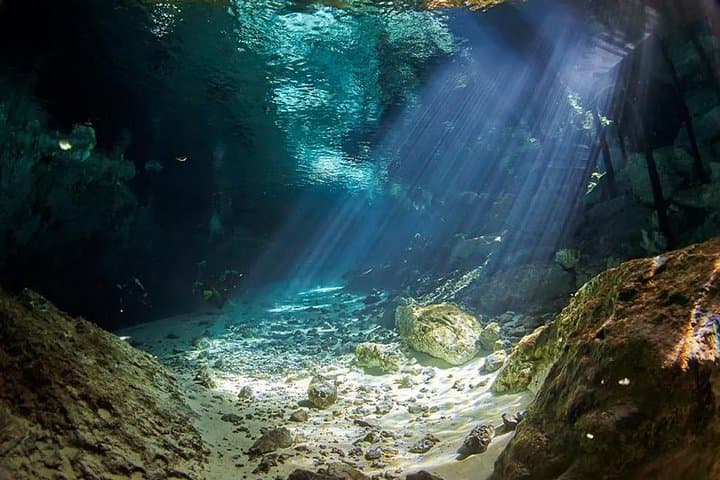


Morning light slices through jungle canopy and drops into bowls of water so clear you can read the bottom like a page. In the Yucatán, cenotes are cave mouths and flooded chambers where freshwater meets limestone—places where stalactites and columns rise from the blue and shafts of sun turn water into glass. Divers slip beneath a curtain of light and swim through rooms carved over millennia, past fossilized stone and fragile speleothems that bear witness to the peninsula’s slow geology.
Morning light slices through jungle canopy and drops into bowls of water so clear you can read the bottom like a page. In the Yucatán, cenotes are cave mouths and flooded chambers where freshwater meets limestone—places where stalactites and columns rise from the blue and shafts of sun turn water into glass. Divers slip beneath a curtain of light and swim through rooms carved over millennia, past fossilized stone and fragile speleothems that bear witness to the peninsula’s slow geology.
These cenotes were sacred to the Maya; sinkholes provided water and ritual space. Geologically they’re collapsed limestone from the porous karst of the Yucatán, creating both open-air pools and semi-submerged caverns. The two-site dives commonly paired for first-time cenote divers—Ponderosa (Jardín del Edén) and Tajma Ha—offer a contrast: wide sunlit bowls with mossy rock and fish, and cavern rooms with dramatic shafts, stalactites, and a pronounced halocline where freshwater meets denser layers.
Expect guided pair dives, surface briefings, and careful navigation to avoid fragile formations. Practical notes: bring your dive certification and logbook, arrive hydrated and rested, and use reef-safe sunscreen only on surface intervals. Visibility is typically excellent on calm, sunny days; mornings deliver the best light for photo opportunities. Because these are cavern-style experiences rather than full cave penetration, comfortable buoyancy control and familiarity with overhead-environment procedures are important. Operators supply tanks, regulators, and weights, but personal masks, dive computer, and certification card speed the pre-dive process. With sensible preparation, cenote dives are a compact, unforgettable way to explore the Yucatán’s subterranean waters.