THE ADVENTURE COLLECTIVE® · Independent discovery and booking for outdoor travel

Experience two of the Yucatán’s most dramatic cavern dives: light‑lit Kin Ha and the bell formations of Zapote. These advanced dives combine geological spectacle with technical requirements—perfect for experienced, certified divers.
Experience two of the Yucatán’s most dramatic cavern dives: light‑lit Kin Ha and the bell formations of Zapote. These advanced dives combine geological spectacle with technical requirements—perfect for experienced, certified divers.
A shaft of sunlight slices through jungle canopy and lands on a round blue hole; you lower yourself to the platform and feel the cool, ancient water drawing you downward. In Kin Ha the beam catches suspended calcite dust and turns the cavern into a cathedral of light. At Zapote the walls pinch in, bell-shaped formations looming like underwater columns while a distinct hydrogen‑sulfide layer marks a sudden change in atmosphere and mood.
Verified experiences and guided adventures in the surrounding area.
Operated by Diversland Mexico · Playa del Carmen, Quintana Roo
A shaft of sunlight slices through jungle canopy and lands on a round blue hole; you lower yourself to the platform and feel the cool, ancient water drawing you downward. In Kin Ha the beam catches suspended calcite dust and turns the cavern into a cathedral of light. At Zapote the walls pinch in, bell-shaped formations looming like underwater columns while a distinct hydrogen‑sulfide layer marks a sudden change in atmosphere and mood.
The Yucatán is pure karst: porous limestone riddled with sinkholes that reveal a lens of fresh water sitting above seawater. Maya communities treated some cenotes as sacred entrances to the underworld; the formations you’ll pass—stalactites, stalagmites and flowstone—grew over millennia as water seeped through rock. The light-driven effects in Kin Ha and the rare bell formations in Zapote attract advanced divers who want geological drama and technical depth rather than reef fish.
Practically speaking, these are advanced cavern dives. Expect guided drops to about 25–30 m, limited overhead exposure, cold spots under overhangs, and tight passages that reward precise buoyancy control. Operators typically provide two tanks, weights, belt, bottled water and snacks, and hotels in Playa del Carmen offer transfer. Bring a reliable primary and backup light, a dive computer set for decompression safety, and plan for a full surface interval before flying.
Timing matters: go early to catch the best shafts of light and calmer waters. Respect fragile formations—no touching—and follow your guide’s line procedures. With certification, preparation and respect for the cave environment, these cenotes offer some of the most otherworldly dives on the peninsula.
challenging.
4–6 hours.
Moderately fit: comfortable with multi-tank dives, controlled breathing, and exits from platforms; must be comfortable at 25–30 m depths.
Advanced Open Water Diver (AOWD) or equivalent is required; some operators may also expect cavern experience or guided cavern endorsements.
Typical descents reach approximately 25–30 meters with sections that pass through a hydrogen‑sulfide layer at Zapote—guided and within overhead limits.
No; these are guided cavern dives for certified, experienced divers (minimum age usually 15). Operators offer other cenote options for snorkelers or novice divers elsewhere.
The H2S layer creates a visual and chemical boundary—guides manage passages through it; sensitive individuals should consult the operator and disclose medical history.
Cenotes functioned as freshwater sources and ritual sites for Maya communities; their geological openness shaped settlement patterns across the peninsula.
Cenotes are sensitive freshwater ecosystems—use biodegradable sunscreen, avoid touching formations, and follow guide rules to prevent silt and pollution.
Diversland Mexico operates guided outdoor trips and adventures with an emphasis on safety, stewardship, and memorable experiences.
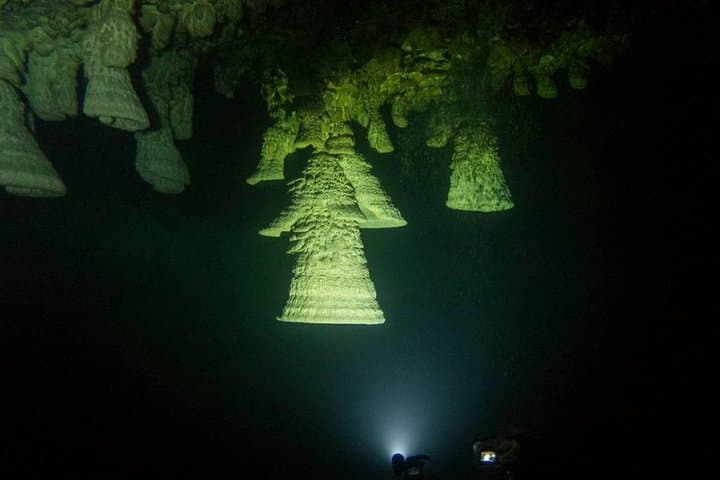
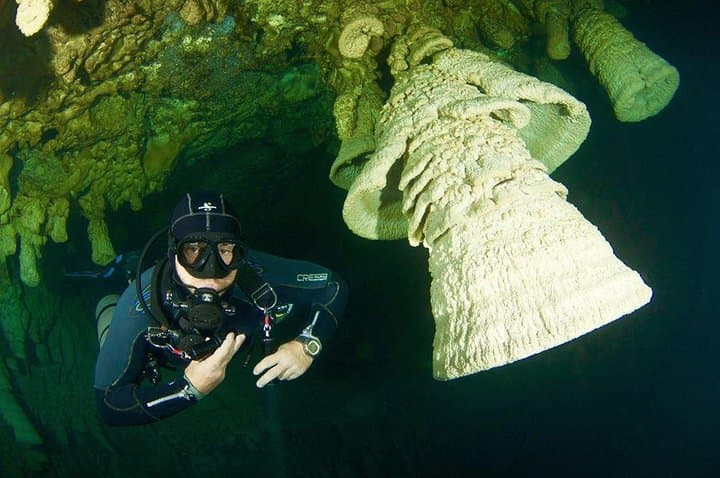
A shaft of sunlight slices through jungle canopy and lands on a round blue hole; you lower yourself to the platform and feel the cool, ancient water drawing you downward. In Kin Ha the beam catches suspended calcite dust and turns the cavern into a cathedral of light. At Zapote the walls pinch in, bell-shaped formations looming like underwater columns while a distinct hydrogen‑sulfide layer marks a sudden change in atmosphere and mood.
A shaft of sunlight slices through jungle canopy and lands on a round blue hole; you lower yourself to the platform and feel the cool, ancient water drawing you downward. In Kin Ha the beam catches suspended calcite dust and turns the cavern into a cathedral of light. At Zapote the walls pinch in, bell-shaped formations looming like underwater columns while a distinct hydrogen‑sulfide layer marks a sudden change in atmosphere and mood.
The Yucatán is pure karst: porous limestone riddled with sinkholes that reveal a lens of fresh water sitting above seawater. Maya communities treated some cenotes as sacred entrances to the underworld; the formations you’ll pass—stalactites, stalagmites and flowstone—grew over millennia as water seeped through rock. The light-driven effects in Kin Ha and the rare bell formations in Zapote attract advanced divers who want geological drama and technical depth rather than reef fish.
Practically speaking, these are advanced cavern dives. Expect guided drops to about 25–30 m, limited overhead exposure, cold spots under overhangs, and tight passages that reward precise buoyancy control. Operators typically provide two tanks, weights, belt, bottled water and snacks, and hotels in Playa del Carmen offer transfer. Bring a reliable primary and backup light, a dive computer set for decompression safety, and plan for a full surface interval before flying.
Timing matters: go early to catch the best shafts of light and calmer waters. Respect fragile formations—no touching—and follow your guide’s line procedures. With certification, preparation and respect for the cave environment, these cenotes offer some of the most otherworldly dives on the peninsula.