THE ADVENTURE COLLECTIVE® · Independent discovery and booking for outdoor travel

Float through cathedral-like chambers where sunlight pierces black water and ancient coral holds echoes of Mayan ritual. This guided cenote dive combines geology, history, and precise scuba techniques for an unforgettable subterranean experience.
Float through cathedral-like chambers where sunlight pierces black water and ancient coral holds echoes of Mayan ritual. This guided cenote dive combines geology, history, and precise scuba techniques for an unforgettable subterranean experience.
You surface under a coin-bright strip of sky; limestone walls close in, and the water is so clear the rock and roots below look like they’re suspended in air. Light from the cenote’s mouth slices into the cavern, painting stalactites in silver and sending beams that dare you deeper.
Verified experiences and guided adventures in the surrounding area.
Operated by Scuba Public Puerto Morelos · Cancun, Quintana Roo
You surface under a coin-bright strip of sky; limestone walls close in, and the water is so clear the rock and roots below look like they’re suspended in air. Light from the cenote’s mouth slices into the cavern, painting stalactites in silver and sending beams that dare you deeper.
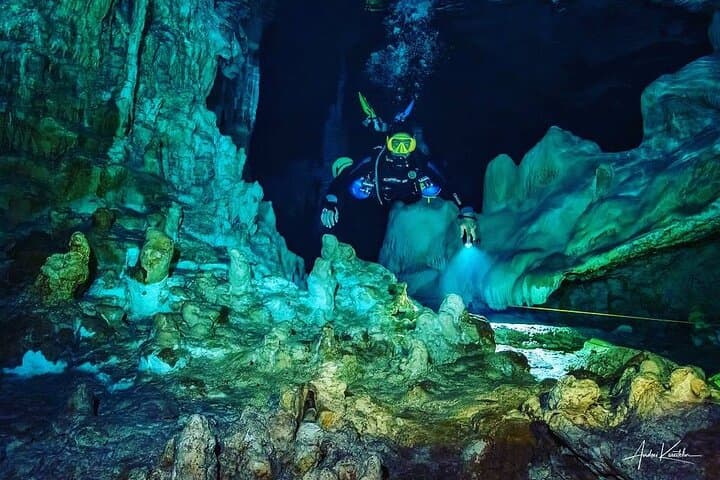
Cenotes formed where the Yucatán’s porous limestone collapsed over groundwater, exposing passages that link to vast underground rivers. Spanish chroniclers and Mayan oral history both mark cenotes as portals—sources of life and places of ritual. Geologically, you’ll see fossilized corals and delicate speleothems that grew over thousands of years; archaeologists sometimes recover pottery and offerings that speak to the site’s ceremonial past.
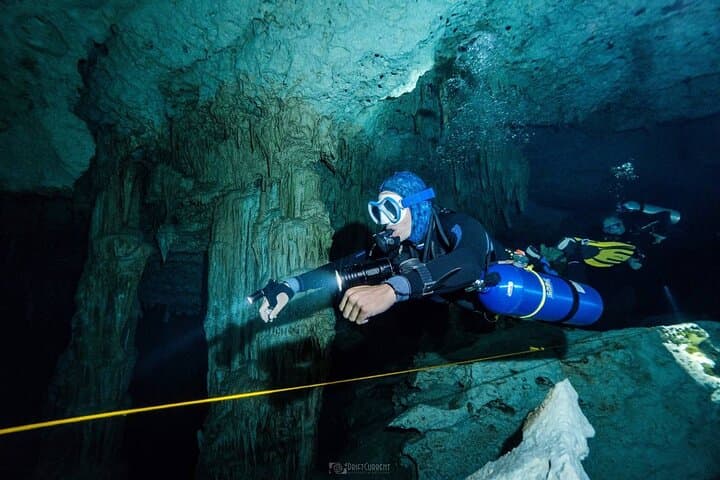
On a guided day trip from Cancún, expect two guided dives with surface intervals for a simple lunch and gear checks. Guides brief on lines, lights, and buoyancy; equipment and private transport are typically provided. The dives are more about precision than speed: slow fin strokes, controlled breathing, and respect for fragile formations. Water temperature hovers in the low-to-mid 20s°C, so a 3–5mm wetsuit is common.
Practical side: book with a guide who enforces briefings and line discipline, confirm certification requirements, and plan for sun and sudden rain—this coastline has fast weather swings. Hydrate before entering and keep camera rigs low-impact; cenotes are sensitive archaeological and ecological systems. When you leave the water you’ll carry more than air—an easy calm, and a clear reminder that these caves require care as much as curiosity.
challenging.
4–6 hours.
Moderate fitness required — ability to carry and don gear, swim calmly, and handle multiple descents and ascents.
Most cenote tours accept certified open-water divers for guided cavern dives; full cave penetration typically requires cave certification—ask the operator about site-specific limits.
Water is usually 20–25°C with visibility often in excess of 30 meters in open chambers, though visibility can change with flow and recent rains.
Beginner certified divers can do guided shallow cavern dives if they have solid buoyancy and comfort with overhead environments; inexperienced divers should choose open-water reef dives first.
Yes—many operators allow photography but require no-flash policies in sensitive areas and insist on secure gear to prevent contact with formations.
Cenotes were important in Maya cosmology as water sources and portals to the underworld; many were sites of offerings and ritual activity.
Cenotes are vulnerable to contamination from runoff and careless diving—use reef-safe products, follow guide rules, and pack out all trash to protect water quality.
Scuba Public Puerto Morelos operates guided outdoor trips and adventures with an emphasis on safety, stewardship, and memorable experiences.
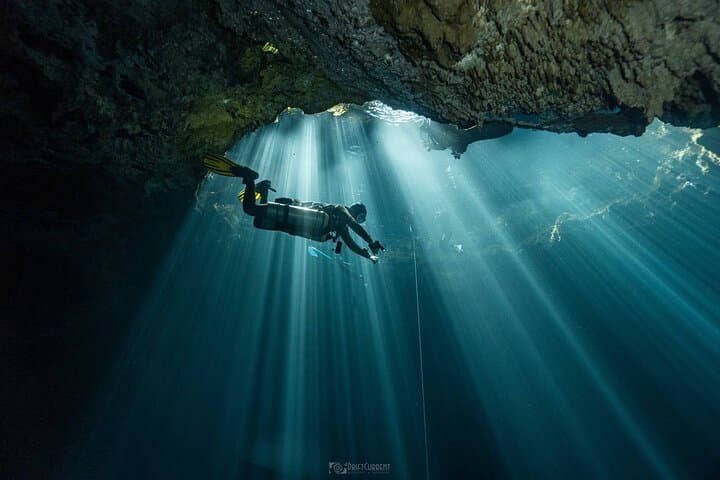
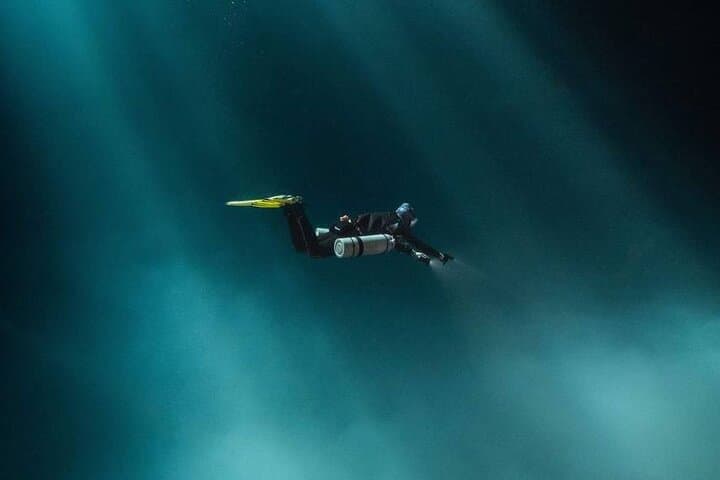
You surface under a coin-bright strip of sky; limestone walls close in, and the water is so clear the rock and roots below look like they’re suspended in air. Light from the cenote’s mouth slices into the cavern, painting stalactites in silver and sending beams that dare you deeper.
You surface under a coin-bright strip of sky; limestone walls close in, and the water is so clear the rock and roots below look like they’re suspended in air. Light from the cenote’s mouth slices into the cavern, painting stalactites in silver and sending beams that dare you deeper.
Cenotes formed where the Yucatán’s porous limestone collapsed over groundwater, exposing passages that link to vast underground rivers. Spanish chroniclers and Mayan oral history both mark cenotes as portals—sources of life and places of ritual. Geologically, you’ll see fossilized corals and delicate speleothems that grew over thousands of years; archaeologists sometimes recover pottery and offerings that speak to the site’s ceremonial past.
On a guided day trip from Cancún, expect two guided dives with surface intervals for a simple lunch and gear checks. Guides brief on lines, lights, and buoyancy; equipment and private transport are typically provided. The dives are more about precision than speed: slow fin strokes, controlled breathing, and respect for fragile formations. Water temperature hovers in the low-to-mid 20s°C, so a 3–5mm wetsuit is common.
Practical side: book with a guide who enforces briefings and line discipline, confirm certification requirements, and plan for sun and sudden rain—this coastline has fast weather swings. Hydrate before entering and keep camera rigs low-impact; cenotes are sensitive archaeological and ecological systems. When you leave the water you’ll carry more than air—an easy calm, and a clear reminder that these caves require care as much as curiosity.