THE ADVENTURE COLLECTIVE® · Independent discovery and booking for outdoor travel

Float under a moonlit sky as millions of microscopic plankton ignite with every stroke. This organized night tour from Seven Mile Beach pairs a sunset stop at Starfish Point with a guided swim in Cayman Kai’s glowing bioluminescent bay.
Float under a moonlit sky as millions of microscopic plankton ignite with every stroke. This organized night tour from Seven Mile Beach pairs a sunset stop at Starfish Point with a guided swim in Cayman Kai’s glowing bioluminescent bay.
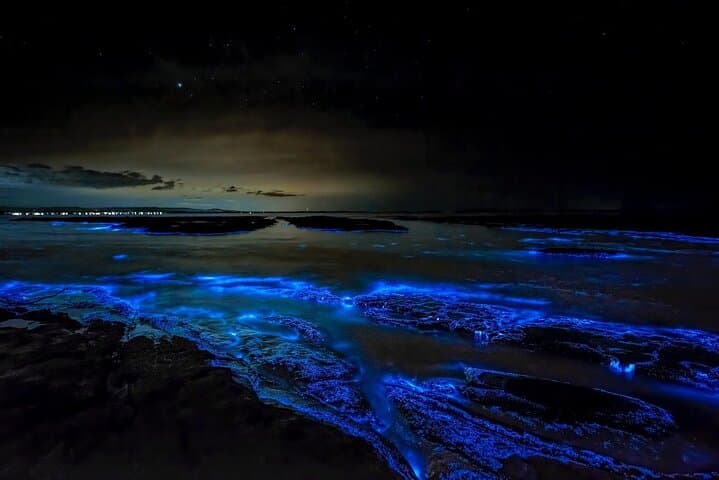
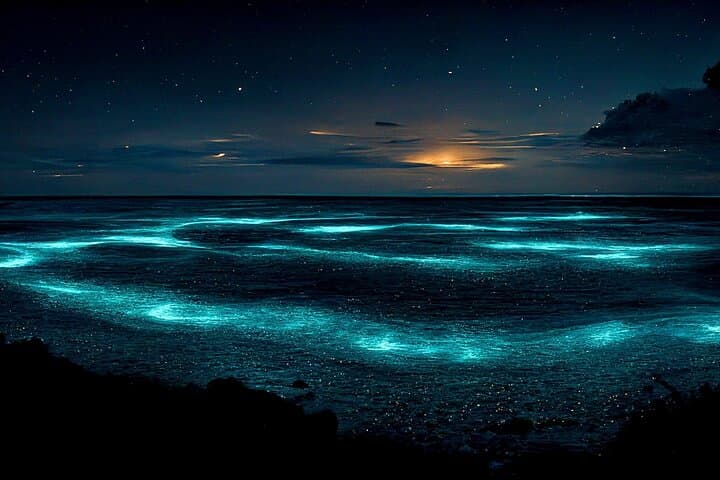
A warm night wind tugs at the brim of your hat as the van rumbles east across Grand Cayman’s blacktop, headlights cutting a path toward the island’s quieter shore. At Starfish Point the water is still and shallow, lit by the last of sunset; starfish and upside-down jellyfish float like slow ornaments. After dusk, the boat slips into Cayman Kai’s sheltered channel and the water begins to answer every movement with light.
Verified experiences and guided adventures in the surrounding area.
Operated by Shore Adventures Tours · East End, Grand Cayman
A warm night wind tugs at the brim of your hat as the van rumbles east across Grand Cayman’s blacktop, headlights cutting a path toward the island’s quieter shore. At Starfish Point the water is still and shallow, lit by the last of sunset; starfish and upside-down jellyfish float like slow ornaments. After dusk, the boat slips into Cayman Kai’s sheltered channel and the water begins to answer every movement with light.
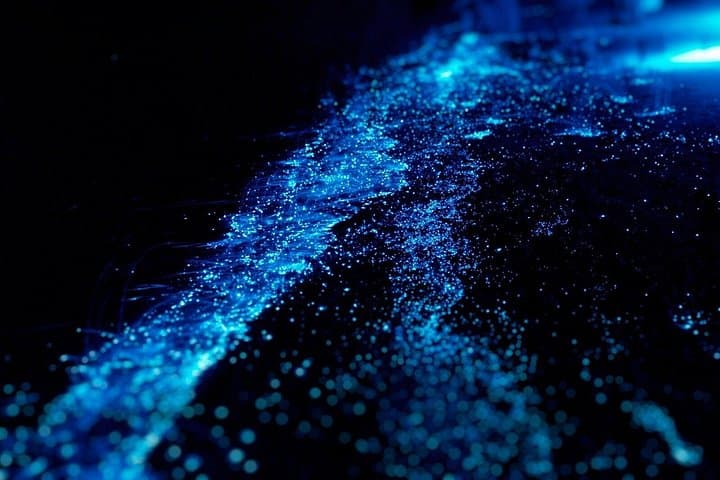
The glow comes from microscopic dinoflagellates—single-celled plankton that flash when disturbed. These organisms favor calm, nutrient-rich waters behind mangrove-lined coves; local guides, drawing on Marine Park protections established in recent decades, know where the concentrations are strongest. The East End has a quieter cultural rhythm than Seven Mile Beach, and evenings here carry stories of fishermen, coral repair efforts, and community stewardship.
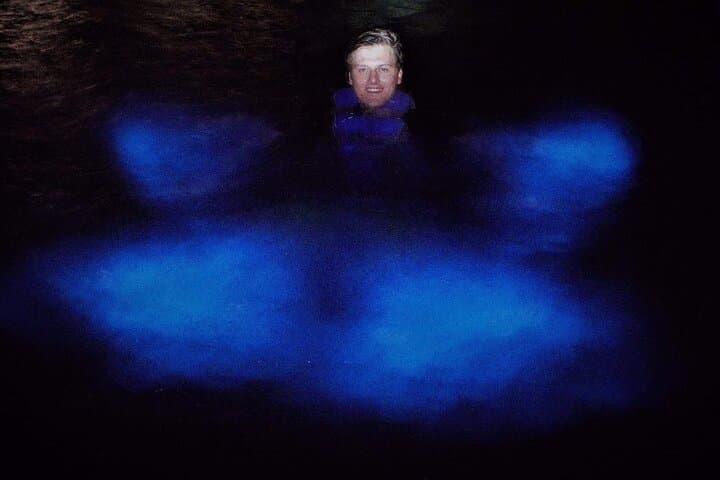
Practically, the tour is built for accessibility: short van transfer from Seven Mile Beach, life vests, snorkel gear and a guide to explain the science and etiquette. Guests may wade or swim; those who stay dry still get a spectacle from the boat. Visibility depends on moon phase, weather and boat traffic—new-moon nights produce the most vivid displays.
Expect two stops—Starfish Point for photos and shallow exploration, then the bioluminescent swim. Bring a towel, reef-safe sunscreen or none at all, and a change of clothes. Move slowly in the water, follow guide instructions, and keep lights off to let the plankton perform. The experience is unpredictable, intimate and governed by nature’s own schedule.
moderate.
2–3 hours.
Suitable for most fitness levels; participants should be comfortable entering calm coastal water and able to float with a life vest if swimming.
No—intensity varies nightly with moon phase, weather, and plankton concentration; guides choose locations to maximize chances but cannot guarantee a specific level of glow.
Yes—life vests are provided and guests may remain on the boat to view the display; wading in shallow water is also an option.
Children are welcome, but infants must sit on an adult’s lap and flotation devices for children under age 3 are not provided—check the operator’s age policies when booking.
Expect roughly a 40-minute van ride each way to the East End, though timing varies by traffic and exact pickup point.
East End fishing communities and marine reserve efforts shaped access to these sheltered bays; Marine Park protections help maintain the conditions that allow bioluminescence to thrive.
Operators follow Marine Park rules and encourage reef-safe sunscreens, no-touch policies for starfish, and limited boat traffic to reduce disturbance to plankton and mangroves.
Shore Adventures Tours operates guided outdoor trips and adventures with an emphasis on safety, stewardship, and memorable experiences.
A warm night wind tugs at the brim of your hat as the van rumbles east across Grand Cayman’s blacktop, headlights cutting a path toward the island’s quieter shore. At Starfish Point the water is still and shallow, lit by the last of sunset; starfish and upside-down jellyfish float like slow ornaments. After dusk, the boat slips into Cayman Kai’s sheltered channel and the water begins to answer every movement with light.
A warm night wind tugs at the brim of your hat as the van rumbles east across Grand Cayman’s blacktop, headlights cutting a path toward the island’s quieter shore. At Starfish Point the water is still and shallow, lit by the last of sunset; starfish and upside-down jellyfish float like slow ornaments. After dusk, the boat slips into Cayman Kai’s sheltered channel and the water begins to answer every movement with light.
The glow comes from microscopic dinoflagellates—single-celled plankton that flash when disturbed. These organisms favor calm, nutrient-rich waters behind mangrove-lined coves; local guides, drawing on Marine Park protections established in recent decades, know where the concentrations are strongest. The East End has a quieter cultural rhythm than Seven Mile Beach, and evenings here carry stories of fishermen, coral repair efforts, and community stewardship.
Practically, the tour is built for accessibility: short van transfer from Seven Mile Beach, life vests, snorkel gear and a guide to explain the science and etiquette. Guests may wade or swim; those who stay dry still get a spectacle from the boat. Visibility depends on moon phase, weather and boat traffic—new-moon nights produce the most vivid displays.
Expect two stops—Starfish Point for photos and shallow exploration, then the bioluminescent swim. Bring a towel, reef-safe sunscreen or none at all, and a change of clothes. Move slowly in the water, follow guide instructions, and keep lights off to let the plankton perform. The experience is unpredictable, intimate and governed by nature’s own schedule.