THE ADVENTURE COLLECTIVE® · Independent discovery and booking for outdoor travel

A compact two-day alpine climb up Cayambe: glacier-school at a 4,600 m refuge followed by a 6–8 hour summit push. Precise logistics, certified guides and high-altitude conditions make this a technical but achievable Ecuadorian volcano ascent.
A compact two-day alpine climb up Cayambe: glacier-school at a 4,600 m refuge followed by a 6–8 hour summit push. Precise logistics, certified guides and high-altitude conditions make this a technical but achievable Ecuadorian volcano ascent.
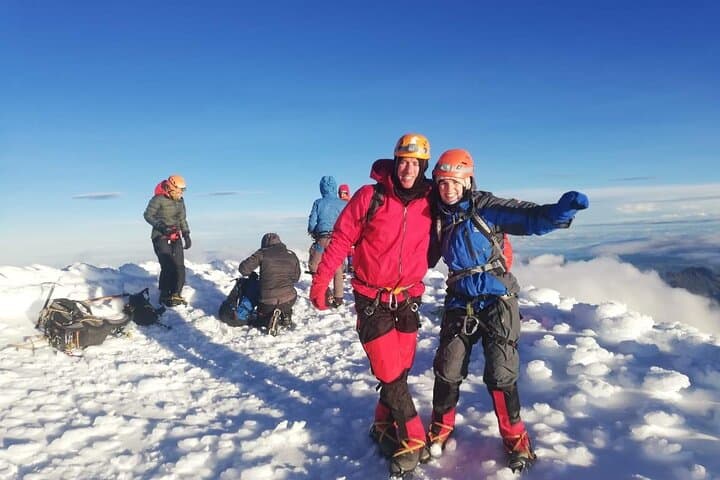
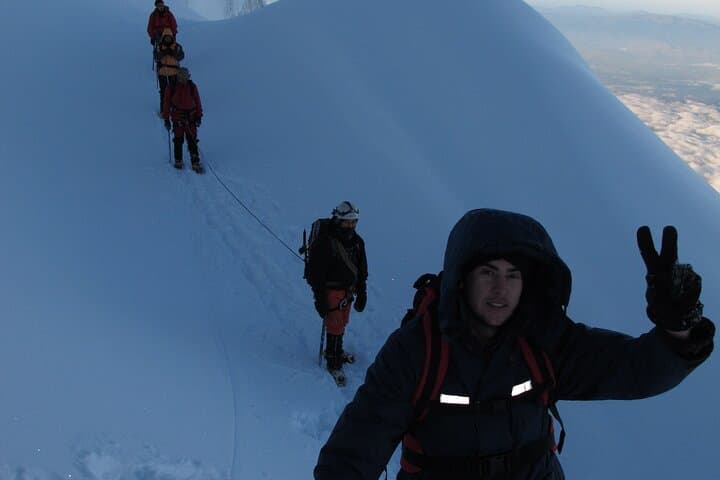
A cold wind lifts off the glacier as you step from the refuge at 4,600 m and squint toward the serrated rim of Cayambe. Night is a bruise of stars; the group slips into layered silence and the headlamps stitch a thread up the glacier. By sunrise the ice catches a pale orange and the summit—sharp, blue, and breathing—lies ahead.
Verified experiences and guided adventures in the surrounding area.
Operated by Ecosportour - Tour Operator · Cayambe, Pichincha
A cold wind lifts off the glacier as you step from the refuge at 4,600 m and squint toward the serrated rim of Cayambe. Night is a bruise of stars; the group slips into layered silence and the headlamps stitch a thread up the glacier. By sunrise the ice catches a pale orange and the summit—sharp, blue, and breathing—lies ahead.
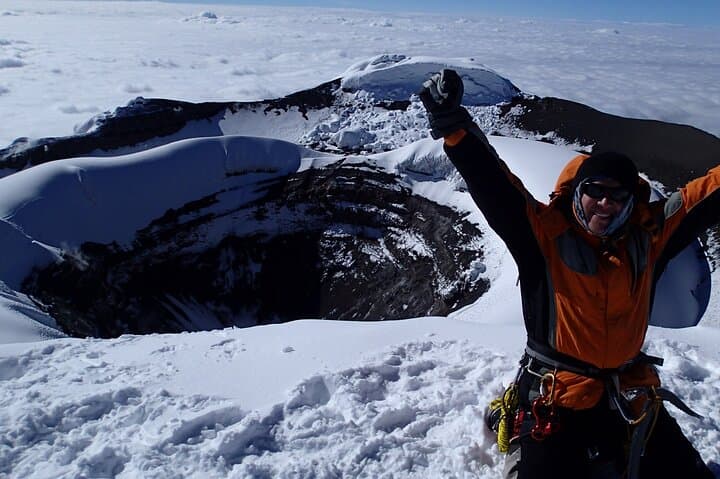
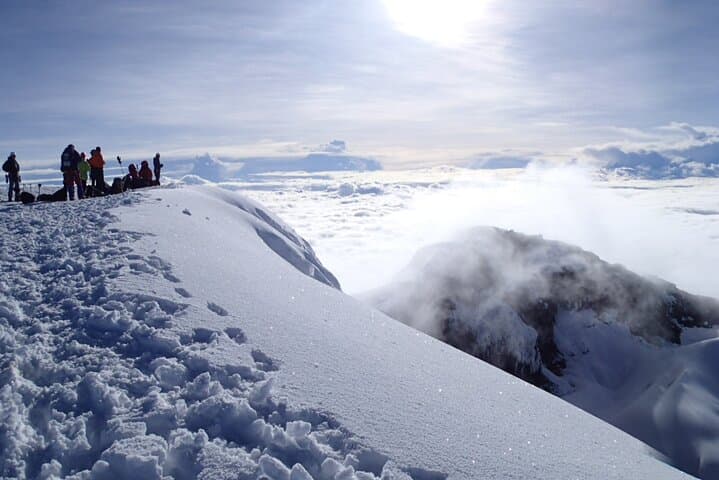
Cayambe is an eroded stratovolcano on Ecuador's northern volcanic line, its glaciers carving crevasses and ridgelines since the last ice advances. The mountain sits within Pichincha Province and has long been part of local highland culture; nearby Cayambe town is known for cheese, livestock markets and an agricultural history shaped by altitude. Geologically, its andesitic flows contrast with the younger Cotopaxi to the south, and the refuge route gives a compact study in high-altitude glaciology.
Expect two days: a drive from Quito to Cayambe, an afternoon glacier-school at the Ruales-Oleas refuge, then an alpine-style summit push that takes 6–8 hours in variable ice and steep snow. Guides rope teams and manage crevasse hazard; travel is slow and deliberate at altitude. Practical essentials: hydrate and eat early, move slowly on crampons, and watch for symptoms of altitude illness. Footwear and layered insulation matter more than aesthetics—wind and radiant ice will take what you don’t bring.
If weather closes in, teams turn back; safety is non-negotiable. Plan for early departures, a 24–48 hour recovery window, and transport time back to Quito. For climbers who want a high-mountain, technical-day summit without a multi-week expedition, Cayambe delivers precise, demanding alpine climbing with clear logistical expectations.
challenging.
2 days (approx. 48 hours).
Good aerobic base with experience on long, steep hikes at altitude; comfortable moving 6–8 hours in technical boots.
You should have a solid aerobic base and recent experience on long hikes; expect 6–8 hours of slow, technical climbing at altitude—train with long uphill days and weighted packs.
Guides typically supply boots, crampons, ice axes, helmets, harnesses and ropes, but bringing your own properly broken-in boots and personal layers is recommended.
Summit success depends on weather, group pacing and acclimatization; certified guides will prioritize safety and may turn the group back if conditions are unsafe.
Acclimatize before ascent, maintain hydration and calories, ascend slowly, and communicate any symptoms immediately—guides carry oxygen and evacuation plans if needed.
Cayambe has long been significant to Andean communities and sits along volcanic chains that shaped highland agriculture; its glaciers have been monitored historically for climate signals.
High-altitude ecosystems are fragile—pack out waste, avoid unnecessary foot traffic off marked routes, and use toilet facilities at the refuge when available.
Ecosportour - Tour Operator operates guided outdoor trips and adventures with an emphasis on safety, stewardship, and memorable experiences.
A cold wind lifts off the glacier as you step from the refuge at 4,600 m and squint toward the serrated rim of Cayambe. Night is a bruise of stars; the group slips into layered silence and the headlamps stitch a thread up the glacier. By sunrise the ice catches a pale orange and the summit—sharp, blue, and breathing—lies ahead.
A cold wind lifts off the glacier as you step from the refuge at 4,600 m and squint toward the serrated rim of Cayambe. Night is a bruise of stars; the group slips into layered silence and the headlamps stitch a thread up the glacier. By sunrise the ice catches a pale orange and the summit—sharp, blue, and breathing—lies ahead.
Cayambe is an eroded stratovolcano on Ecuador's northern volcanic line, its glaciers carving crevasses and ridgelines since the last ice advances. The mountain sits within Pichincha Province and has long been part of local highland culture; nearby Cayambe town is known for cheese, livestock markets and an agricultural history shaped by altitude. Geologically, its andesitic flows contrast with the younger Cotopaxi to the south, and the refuge route gives a compact study in high-altitude glaciology.
Expect two days: a drive from Quito to Cayambe, an afternoon glacier-school at the Ruales-Oleas refuge, then an alpine-style summit push that takes 6–8 hours in variable ice and steep snow. Guides rope teams and manage crevasse hazard; travel is slow and deliberate at altitude. Practical essentials: hydrate and eat early, move slowly on crampons, and watch for symptoms of altitude illness. Footwear and layered insulation matter more than aesthetics—wind and radiant ice will take what you don’t bring.
If weather closes in, teams turn back; safety is non-negotiable. Plan for early departures, a 24–48 hour recovery window, and transport time back to Quito. For climbers who want a high-mountain, technical-day summit without a multi-week expedition, Cayambe delivers precise, demanding alpine climbing with clear logistical expectations.