THE ADVENTURE COLLECTIVE® · Independent discovery and booking for outdoor travel

Walk a cliff-top track to Cathedral Cove’s dramatic arch, then time the tide to dig a warm pool at Hot Water Beach. This full-day Coromandel trip blends a scenic hike, snorkeling opportunities, and a one-of-a-kind geothermal beach soak.
Walk a cliff-top track to Cathedral Cove’s dramatic arch, then time the tide to dig a warm pool at Hot Water Beach. This full-day Coromandel trip blends a scenic hike, snorkeling opportunities, and a one-of-a-kind geothermal beach soak.
You step onto the coastal track and the Pacific spreads wide: cliffs push the wind into your face, gulls quarter the sky, and a natural stone arch yawns ahead like a doorway to a different shore. The walk to Cathedral Cove rewards steady lungs and loose gravel with sudden coves, turquoise water, and an arch large enough to frame the ocean itself.
Verified experiences and guided adventures in the surrounding area.
Operated by ELIM TOUR · Hahei, Waikato
You step onto the coastal track and the Pacific spreads wide: cliffs push the wind into your face, gulls quarter the sky, and a natural stone arch yawns ahead like a doorway to a different shore. The walk to Cathedral Cove rewards steady lungs and loose gravel with sudden coves, turquoise water, and an arch large enough to frame the ocean itself.
This stretch of the Coromandel Peninsula sits on volcanic bedrock and uplifted sandstone; the arch at Cathedral Cove was sculpted by wave action and time, while Hot Water Beach gets its warmth from shallow geothermal upwellings along fault lines under the sand. Māori used these places for food gathering and coastal travel; today small settlements like Hahei and Whitianga carry both fishing and tourism traditions.
Expect a coastal trail of roughly 2.2 km one-way with modest climbs and stair sections, cliff-top viewpoints, and beaches suited to swimming and snorkeling. Hot Water Beach is a low-tide activity: dig a shallow pool and let warm springs lap the sand, but watch the tide—they reclaim the shore quickly.
Practical guidance: plan the day around tide charts, bring sun protection, a light jacket for wind, and footwear that handles sand and uneven trail. Hydrate and carry a small first-aid kit; cell reception is intermittent. Guides commonly include transport, a shovel, and local knowledge—use them to time your visit and learn where to safely build a pool. The day blends a brisk coastal hike, geological spectacle, and an unusual geothermal soak—simple to prepare for, memorable in practice.
moderate.
11 hours.
Moderate fitness: comfortable walking 2–4 hours on uneven trails and standing on the beach; able to manage stairs and short climbs.
Most visitors walk from Hahei carpark along a 2.2 km coastal track (about 30–45 minutes one-way), or arrive by kayak or boat from nearby launch points.
Around low tide—check local tidal times and aim to be on the beach at least an hour before the lowest tide for best results and safety.
Basic facilities (toilets, parking) are available near Hahei; Cathedral Cove itself has no food kiosks, so bring water and snacks.
Yes, many families and older visitors make the walk, but the trail has stairs and uneven sections; move at your own pace and allow extra time.
The Coromandel coast has a history of Māori coastal travel and later kauri logging and gold rush-era settlements; many place names and local knowledge reflect this mixed heritage.
Cathedral Cove lies adjacent to Te Whanganui-A-Hei Marine Reserve—follow leave-no-trace rules, avoid collecting shells or marine life, and stick to marked tracks to protect nesting birds and intertidal zones.
ELIM TOUR operates guided outdoor trips and adventures with an emphasis on safety, stewardship, and memorable experiences.
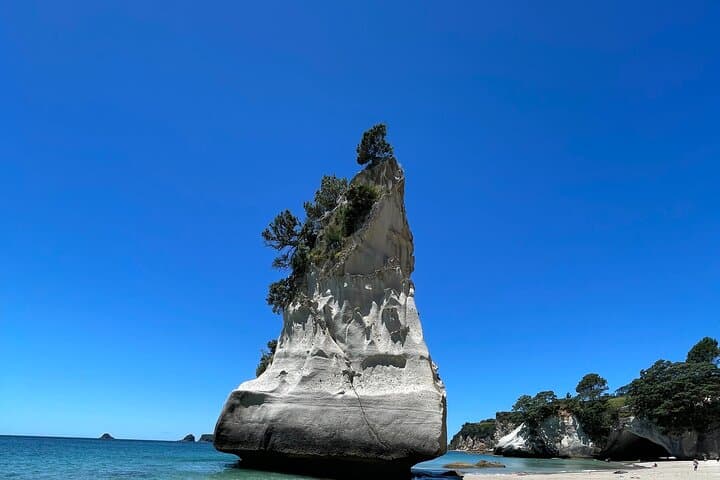
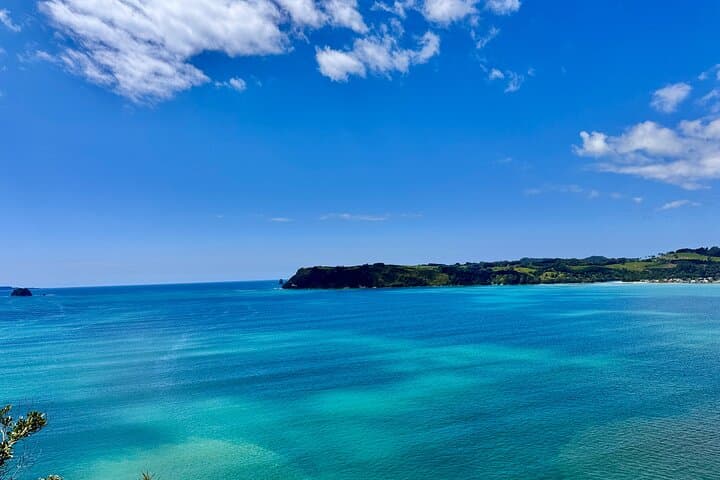
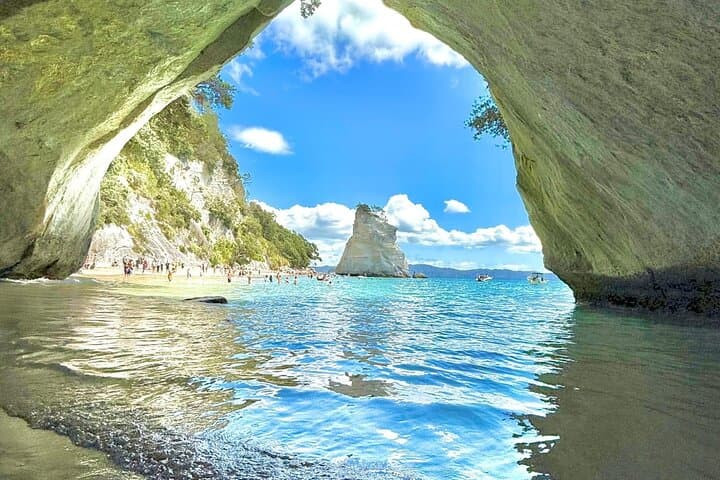
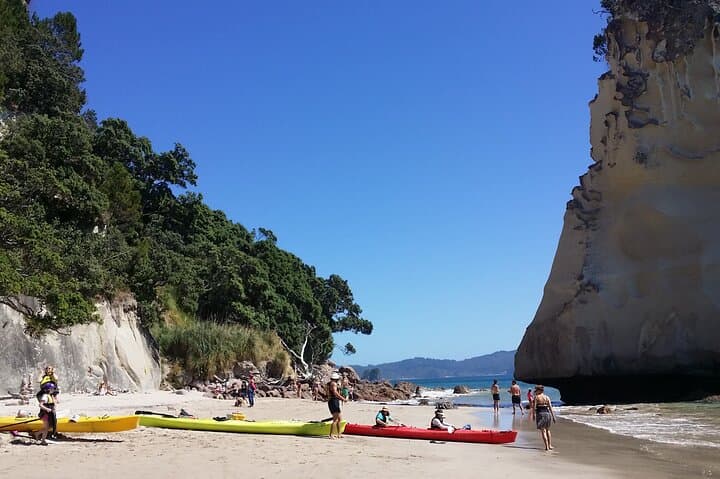
You step onto the coastal track and the Pacific spreads wide: cliffs push the wind into your face, gulls quarter the sky, and a natural stone arch yawns ahead like a doorway to a different shore. The walk to Cathedral Cove rewards steady lungs and loose gravel with sudden coves, turquoise water, and an arch large enough to frame the ocean itself.
You step onto the coastal track and the Pacific spreads wide: cliffs push the wind into your face, gulls quarter the sky, and a natural stone arch yawns ahead like a doorway to a different shore. The walk to Cathedral Cove rewards steady lungs and loose gravel with sudden coves, turquoise water, and an arch large enough to frame the ocean itself.
This stretch of the Coromandel Peninsula sits on volcanic bedrock and uplifted sandstone; the arch at Cathedral Cove was sculpted by wave action and time, while Hot Water Beach gets its warmth from shallow geothermal upwellings along fault lines under the sand. Māori used these places for food gathering and coastal travel; today small settlements like Hahei and Whitianga carry both fishing and tourism traditions.
Expect a coastal trail of roughly 2.2 km one-way with modest climbs and stair sections, cliff-top viewpoints, and beaches suited to swimming and snorkeling. Hot Water Beach is a low-tide activity: dig a shallow pool and let warm springs lap the sand, but watch the tide—they reclaim the shore quickly.
Practical guidance: plan the day around tide charts, bring sun protection, a light jacket for wind, and footwear that handles sand and uneven trail. Hydrate and carry a small first-aid kit; cell reception is intermittent. Guides commonly include transport, a shovel, and local knowledge—use them to time your visit and learn where to safely build a pool. The day blends a brisk coastal hike, geological spectacle, and an unusual geothermal soak—simple to prepare for, memorable in practice.