THE ADVENTURE COLLECTIVE® · Independent discovery and booking for outdoor travel

Walk Catania’s Baroque streets and follow the volcanic coastline to the Cyclops Riviera. This guided day tour mixes Roman ruins, a lively fish market and seaside myths with practical stops for photos and local bites.
Walk Catania’s Baroque streets and follow the volcanic coastline to the Cyclops Riviera. This guided day tour mixes Roman ruins, a lively fish market and seaside myths with practical stops for photos and local bites.
The morning opens on Piazza del Duomo where the cathedral’s black-and-white stone feels warm underfoot and Mount Etna looms like a distant, active presence.
Strolling down Via Etnea, the guide threads together Baroque façades and volcanic layers, leading the group from Catania’s Roman remains to the fisher stalls that still shout prices each dawn.
Verified experiences and guided adventures in the surrounding area.
Operated by Sicily Grand Tour · Catania, Sicily
The morning opens on Piazza del Duomo where the cathedral’s black-and-white stone feels warm underfoot and Mount Etna looms like a distant, active presence.
Strolling down Via Etnea, the guide threads together Baroque façades and volcanic layers, leading the group from Catania’s Roman remains to the fisher stalls that still shout prices each dawn.
The route moves east along the Ionian coast toward the Cyclops Riviera — Aci Trezza and its Faraglioni — volcanic sea stacks tied to the Polyphemus myth. Geology here is visible: basalt columns and lava-reshaped cliffs tell of repeated Etna eruptions and ancient lava flows that met the sea. Catania’s identity is equally layered: Greek colony, Roman outpost, Norman stronghold, and a Baroque city rebuilt after the 1693 earthquake.
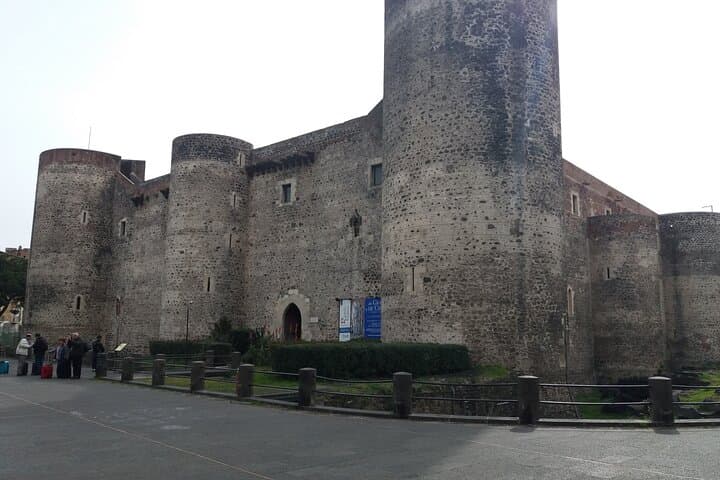
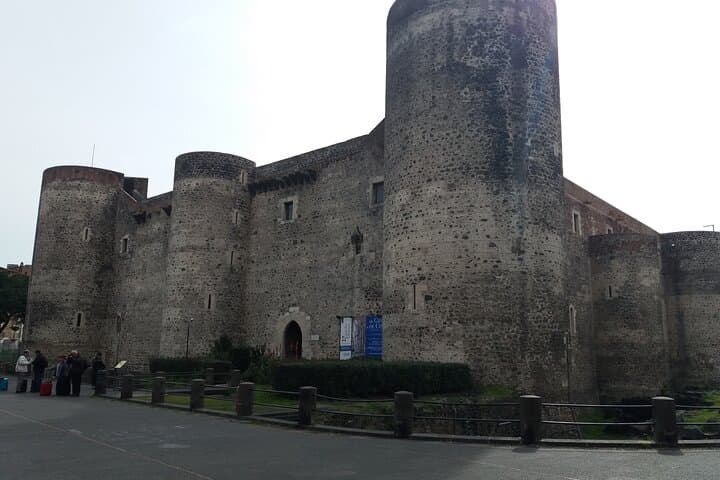
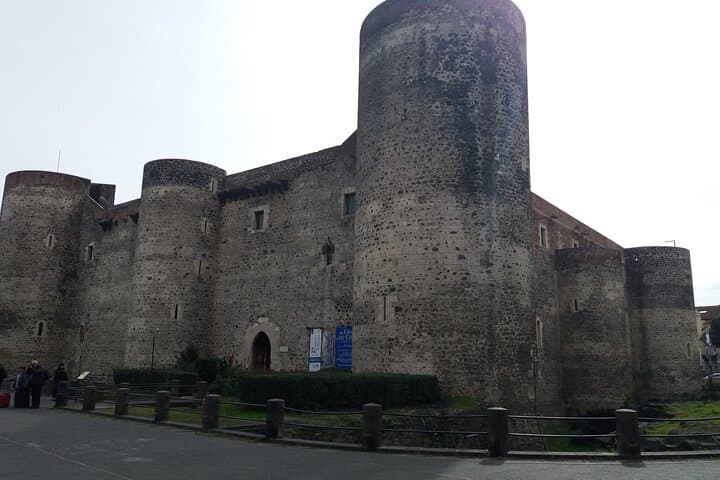
Cultural notes surface naturally: a stop at the fish market for local street-food style bites, a walk past medieval Castello Ursino, and a pause at a seaside viewpoint to imagine Odysseus and the giant Cyclops. Wildlife is subtle — seabirds wheel and, on lucky days, a pod of dolphins slips past the rocks.
Practical guidance: this full-day, mostly easy tour requires comfortable walking shoes, sun protection, and a light layer for coastal breezes. Expect about six hours total with short transfers by air-conditioned minivan, intermittent walking on cobbles, and one-hour leisure time in Aci Trezza. Carry cash for small purchases, hydrate frequently in summer, and plan for clear views of Etna in the morning when haze is lowest.
easy.
5–6 hours.
Suitable for travelers of average fitness who can walk short distances on uneven surfaces; minimal elevation change.
The tour runs about six hours with a mix of short guided walks, transfers by air-conditioned vehicle, and an hour of free time in Aci Trezza.
Yes—this is rated easy and designed for a broad range of fitness levels; notify the operator of mobility needs for pickup and seating accommodations.
No—food is not included; the itinerary includes stops where you can sample local street food and seafood at your own expense.
Yes—Via Etnea and coastal viewpoints offer good views of Etna on clear days; visibility is best in the morning and after low haze.
Catania grew from a Greek colony into a Roman and then Norman city; repeated Etna eruptions and the 1693 earthquake shaped much of its Baroque architecture.
Respect marine habitats around the Faraglioni—avoid collecting rocks or disturbing wildlife, and support local vendors to keep traditional fisheries viable.
Sicily Grand Tour operates guided outdoor trips and adventures with an emphasis on safety, stewardship, and memorable experiences.
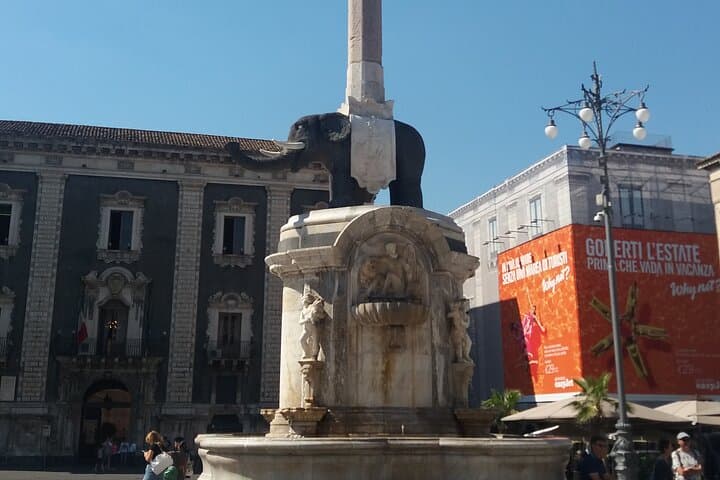
The morning opens on Piazza del Duomo where the cathedral’s black-and-white stone feels warm underfoot and Mount Etna looms like a distant, active presence.
Strolling down Via Etnea, the guide threads together Baroque façades and volcanic layers, leading the group from Catania’s Roman remains to the fisher stalls that still shout prices each dawn.
The morning opens on Piazza del Duomo where the cathedral’s black-and-white stone feels warm underfoot and Mount Etna looms like a distant, active presence.
Strolling down Via Etnea, the guide threads together Baroque façades and volcanic layers, leading the group from Catania’s Roman remains to the fisher stalls that still shout prices each dawn.
The route moves east along the Ionian coast toward the Cyclops Riviera — Aci Trezza and its Faraglioni — volcanic sea stacks tied to the Polyphemus myth. Geology here is visible: basalt columns and lava-reshaped cliffs tell of repeated Etna eruptions and ancient lava flows that met the sea. Catania’s identity is equally layered: Greek colony, Roman outpost, Norman stronghold, and a Baroque city rebuilt after the 1693 earthquake.
Cultural notes surface naturally: a stop at the fish market for local street-food style bites, a walk past medieval Castello Ursino, and a pause at a seaside viewpoint to imagine Odysseus and the giant Cyclops. Wildlife is subtle — seabirds wheel and, on lucky days, a pod of dolphins slips past the rocks.
Practical guidance: this full-day, mostly easy tour requires comfortable walking shoes, sun protection, and a light layer for coastal breezes. Expect about six hours total with short transfers by air-conditioned minivan, intermittent walking on cobbles, and one-hour leisure time in Aci Trezza. Carry cash for small purchases, hydrate frequently in summer, and plan for clear views of Etna in the morning when haze is lowest.