THE ADVENTURE COLLECTIVE® · Independent discovery and booking for outdoor travel

Explore Catania’s dramatic baroque center on a two-hour, family-friendly walking tour led by a certified guide. See Piazza Duomo, Via Crociferi, and the exteriors of landmark palaces while learning how Etna shaped the city beneath your feet.
Explore Catania’s dramatic baroque center on a two-hour, family-friendly walking tour led by a certified guide. See Piazza Duomo, Via Crociferi, and the exteriors of landmark palaces while learning how Etna shaped the city beneath your feet.
Mid-morning light skims the black lava stone of Piazza Duomo as a small group fans out behind a certified guide. The cadence is easy and adaptable—strollers and steady-paced walkers move at the same thoughtful tempo—while Mount Etna watches from the horizon, a reminder that the city’s stone and streets are heirs to volcanic upheaval.
Verified experiences and guided adventures in the surrounding area.
Operated by Sonia Arena · Catania, Sicily
Mid-morning light skims the black lava stone of Piazza Duomo as a small group fans out behind a certified guide. The cadence is easy and adaptable—strollers and steady-paced walkers move at the same thoughtful tempo—while Mount Etna watches from the horizon, a reminder that the city’s stone and streets are heirs to volcanic upheaval.
The walk threads through Catania’s post-1693 baroque rebirth: the Cathedral’s layered façade and octagonal dome, the sweeping civic presence of the town hall, the sculpted concave-and-convex lines of churches that speak to Sicilian Baroque grammar. Underfoot, lava has both buried and preserved earlier Roman layers; local guides point out where underground pockets and former streets lie beneath modern plazas. You’ll pass Via Crociferi’s narrow baroque street, admire the Palazzo Biscari from outside, and pause for a local lemon squeeze—a small, bright ritual in Catania’s market culture.
Practical guidance: this private, two-hour tour is physically easy but involves cobbled streets and short standing stops—comfortable shoes and a refillable water bottle matter. Morning or late afternoon avoids summer heat; bring a light layer for coastal winds and occasional Etna dust. The route links major plazas and alleyways with public-transport access and is family-friendly, but it’s not recommended for people with serious spinal issues. Carry some cash for market treats and expect clear, fact-driven narration from a certified local guide. The tour balances discovery with accessibility, letting visitors feel the city’s alive geology and baroque pride while keeping logistics simple and manageable.
easy.
2 hours.
Suitable for most fitness levels; requires 1–2 hours of easy walking and standing.
The guided walk lasts about two hours and covers central Catania highlights at a relaxed pace.
The route is stroller-accessible and generally suitable for many wheelchairs, but cobbles and some uneven pavement can present challenges; contact the operator for specifics.
This private walking tour focuses on exteriors and narration; admissions and food or drink (like a lemon squeeze) are typically not included.
Tours are led by certified local guides; language availability may vary—check booking details or request your preferred language at reservation.
Catania was largely rebuilt after the devastating 1693 earthquake in a distinctive Sicilian Baroque style; many buildings reflect the rapid reconstruction using local lava stone.
Respect historic fabric by sticking to marked paths and avoiding leaning or climbing on fragile façades; support local markets and small businesses to keep tourism benefits local.
Sonia Arena operates guided outdoor trips and adventures with an emphasis on safety, stewardship, and memorable experiences.
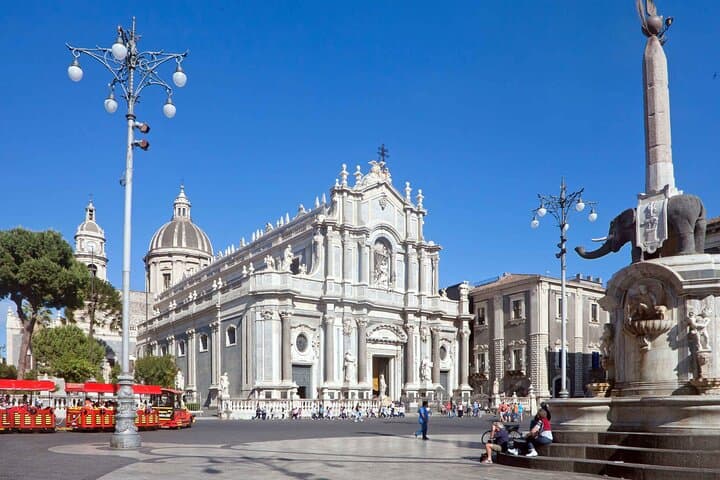
Mid-morning light skims the black lava stone of Piazza Duomo as a small group fans out behind a certified guide. The cadence is easy and adaptable—strollers and steady-paced walkers move at the same thoughtful tempo—while Mount Etna watches from the horizon, a reminder that the city’s stone and streets are heirs to volcanic upheaval.
Mid-morning light skims the black lava stone of Piazza Duomo as a small group fans out behind a certified guide. The cadence is easy and adaptable—strollers and steady-paced walkers move at the same thoughtful tempo—while Mount Etna watches from the horizon, a reminder that the city’s stone and streets are heirs to volcanic upheaval.
The walk threads through Catania’s post-1693 baroque rebirth: the Cathedral’s layered façade and octagonal dome, the sweeping civic presence of the town hall, the sculpted concave-and-convex lines of churches that speak to Sicilian Baroque grammar. Underfoot, lava has both buried and preserved earlier Roman layers; local guides point out where underground pockets and former streets lie beneath modern plazas. You’ll pass Via Crociferi’s narrow baroque street, admire the Palazzo Biscari from outside, and pause for a local lemon squeeze—a small, bright ritual in Catania’s market culture.
Practical guidance: this private, two-hour tour is physically easy but involves cobbled streets and short standing stops—comfortable shoes and a refillable water bottle matter. Morning or late afternoon avoids summer heat; bring a light layer for coastal winds and occasional Etna dust. The route links major plazas and alleyways with public-transport access and is family-friendly, but it’s not recommended for people with serious spinal issues. Carry some cash for market treats and expect clear, fact-driven narration from a certified local guide. The tour balances discovery with accessibility, letting visitors feel the city’s alive geology and baroque pride while keeping logistics simple and manageable.