THE ADVENTURE COLLECTIVE® · Independent discovery and booking for outdoor travel

Sail from the Costa Brava to the Medes Islands and peer into the Mediterranean through a catamaran’s underwater viewing rooms. Expect shallow reefs, historic coastal ruins and a calm half-day stop in Estartit for market stalls and local seafood.
Sail from the Costa Brava to the Medes Islands and peer into the Mediterranean through a catamaran’s underwater viewing rooms. Expect shallow reefs, historic coastal ruins and a calm half-day stop in Estartit for market stalls and local seafood.
The catamaran slips out of the harbor and the coastline of the Costa Brava unspools—rocky headlands, low pine slopes and the clipped silhouette of Montgrí rising like a sleeping figure above the bay. Salt spray cools the face as the boat crosses the Gulf of Roses; the sea seems to press forward, offering a clear window into life below.
Verified experiences and guided adventures in the surrounding area.
Operated by Els Blaus de Roses · L'Estartit, Girona
The catamaran slips out of the harbor and the coastline of the Costa Brava unspools—rocky headlands, low pine slopes and the clipped silhouette of Montgrí rising like a sleeping figure above the bay. Salt spray cools the face as the boat crosses the Gulf of Roses; the sea seems to press forward, offering a clear window into life below.
The Medes Islands are small, rocky outcrops with a long human story: once a refuge for fishermen and, by rumor and record, pirates. Geologically they’re the remains of resistant rock standing against a coastline shaped by ancient sea levels and modern erosion, surrounded by dense beds of Posidonia oceanica—vital seagrass that sustains the marine ecosystem.
Culturally the route brushes Greek and Roman shores at Sant Martí d’Empúries, where ruins speak to centuries of coastal trade, and modern fishing villages like L’Estartit that celebrate seafood and local markets.
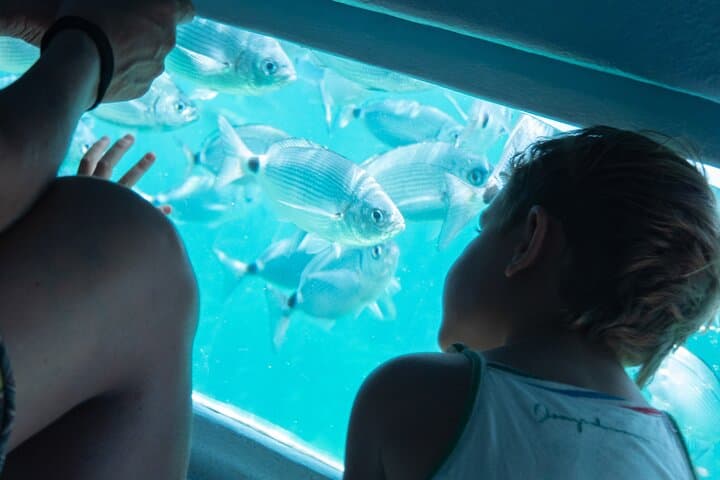
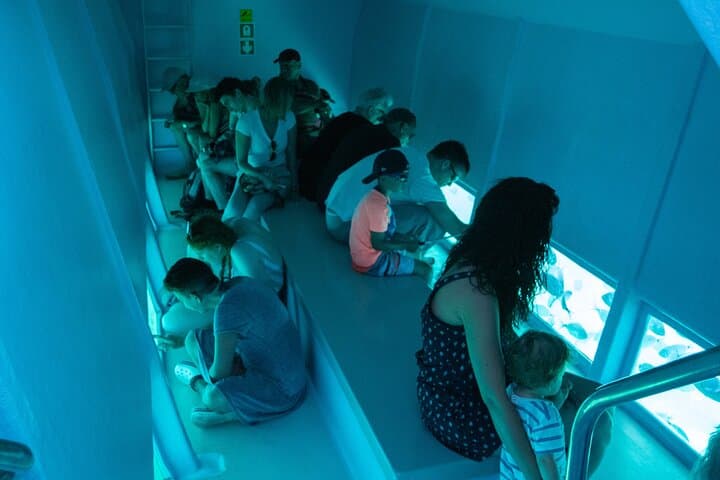
Practical guidance sits close to the poetic: passengers will use the catamaran’s underwater viewing rooms to observe reefs, boulders and schools of fish without getting wet, then spend about 90 minutes ashore in Estartit—enough time to walk the market or enter the water from the beach with a snorkel.
Bring reef-safe sunscreen, a light wind layer and water; schedule trips in morning or late afternoon for calmer seas and clearer views. Respect the marine park rules—no anchoring on seagrass beds and keep distance from protected areas. The trip is accessible and family-friendly, offering an efficient way to see submerged life and coastal history in one outing.
easy.
Approximately 5 hours (total tour time).
Suitable for most fitness levels; involves short walks onshore and boarding ramps on the boat
Yes—these tours are scheduled and can fill; book ahead to secure preferred departure times.
Yes—the tour includes access to underwater viewing rooms where passengers can see the seabed without diving.
Yes—it's family-friendly; non-swimmers can enjoy the viewing rooms and shore stops without entering the water.
Tours are cancellable for a full refund if canceled due to bad weather, typically at least 24 hours notice per operator policy.
The Medes Islands were historically fished and at times served as hideouts; the nearby Empúries coast holds Greek and Roman archaeological sites from ancient trade routes.
The islands are part of a marine protected area—avoid disturbing habitats, use reef-safe products and follow local rules to protect Posidonia seagrass and spawning grounds.
Els Blaus de Roses operates guided outdoor trips and adventures with an emphasis on safety, stewardship, and memorable experiences.


The catamaran slips out of the harbor and the coastline of the Costa Brava unspools—rocky headlands, low pine slopes and the clipped silhouette of Montgrí rising like a sleeping figure above the bay. Salt spray cools the face as the boat crosses the Gulf of Roses; the sea seems to press forward, offering a clear window into life below.
The catamaran slips out of the harbor and the coastline of the Costa Brava unspools—rocky headlands, low pine slopes and the clipped silhouette of Montgrí rising like a sleeping figure above the bay. Salt spray cools the face as the boat crosses the Gulf of Roses; the sea seems to press forward, offering a clear window into life below.
The Medes Islands are small, rocky outcrops with a long human story: once a refuge for fishermen and, by rumor and record, pirates. Geologically they’re the remains of resistant rock standing against a coastline shaped by ancient sea levels and modern erosion, surrounded by dense beds of Posidonia oceanica—vital seagrass that sustains the marine ecosystem.
Culturally the route brushes Greek and Roman shores at Sant Martí d’Empúries, where ruins speak to centuries of coastal trade, and modern fishing villages like L’Estartit that celebrate seafood and local markets.
Practical guidance sits close to the poetic: passengers will use the catamaran’s underwater viewing rooms to observe reefs, boulders and schools of fish without getting wet, then spend about 90 minutes ashore in Estartit—enough time to walk the market or enter the water from the beach with a snorkel.
Bring reef-safe sunscreen, a light wind layer and water; schedule trips in morning or late afternoon for calmer seas and clearer views. Respect the marine park rules—no anchoring on seagrass beds and keep distance from protected areas. The trip is accessible and family-friendly, offering an efficient way to see submerged life and coastal history in one outing.