THE ADVENTURE COLLECTIVE® · Independent discovery and booking for outdoor travel

A reliable, scenic 75‑minute ferry ride from Avalon to Newport Beach aboard the three‑deck Catalina Flyer. Expect open‑air viewing, onboard amenities, and potential dolphin sightings on this popular island‑to‑mainland connection.
A reliable, scenic 75‑minute ferry ride from Avalon to Newport Beach aboard the three‑deck Catalina Flyer. Expect open‑air viewing, onboard amenities, and potential dolphin sightings on this popular island‑to‑mainland connection.
The Catalina Flyer slices across blue Pacific in a steady, purposeful rhythm — three decks catching sun and wind as Avalon shrinks into a shoreline of stucco and palms. From the open-air upper deck the island’s steep, shrub-draped ridges and the white wash of coves slide past; gulls wheel close enough to hear. Onboard, the enclosed main deck offers respite from spray and wind, while the snack bar and bar on the mid deck keep passengers comfortable during the roughly 75-minute transit.
Verified experiences and guided adventures in the surrounding area.
Operated by Catalina Flyer · Newport Beach, California
The Catalina Flyer slices across blue Pacific in a steady, purposeful rhythm — three decks catching sun and wind as Avalon shrinks into a shoreline of stucco and palms. From the open-air upper deck the island’s steep, shrub-draped ridges and the white wash of coves slide past; gulls wheel close enough to hear. Onboard, the enclosed main deck offers respite from spray and wind, while the snack bar and bar on the mid deck keep passengers comfortable during the roughly 75-minute transit.
Catalina Island sits on a block of uplifted marine sediment and volcanic rock, its interior carved by erosion into steep canyons and coastal terraces. Indigenous Tongva communities lived here for millennia before the island anchored ranching, mining, and later resort development — William Wrigley Jr.’s investments in the early 20th century shaped Avalon’s waterfront architecture and hospitality legacy.
Expect a practical, scenic crossing rather than a sightseeing cruise: the route connects Avalon’s harbor with Newport Beach’s Balboa/Harbor area and is popular with day-trippers and locals. Wildlife sightings are common — pods of dolphins often ride the bow wave, while seals and seabirds pepper the route. Timing matters: mornings can be glassy calm, afternoons breezier and cooler.
Practical tips: arrive 45–60 minutes early to pick up boarding passes; wear a windproof layer and sun protection; stow valuables in a dry bag if you occupy the open deck. If you get seasick, taking medication before boarding and facing forward on deck will help. Restrooms and seating are available onboard, and the vessel is wheelchair accessible, making this a straightforward, reliable link between island and mainland.
easy.
1–1.5 hours (75 minutes typical).
Suitable for most fitness levels; minimal mobility needed for boarding ramps and short walks to terminals
The trip takes approximately 75 minutes each way; allow extra time for boarding and disembarkation.
Yes — the Catalina Flyer has restrooms on board and indoor seating on the main and mid decks.
Yes — the vessel and terminals are wheelchair accessible; notify the operator in advance if you require assistance.
Service animals are allowed; non-service pets typically are not permitted—check the operator’s policy before booking.
Avalon’s waterfront grew into a resort town after early 20th‑century development by William Wrigley Jr.; the island also has a long Tongva cultural history.
Catalina and surrounding waters include marine protected areas and active island conservation programs — stick to marked trails, avoid feeding wildlife, and use reef‑safe sunscreen to limit impact.
Catalina Flyer operates guided outdoor trips and adventures with an emphasis on safety, stewardship, and memorable experiences.
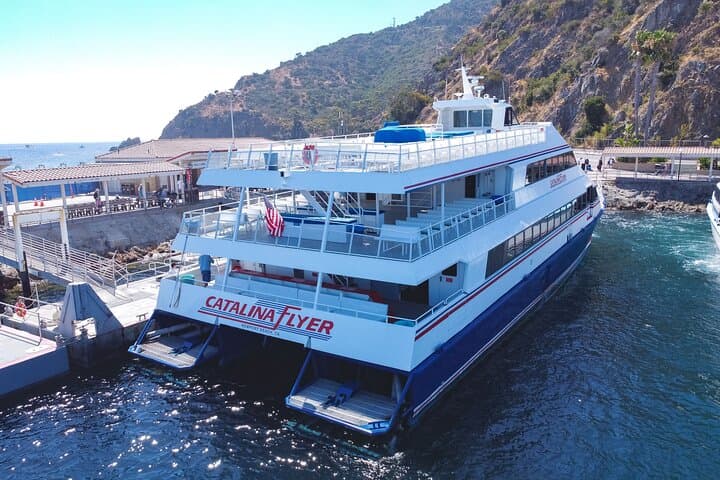
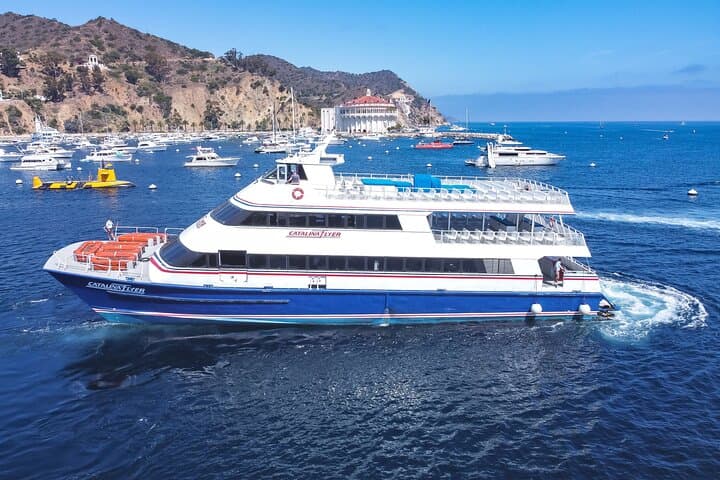

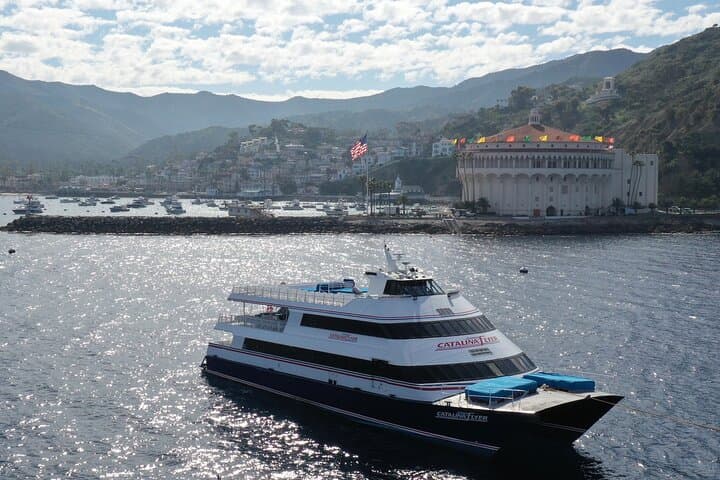
The Catalina Flyer slices across blue Pacific in a steady, purposeful rhythm — three decks catching sun and wind as Avalon shrinks into a shoreline of stucco and palms. From the open-air upper deck the island’s steep, shrub-draped ridges and the white wash of coves slide past; gulls wheel close enough to hear. Onboard, the enclosed main deck offers respite from spray and wind, while the snack bar and bar on the mid deck keep passengers comfortable during the roughly 75-minute transit.
The Catalina Flyer slices across blue Pacific in a steady, purposeful rhythm — three decks catching sun and wind as Avalon shrinks into a shoreline of stucco and palms. From the open-air upper deck the island’s steep, shrub-draped ridges and the white wash of coves slide past; gulls wheel close enough to hear. Onboard, the enclosed main deck offers respite from spray and wind, while the snack bar and bar on the mid deck keep passengers comfortable during the roughly 75-minute transit.
Catalina Island sits on a block of uplifted marine sediment and volcanic rock, its interior carved by erosion into steep canyons and coastal terraces. Indigenous Tongva communities lived here for millennia before the island anchored ranching, mining, and later resort development — William Wrigley Jr.’s investments in the early 20th century shaped Avalon’s waterfront architecture and hospitality legacy.
Expect a practical, scenic crossing rather than a sightseeing cruise: the route connects Avalon’s harbor with Newport Beach’s Balboa/Harbor area and is popular with day-trippers and locals. Wildlife sightings are common — pods of dolphins often ride the bow wave, while seals and seabirds pepper the route. Timing matters: mornings can be glassy calm, afternoons breezier and cooler.
Practical tips: arrive 45–60 minutes early to pick up boarding passes; wear a windproof layer and sun protection; stow valuables in a dry bag if you occupy the open deck. If you get seasick, taking medication before boarding and facing forward on deck will help. Restrooms and seating are available onboard, and the vessel is wheelchair accessible, making this a straightforward, reliable link between island and mainland.