THE ADVENTURE COLLECTIVE® · Independent discovery and booking for outdoor travel

A compact half-day trek from Sapa into the Muong Hoa Valley, Cat Cat Village pairs easy cultural immersion with waterfall views and terrace-side walking. This guided route is ideal for travelers seeking a short, insightful encounter with Black Hmong life and classic northern Vietnam scenery.
A compact half-day trek from Sapa into the Muong Hoa Valley, Cat Cat Village pairs easy cultural immersion with waterfall views and terrace-side walking. This guided route is ideal for travelers seeking a short, insightful encounter with Black Hmong life and classic northern Vietnam scenery.
You step out of Sapa’s narrow streets into mountain air that cools your shoulders and draws your gaze downhill—Cat Cat Village lies below, carved into the green ribs of the Muong Hoa Valley. The route slips from town across stone steps and terraced paths, trading views of Sapa’s clustered roofs for the close intimacy of rice terraces, wooden homes, and murmuring streams.
Verified experiences and guided adventures in the surrounding area.
Operated by Local Tours SAPA · Sapa, Lao Cai
You step out of Sapa’s narrow streets into mountain air that cools your shoulders and draws your gaze downhill—Cat Cat Village lies below, carved into the green ribs of the Muong Hoa Valley. The route slips from town across stone steps and terraced paths, trading views of Sapa’s clustered roofs for the close intimacy of rice terraces, wooden homes, and murmuring streams.
The village is home to the Black Hmong people and carries visible marks of history: a small waterfall fed by valley runoff and the ruins of a French-built hydraulic power station from the colonial era. The geology here is folded shale and metamorphic bedrock, shaped by monsoon runoff into narrow terraces and gullies; the terrain rewards attention because paths can be steep, rocky, and lined with carved stone steps.
Daily life is visible and active—women weaving indigo cloth, children guiding water buffalo, and local farms working the terraces. Your guide outlines cultural norms, points out textile techniques and sacred spots, and times the route so you reach the waterfall and bridge when light best highlights the valley.
Practicalities: the guided walk covers roughly 2.5 km of trekking (about two hours of walking within a 3.5-hour half-day window), with a short 1.5 km approach from Sapa town to the village gate. Expect a descent into the valley and an uphill return to the bus; wear grippy shoes and bring a small daypack with water and cash for entrance and crafts. Rain gear is essential in the wet months, and move respectfully through private areas—stick to marked routes to minimize erosion and disturbance.
This short trek delivers cultural insight and close-up mountain scenery without technical challenges, making it an efficient, sensory introduction to Sapa’s upland life if you have an afternoon to spare.
moderate.
2–3 hours.
Suitable for most people who can walk on uneven ground and manage a downhill then uphill return; not technically strenuous but requires basic stamina.
Yes—pick up and drop off in Sapa Town are included with the tour; confirm your hotel name and location when booking.
The guided walk inside the village is about 2.5 km and takes roughly two hours; it’s moderate due to stairs and a downhill/uphill profile but requires no technical skills.
Entrance to Cat Cat Village is included in the booking as listed in the tour inclusions.
Basic toilets and small snack stalls exist near the village and waterfall; bring hand sanitizer and expect simple facilities.
Cat Cat is traditionally a Black Hmong settlement; the village shows traces of French colonial investment such as a small hydraulic station built in the early 20th century.
Foot traffic and rainwater can accelerate erosion—stick to marked trails, avoid trampling terraces, and support local economies by buying from village artisans.
Local Tours SAPA operates guided outdoor trips and adventures with an emphasis on safety, stewardship, and memorable experiences.
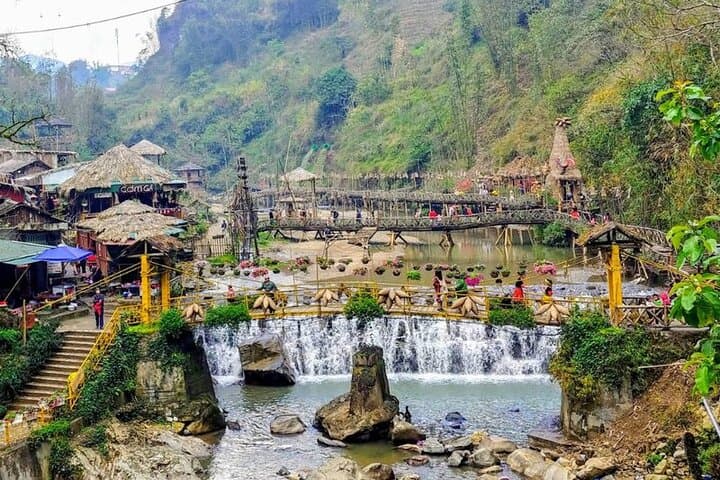
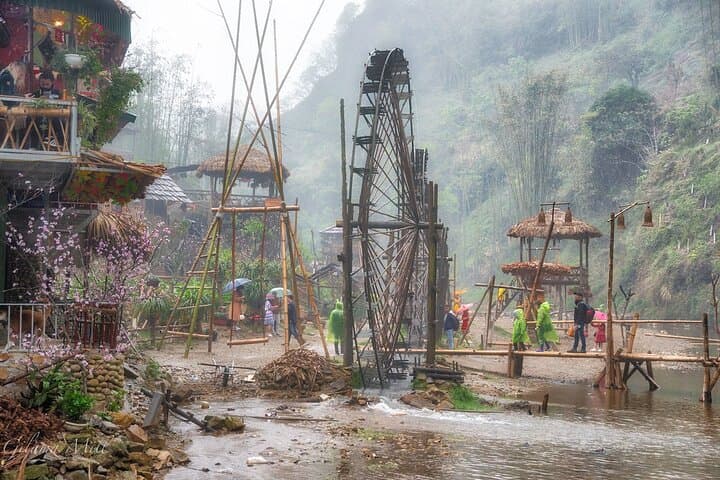

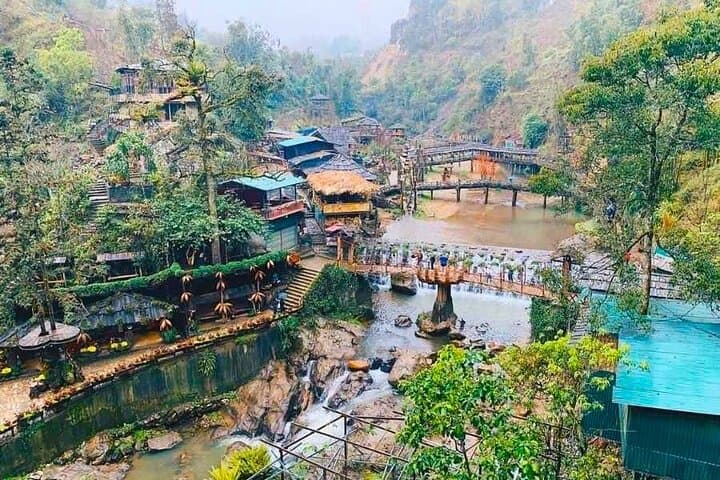
You step out of Sapa’s narrow streets into mountain air that cools your shoulders and draws your gaze downhill—Cat Cat Village lies below, carved into the green ribs of the Muong Hoa Valley. The route slips from town across stone steps and terraced paths, trading views of Sapa’s clustered roofs for the close intimacy of rice terraces, wooden homes, and murmuring streams.
You step out of Sapa’s narrow streets into mountain air that cools your shoulders and draws your gaze downhill—Cat Cat Village lies below, carved into the green ribs of the Muong Hoa Valley. The route slips from town across stone steps and terraced paths, trading views of Sapa’s clustered roofs for the close intimacy of rice terraces, wooden homes, and murmuring streams.
The village is home to the Black Hmong people and carries visible marks of history: a small waterfall fed by valley runoff and the ruins of a French-built hydraulic power station from the colonial era. The geology here is folded shale and metamorphic bedrock, shaped by monsoon runoff into narrow terraces and gullies; the terrain rewards attention because paths can be steep, rocky, and lined with carved stone steps.
Daily life is visible and active—women weaving indigo cloth, children guiding water buffalo, and local farms working the terraces. Your guide outlines cultural norms, points out textile techniques and sacred spots, and times the route so you reach the waterfall and bridge when light best highlights the valley.
Practicalities: the guided walk covers roughly 2.5 km of trekking (about two hours of walking within a 3.5-hour half-day window), with a short 1.5 km approach from Sapa town to the village gate. Expect a descent into the valley and an uphill return to the bus; wear grippy shoes and bring a small daypack with water and cash for entrance and crafts. Rain gear is essential in the wet months, and move respectfully through private areas—stick to marked routes to minimize erosion and disturbance.
This short trek delivers cultural insight and close-up mountain scenery without technical challenges, making it an efficient, sensory introduction to Sapa’s upland life if you have an afternoon to spare.