THE ADVENTURE COLLECTIVE® · Independent discovery and booking for outdoor travel

Explore Castro Verde by solving clues and discovering landmarks at your own pace. This self-guided, app-based scavenger hunt pairs light walking with cultural insights and local history.
Explore Castro Verde by solving clues and discovering landmarks at your own pace. This self-guided, app-based scavenger hunt pairs light walking with cultural insights and local history.
You step off the main square and the wind of the Alentejo plains pushes at your shoulders, guiding you past whitewashed facades toward the basilica’s carved stone. Castro Verde doesn’t rush — it offers details: plaques, tiles, a windmill turning like an old clock. This scavenger hunt turns those details into a map of curiosity.
Verified experiences and guided adventures in the surrounding area.
Operated by Explorial · Castro Verde, Beja
You step off the main square and the wind of the Alentejo plains pushes at your shoulders, guiding you past whitewashed facades toward the basilica’s carved stone. Castro Verde doesn’t rush — it offers details: plaques, tiles, a windmill turning like an old clock. This scavenger hunt turns those details into a map of curiosity.
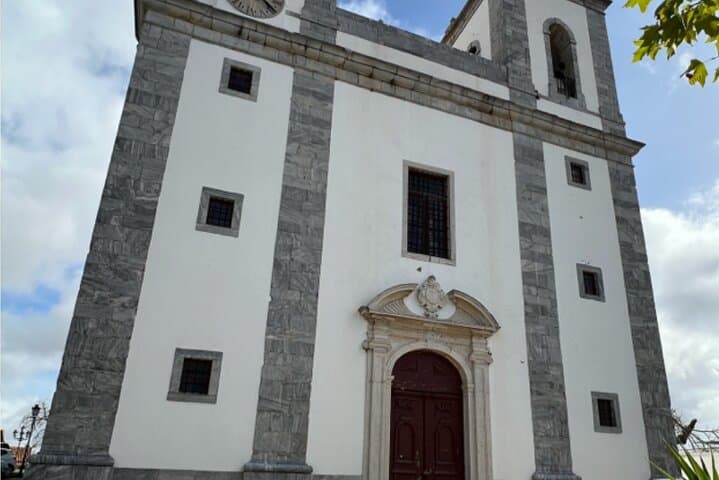
The route threads through the town’s baroque and vernacular architecture, leading to the Basílica Real de Nossa Senhora da Conceição and the Moinho de Castro Verde. The area’s geology — broad, low-lying schist and gentle limestone outcrops — shaped the agricultural rhythms and the grid of lanes you’ll walk. Cultural life here is tied to sheep grazing, traditional festivals, and a quiet devotion visible in small chapels and painted azulejos.
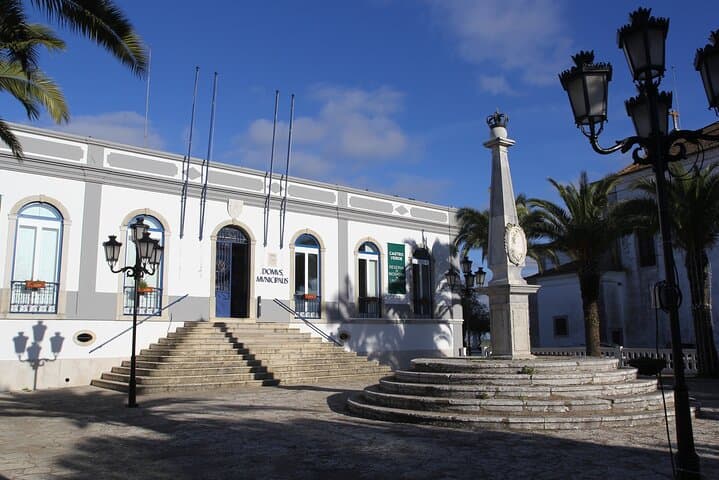
Historically, Castro Verde grew as a market and ecclesiastical center; its basilica marks centuries of local patronage and communal gatherings. Along the way you’ll encounter municipal squares, neighborhood shops, and Casa Dona Maria — elements of daily Portuguese life that give context to each clue.
Practically: the game runs on a mobile app and uses GPS hints and photo tasks; expect 1–2 hours of walking, around 2–3 km on mostly flat, paved or cobbled streets with short stair sections. Wear sturdy shoes, charge your phone, and carry water. The self-guided format lets you linger at museums or cafés, but be mindful of private property and agricultural land.
This is an urban, low-impact outdoor experience — ideal for curious walkers who want history, light exercise, and the satisfaction of solving local puzzles at their own pace.
easy.
1–2 hours.
Suitable for most fitness levels; requires moderate mobility for 2–3 km of walking
Most groups finish in 1–2 hours; the app-driven format lets you pause and explore longer if you wish.
Yes—clues and photo tasks are family-friendly, but supervise young children on streets and steps.
This is self-guided with instant confirmation; you receive an access code and can begin at your convenience within opening hours.
Much of the town center is paved but has cobbled surfaces and short stair sections; full accessibility may be limited in parts.
Castro Verde grew as a market town with a strong ecclesiastical presence; the Royal Basilica reflects parish wealth and communal identity from the 17th–18th centuries.
The surrounding Alentejo plains support steppe bird conservation; stick to public roads and avoid disturbing farmland or nesting grounds.
Explorial operates guided outdoor trips and adventures with an emphasis on safety, stewardship, and memorable experiences.

You step off the main square and the wind of the Alentejo plains pushes at your shoulders, guiding you past whitewashed facades toward the basilica’s carved stone. Castro Verde doesn’t rush — it offers details: plaques, tiles, a windmill turning like an old clock. This scavenger hunt turns those details into a map of curiosity.
You step off the main square and the wind of the Alentejo plains pushes at your shoulders, guiding you past whitewashed facades toward the basilica’s carved stone. Castro Verde doesn’t rush — it offers details: plaques, tiles, a windmill turning like an old clock. This scavenger hunt turns those details into a map of curiosity.
The route threads through the town’s baroque and vernacular architecture, leading to the Basílica Real de Nossa Senhora da Conceição and the Moinho de Castro Verde. The area’s geology — broad, low-lying schist and gentle limestone outcrops — shaped the agricultural rhythms and the grid of lanes you’ll walk. Cultural life here is tied to sheep grazing, traditional festivals, and a quiet devotion visible in small chapels and painted azulejos.
Historically, Castro Verde grew as a market and ecclesiastical center; its basilica marks centuries of local patronage and communal gatherings. Along the way you’ll encounter municipal squares, neighborhood shops, and Casa Dona Maria — elements of daily Portuguese life that give context to each clue.
Practically: the game runs on a mobile app and uses GPS hints and photo tasks; expect 1–2 hours of walking, around 2–3 km on mostly flat, paved or cobbled streets with short stair sections. Wear sturdy shoes, charge your phone, and carry water. The self-guided format lets you linger at museums or cafés, but be mindful of private property and agricultural land.
This is an urban, low-impact outdoor experience — ideal for curious walkers who want history, light exercise, and the satisfaction of solving local puzzles at their own pace.