THE ADVENTURE COLLECTIVE® · Independent discovery and booking for outdoor travel

Drive the Richardson Highway into the Delta Range, hike across low moraine to a shifting glacier ice cave, and return via North Pole’s Santa Claus House. This full-day trip blends easy terrain with winter conditions — great for adventurous day-trippers from Fairbanks.
Drive the Richardson Highway into the Delta Range, hike across low moraine to a shifting glacier ice cave, and return via North Pole’s Santa Claus House. This full-day trip blends easy terrain with winter conditions — great for adventurous day-trippers from Fairbanks.
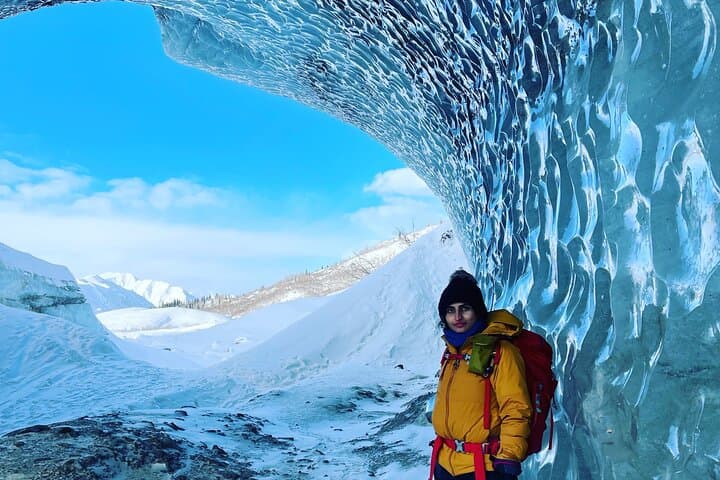
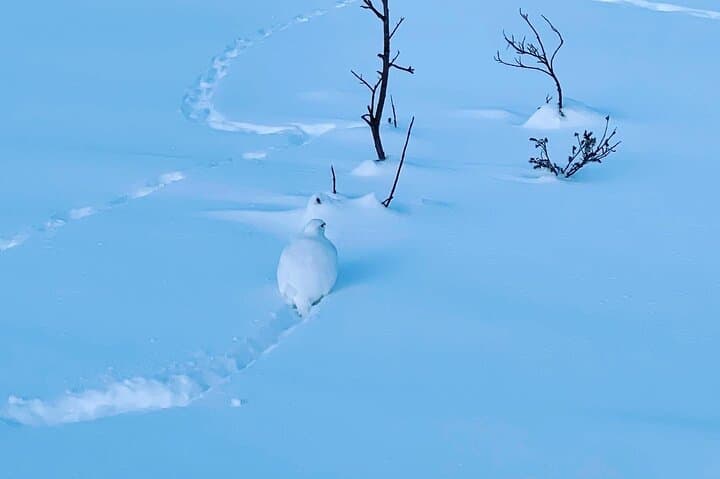
Morning light slides across spruce and tundra as your van pulls onto the Richardson Highway and the Alaska Range unfolds ahead. The mountains don’t wait — glaciers and ridgelines push a cold presence into the valley — and wildlife often appears roadside: moose browse, caribou cross without hurry. After roughly 2.5 hours of highway, you step where the trail begins and walk toward an ice cave carved into a moving mass of Castner Glacier.
Verified experiences and guided adventures in the surrounding area.
Operated by Vip Northern Lights Tours · Fairbanks, Alaska
Morning light slides across spruce and tundra as your van pulls onto the Richardson Highway and the Alaska Range unfolds ahead. The mountains don’t wait — glaciers and ridgelines push a cold presence into the valley — and wildlife often appears roadside: moose browse, caribou cross without hurry. After roughly 2.5 hours of highway, you step where the trail begins and walk toward an ice cave carved into a moving mass of Castner Glacier.
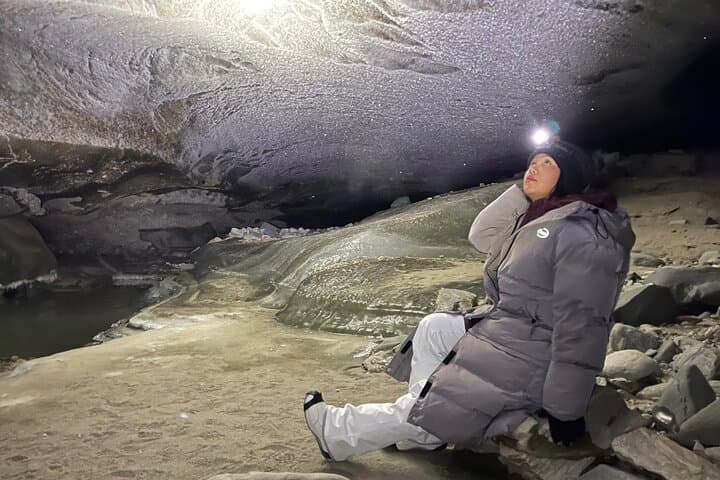
Geology here is direct: the Delta Range is an eastern arm of the Alaska Range, and these interior glacier caves form at relatively low elevation where ice, winter cold and seasonal melt combine to create sculpted chambers. The caves change with seasons and storms; no two visits feel the same. Culturally, the return route passes North Pole — a short stop at the Santa Claus House connects wilderness with local kitsch and Alaskan hospitality.
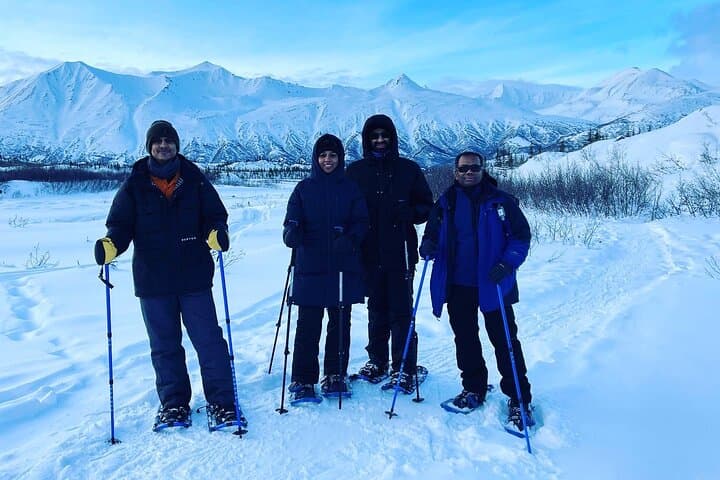
Expect a mostly flat approach of roughly 1.8–2.6 miles round trip from the trailhead, with minimal elevation gain but variable footing across moraine, snow and braided streams. Guides provide snowshoe rental when conditions demand; deep cold, wind and icier surfaces are real factors. BLM permits govern access, so follow route markers and stay out of unstable ice.
Practical tips: layer for sub-freezing temperatures, bring waterproof boots and gaiters, use trekking poles for stream crossings, and allow a full day (9–10 hours) for transport, hike, and stops. Respect wildlife distance, pack out waste, and be ready for rapidly shifting weather — the cave rewards patience with rare, bright blue ice and close-up glacier geology.
moderate.
9–10 hours.
Moderate fitness: steady walking over flat but uneven terrain; ability to handle cold-weather conditions.
Approach distances vary by trailhead and route; expect roughly 1.8–2.6 miles round trip on mostly flat terrain with variable footing.
Caves are unstable by nature and change seasonally — guides minimize risk by controlling access and you should follow their instructions and avoid venturing into unstable chambers.
Layered synthetic insulation, a windproof/waterproof shell, warm hat and gloves, and waterproof boots are essential; cold-weather conditions are the norm.
This tour is listed as all-sales-final; operators may cancel for bad weather or insufficient travelers, in which case refunds or alternatives are determined by the vendor.
The Delta Range sits on routes long used for subsistence travel and later highway development; today BLM permits regulate access to sensitive glacier features.
Ice caves and moraine are fragile; stay on approach routes, pack out waste, and avoid entering unstable ice to reduce impact and safety risk.
Vip Northern Lights Tours operates guided outdoor trips and adventures with an emphasis on safety, stewardship, and memorable experiences.
Morning light slides across spruce and tundra as your van pulls onto the Richardson Highway and the Alaska Range unfolds ahead. The mountains don’t wait — glaciers and ridgelines push a cold presence into the valley — and wildlife often appears roadside: moose browse, caribou cross without hurry. After roughly 2.5 hours of highway, you step where the trail begins and walk toward an ice cave carved into a moving mass of Castner Glacier.
Morning light slides across spruce and tundra as your van pulls onto the Richardson Highway and the Alaska Range unfolds ahead. The mountains don’t wait — glaciers and ridgelines push a cold presence into the valley — and wildlife often appears roadside: moose browse, caribou cross without hurry. After roughly 2.5 hours of highway, you step where the trail begins and walk toward an ice cave carved into a moving mass of Castner Glacier.
Geology here is direct: the Delta Range is an eastern arm of the Alaska Range, and these interior glacier caves form at relatively low elevation where ice, winter cold and seasonal melt combine to create sculpted chambers. The caves change with seasons and storms; no two visits feel the same. Culturally, the return route passes North Pole — a short stop at the Santa Claus House connects wilderness with local kitsch and Alaskan hospitality.
Expect a mostly flat approach of roughly 1.8–2.6 miles round trip from the trailhead, with minimal elevation gain but variable footing across moraine, snow and braided streams. Guides provide snowshoe rental when conditions demand; deep cold, wind and icier surfaces are real factors. BLM permits govern access, so follow route markers and stay out of unstable ice.
Practical tips: layer for sub-freezing temperatures, bring waterproof boots and gaiters, use trekking poles for stream crossings, and allow a full day (9–10 hours) for transport, hike, and stops. Respect wildlife distance, pack out waste, and be ready for rapidly shifting weather — the cave rewards patience with rare, bright blue ice and close-up glacier geology.