THE ADVENTURE COLLECTIVE® · Independent discovery and booking for outdoor travel

Scale medieval walls, trace glacial valleys, and hear the slate industry’s echo on a compact, scenery-rich day from Llandudno. This minibus tour hits Conwy, Dolbadarn, and Caernarfon Castles plus Snowdonia’s classic viewpoints and the National Slate Museum.
Scale medieval walls, trace glacial valleys, and hear the slate industry’s echo on a compact, scenery-rich day from Llandudno. This minibus tour hits Conwy, Dolbadarn, and Caernarfon Castles plus Snowdonia’s classic viewpoints and the National Slate Museum.
The minibus pulls away from Llandudno station and curls around the Great Orme’s one-way road, where limestone cliffs drop to a restless Irish Sea. Wind teases whitecaps and nudges the bus along; wild goats pick their way across the bracken as kittiwakes trace the air. It’s a quick hit of elevation and exposure that sets the tone: Wales moves between sea and summit in a heartbeat, and today you chase both.
Verified experiences and guided adventures in the surrounding area.
Operated by Adventure Tour Snowdonia · Llandudno, Wales
The minibus pulls away from Llandudno station and curls around the Great Orme’s one-way road, where limestone cliffs drop to a restless Irish Sea. Wind teases whitecaps and nudges the bus along; wild goats pick their way across the bracken as kittiwakes trace the air. It’s a quick hit of elevation and exposure that sets the tone: Wales moves between sea and summit in a heartbeat, and today you chase both.
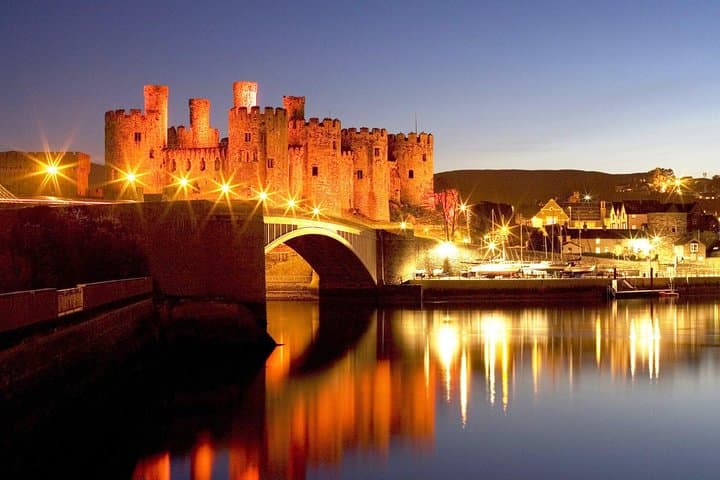
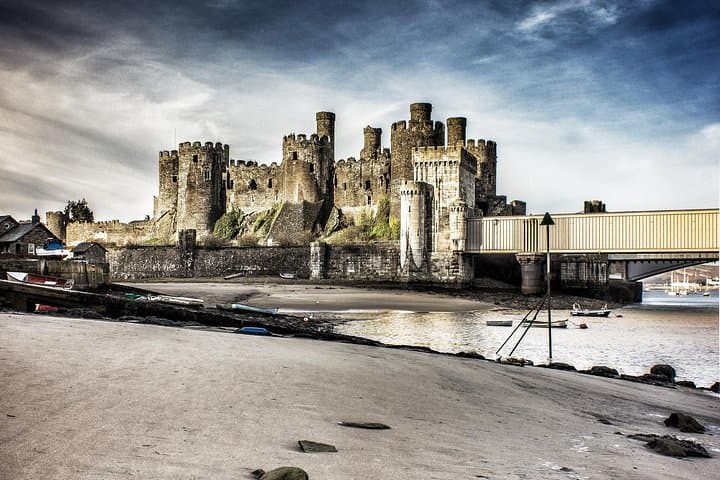
Conwy arrives with a skyline of battlements. Edward I’s 13th-century fortress still shoulders above the estuary, its walls daring you to climb for a view of slate roofs and fishing boats below. The town hums with quayside life—chip shop vinegar in the air, gulls lobbying for scraps—and Britain’s Smallest House, red-fronted and improbable, smiles for photos. Step across to Thomas Telford’s elegant suspension bridge and you step into the early age of engineering, ironwork arcing over the river.
From there, the road aims into Snowdonia. Nant Ffrancon drops away, a U-shaped valley planed by ice, while Tryfan’s shark-fin ridge crowds the windscreen. Llyn Ogwen lies dark and watchful, said to guard an Arthurian secret; the lake keeps its stories close, the breeze pushing ripples toward the shore. Between Pen-y-Pass and the Glyderau, the park’s geology speaks in clean lines—rhyolite crags, glacial lakes, and a horizon that keeps resetting.
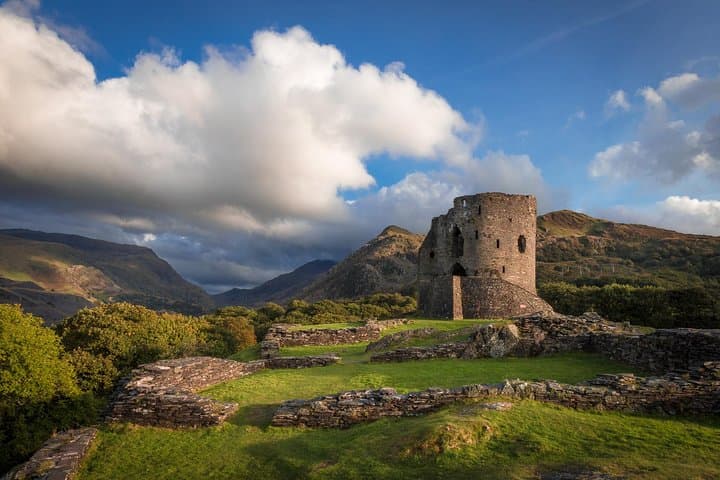
At the National Slate Museum in Llanberis, history is tangible. Giant waterwheels sleep beside workshops where the marks of chisels and hammers still cut the air. This is the UNESCO-listed Slate Landscape of Northwest Wales—an industry that roofed the world and carved communities into the hillsides. Above Llyn Padarn, Dolbadarn Castle—raised by Llywelyn the Great—holds a single round tower with a view that explains why it was built here.
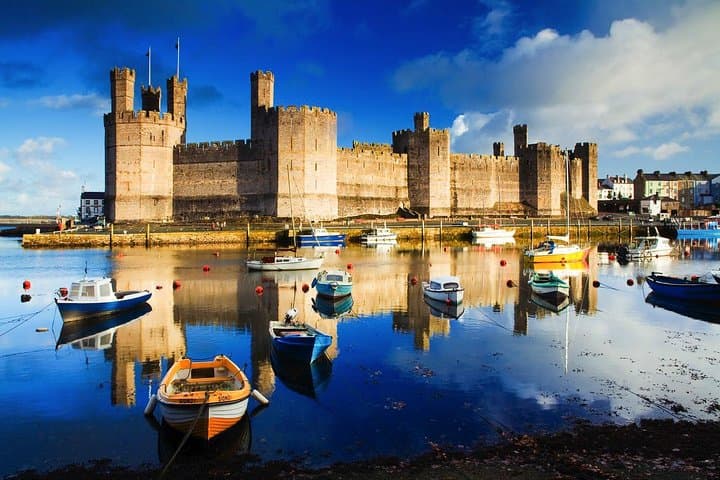
The day rounds out at Caernarfon, a brute of a fortress with polygonal towers mirrored in the Menai Strait. Flags snap. Steps narrow. The town’s lanes feed into the waterfront, where the tide tugs at moorings and cafés deliver strong tea. By the time you roll back along the coast, sand spits and headlands slide past in the late light, the sea still shouldering the land.
It’s a full-day sampler—about nine hours—with short walks, optional castle entries, and multiple photo stops. Expect quick shifts in weather and bring layers, comfortable shoes, and curiosity. The landscapes do the heavy lifting; the stories—kings, quarrymen, and coastal towns—fill in the rest.
easy.
9 hours.
Comfortable walking shoes recommended; expect multiple short walks, standing during talks, and stair climbing in castles if you opt in.
Expect several 10–30 minute walks at viewpoints, towns, and museums. Castle interiors require climbing steep, narrow stairs but are optional.
No. Admissions for Conwy and Caernarfon are optional and payable on site by cash or contactless.
Yes, but bring a collapsible stroller. Some castle sections and stairways are not stroller- or wheelchair-accessible.
Tours run rain or shine. The itinerary may adjust for safety, but Snowdonia’s shifting weather is part of the experience—bring layers and a waterproof.
Yes. You’ll have time in towns such as Conwy or Llanberis to buy lunch and snacks; you may also bring your own packed lunch.
Facilities are available at major stops including towns, visitor centers, and the museum; ask your guide for the next opportunity.
Conwy and Caernarfon were linchpins in Edward I’s 13th-century ring of castles, while Dolbadarn was built earlier by Llywelyn the Great to guard the Llanberis Pass. The region’s slate industry later reshaped the landscape and is now recognized as a UNESCO World Heritage Site.
Stay on marked paths and walls to protect fragile masonry and vegetation; never climb barriers. Refill bottles, pack out rubbish, and give wildlife space—especially nesting seabirds and goats.
Adventure Tour Snowdonia operates guided outdoor trips and adventures with an emphasis on safety, stewardship, and memorable experiences.
The minibus pulls away from Llandudno station and curls around the Great Orme’s one-way road, where limestone cliffs drop to a restless Irish Sea. Wind teases whitecaps and nudges the bus along; wild goats pick their way across the bracken as kittiwakes trace the air. It’s a quick hit of elevation and exposure that sets the tone: Wales moves between sea and summit in a heartbeat, and today you chase both.
The minibus pulls away from Llandudno station and curls around the Great Orme’s one-way road, where limestone cliffs drop to a restless Irish Sea. Wind teases whitecaps and nudges the bus along; wild goats pick their way across the bracken as kittiwakes trace the air. It’s a quick hit of elevation and exposure that sets the tone: Wales moves between sea and summit in a heartbeat, and today you chase both.
Conwy arrives with a skyline of battlements. Edward I’s 13th-century fortress still shoulders above the estuary, its walls daring you to climb for a view of slate roofs and fishing boats below. The town hums with quayside life—chip shop vinegar in the air, gulls lobbying for scraps—and Britain’s Smallest House, red-fronted and improbable, smiles for photos. Step across to Thomas Telford’s elegant suspension bridge and you step into the early age of engineering, ironwork arcing over the river.
From there, the road aims into Snowdonia. Nant Ffrancon drops away, a U-shaped valley planed by ice, while Tryfan’s shark-fin ridge crowds the windscreen. Llyn Ogwen lies dark and watchful, said to guard an Arthurian secret; the lake keeps its stories close, the breeze pushing ripples toward the shore. Between Pen-y-Pass and the Glyderau, the park’s geology speaks in clean lines—rhyolite crags, glacial lakes, and a horizon that keeps resetting.
At the National Slate Museum in Llanberis, history is tangible. Giant waterwheels sleep beside workshops where the marks of chisels and hammers still cut the air. This is the UNESCO-listed Slate Landscape of Northwest Wales—an industry that roofed the world and carved communities into the hillsides. Above Llyn Padarn, Dolbadarn Castle—raised by Llywelyn the Great—holds a single round tower with a view that explains why it was built here.
The day rounds out at Caernarfon, a brute of a fortress with polygonal towers mirrored in the Menai Strait. Flags snap. Steps narrow. The town’s lanes feed into the waterfront, where the tide tugs at moorings and cafés deliver strong tea. By the time you roll back along the coast, sand spits and headlands slide past in the late light, the sea still shouldering the land.
It’s a full-day sampler—about nine hours—with short walks, optional castle entries, and multiple photo stops. Expect quick shifts in weather and bring layers, comfortable shoes, and curiosity. The landscapes do the heavy lifting; the stories—kings, quarrymen, and coastal towns—fill in the rest.