THE ADVENTURE COLLECTIVE® · Independent discovery and booking for outdoor travel

Drive from Almaty to the cinematic Castle of Nomads and the ancient Besshatyr burial mounds in a single long day. Explore Scythian kurgans, river-valley steppe, and reconstructed medieval fortifications with a private guide and included lunch.
Drive from Almaty to the cinematic Castle of Nomads and the ancient Besshatyr burial mounds in a single long day. Explore Scythian kurgans, river-valley steppe, and reconstructed medieval fortifications with a private guide and included lunch.
You step out of the air-conditioned van and the Ili River valley opens—wide steppe, wind-sculpted reeds, and a low skyline dominated by five rounded burial mounds. The Castle of Nomads rises nearby: a modern reconstruction built for the film Nomad, its timber-and-stone façades echoing medieval Kazakh fortifications while the river murmurs a cool contrast.
Verified experiences and guided adventures in the surrounding area.
Operated by Explore Kazakhstan · Almaty, Almaty Region
You step out of the air-conditioned van and the Ili River valley opens—wide steppe, wind-sculpted reeds, and a low skyline dominated by five rounded burial mounds. The Castle of Nomads rises nearby: a modern reconstruction built for the film Nomad, its timber-and-stone façades echoing medieval Kazakh fortifications while the river murmurs a cool contrast.
Besshatyr (Bes Shatyr) sits roughly 195 km north of Almaty on the northern bank of the Ili. The site combines archaeology and landscape: Scythian-era kurgans ringed by stone fences, low earthen rises used as barrows for centuries, and a broad valley shaped by alluvial deposits and seasonal floods. The nearby castle is cinematic—recent, deliberate—while Besshatyr is ancient and austere, a place where nomadic ritual met funerary engineering.
Culturally, you’ll see the footprints of horse-based societies: grave goods, circular stone enclosures, and the open steppe that made mobility essential. Geologically the area is flat to gently undulating; expect dusty trails, compacted earth, and minimal elevation gain—most site walks are 1–2 km over uneven ground.
Practical guidance: this is a long day (about 12–14 hours door-to-door). Wear sturdy walking shoes with good tread, sun protection, and layered clothes for wind. Bring 2–3 liters of water, a camera with a spare battery, and patience for dusty conditions. Lunch and a private, air-conditioned vehicle are included, but restroom stops are basic outside larger towns. Start early to avoid the strongest afternoon sun and use the guide’s local knowledge to read the landscape and its stories.
easy.
12–14 hours.
Suitable for most fitness levels; expect short, easy walks totaling 2–4 km and long periods sitting in vehicle
The full itinerary involves roughly 4–5 hours of driving each way depending on stops; the package is billed as a 12–14 hour day trip.
Admission to Besshatyr is included in this tour; check with the operator for any additional site fees or seasonal closures.
Yes—operators note it’s suitable for all fitness levels; however expect long vehicle time and limited facilities at remote sites.
An English-speaking guide is included according to the tour details, but confirm language needs when booking.
Besshatyr’s kurgans date to Scythian-era nomadic cultures; the region served as a sacred and funerary landscape for successive nomadic groups.
Altyn Emel and surrounding valleys are sensitive steppe ecosystems—stay on paths, avoid disturbing archaeological features, and pack out all waste.
Explore Kazakhstan operates guided outdoor trips and adventures with an emphasis on safety, stewardship, and memorable experiences.
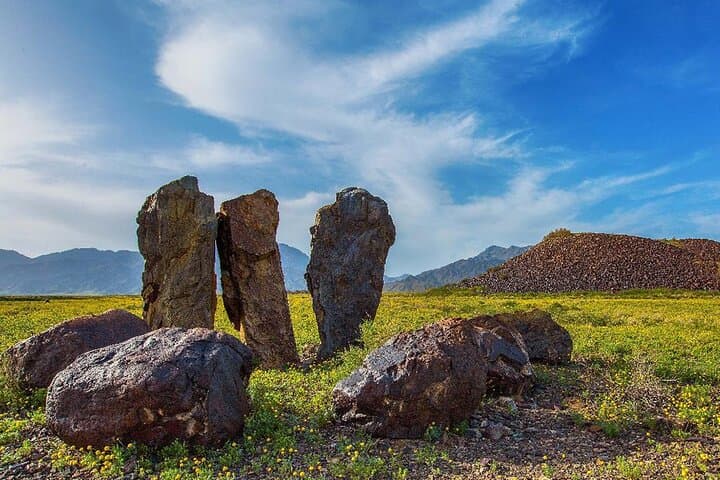
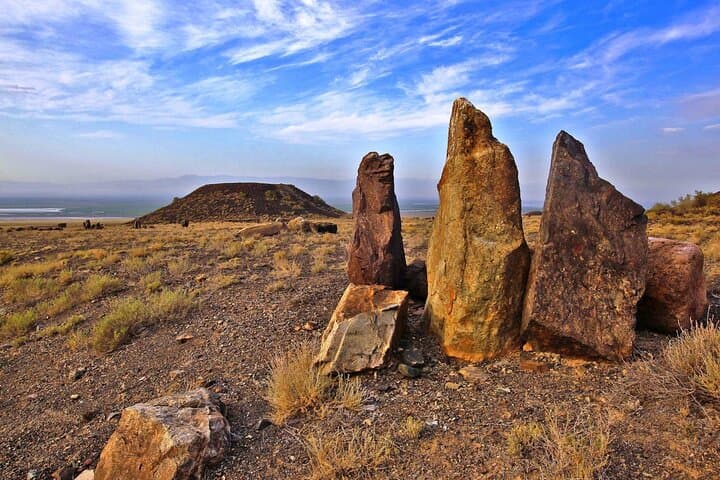
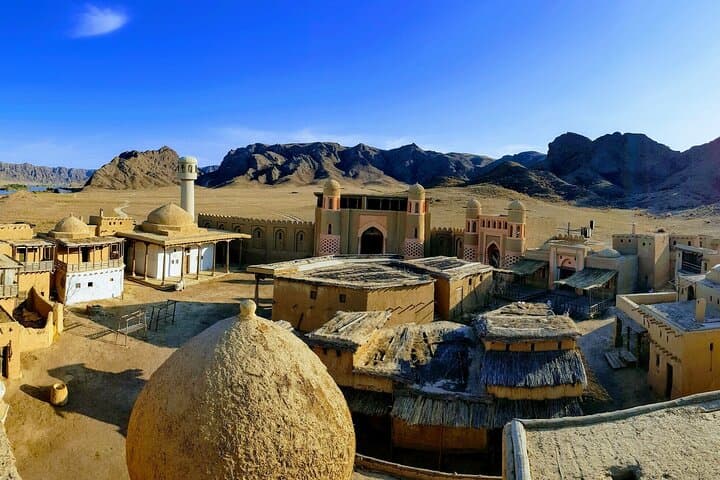
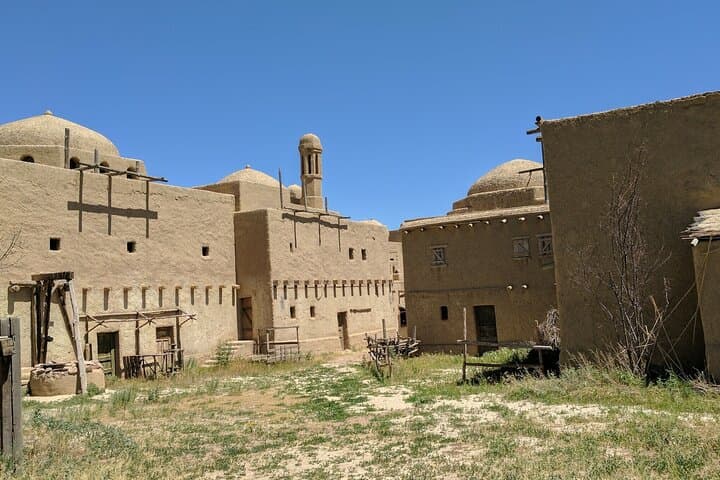
You step out of the air-conditioned van and the Ili River valley opens—wide steppe, wind-sculpted reeds, and a low skyline dominated by five rounded burial mounds. The Castle of Nomads rises nearby: a modern reconstruction built for the film Nomad, its timber-and-stone façades echoing medieval Kazakh fortifications while the river murmurs a cool contrast.
You step out of the air-conditioned van and the Ili River valley opens—wide steppe, wind-sculpted reeds, and a low skyline dominated by five rounded burial mounds. The Castle of Nomads rises nearby: a modern reconstruction built for the film Nomad, its timber-and-stone façades echoing medieval Kazakh fortifications while the river murmurs a cool contrast.
Besshatyr (Bes Shatyr) sits roughly 195 km north of Almaty on the northern bank of the Ili. The site combines archaeology and landscape: Scythian-era kurgans ringed by stone fences, low earthen rises used as barrows for centuries, and a broad valley shaped by alluvial deposits and seasonal floods. The nearby castle is cinematic—recent, deliberate—while Besshatyr is ancient and austere, a place where nomadic ritual met funerary engineering.
Culturally, you’ll see the footprints of horse-based societies: grave goods, circular stone enclosures, and the open steppe that made mobility essential. Geologically the area is flat to gently undulating; expect dusty trails, compacted earth, and minimal elevation gain—most site walks are 1–2 km over uneven ground.
Practical guidance: this is a long day (about 12–14 hours door-to-door). Wear sturdy walking shoes with good tread, sun protection, and layered clothes for wind. Bring 2–3 liters of water, a camera with a spare battery, and patience for dusty conditions. Lunch and a private, air-conditioned vehicle are included, but restroom stops are basic outside larger towns. Start early to avoid the strongest afternoon sun and use the guide’s local knowledge to read the landscape and its stories.