THE ADVENTURE COLLECTIVE® · Independent discovery and booking for outdoor travel

Perched high on Vomero hill, Castel Sant'Elmo offers sweeping views of the Bay of Naples and Mount Vesuvius alongside star‑shaped bastions, historic chambers, and interpretive displays — an ideal two‑hour visit for history buffs and photographers.
Perched high on Vomero hill, Castel Sant'Elmo offers sweeping views of the Bay of Naples and Mount Vesuvius alongside star‑shaped bastions, historic chambers, and interpretive displays — an ideal two‑hour visit for history buffs and photographers.
You crest the last cobbled street and the city opens like a map laid flat: terracotta roofs, the blue curve of the bay, and Vesuvius watching from across the water. Castel Sant'Elmo sits on the highest point of Vomero, its angular bastions slicing into the sky. Up close the stone smells faintly of salt and old gunpowder; the ramparts demand you slow down and look outward — at harbors, neighborhoods stacked on hills, and the tide of people below.
Verified experiences and guided adventures in the surrounding area.
Operated by Cosmic Tickets & Audios · Naples, Campania
You crest the last cobbled street and the city opens like a map laid flat: terracotta roofs, the blue curve of the bay, and Vesuvius watching from across the water. Castel Sant'Elmo sits on the highest point of Vomero, its angular bastions slicing into the sky. Up close the stone smells faintly of salt and old gunpowder; the ramparts demand you slow down and look outward — at harbors, neighborhoods stacked on hills, and the tide of people below.
The fortress began as a medieval hermitage but was transformed into the imposing, star‑shaped stronghold you see today during the 16th–17th centuries as artillery redefined military architecture. Over time it served as barracks, a political prison, and a civic space; its layers of plaster, iron hoops and patched masonry read like a history of Naples’ turbulent relationship with power. Geologically, the sentinel sits on volcanic ground—pozzolana ash has shaped the building materials and the very contours of the hill. Culturally, the castle is both a lookout and a stage: exhibitions rotate through its halls, while locals come up for sunset and the ritual of the city lighting up.
The visit is compact and practical. Expect two hours to move from the entry security through the courtyard, the historical chambers and up onto the ramparts. The climb includes stepped passages and level ramparts; there are accessible routes to lower exhibitions, but reaching every terrace involves stairs. Audio guides and interpretive panels orient you to the fortress’ strategic geometry and the panoramic relationship between Naples and the Bay.
Planwise: arrive early to avoid mandatory security lines, or aim for late afternoon when the light softens and Vesuvius glows. Public transport—funiculars and buses—will deliver you to Vomero without the parking hassle. This ticket is mobile-friendly; bring an ID and the emailed voucher. Wear sensible shoes for uneven stone and a wind layer for the ramparts. Photography is excellent from the western bastions and the central courtyard; if you’re shooting sunset, allow twenty minutes to get from the lower gate to the best viewpoint.
Practical rhythms: move from gallery to terrace, give the audio commentary a listen in at least one chamber, and leave time to descend into the surrounding streets of Vomero — cafés here keep the evening slow. Above all, treat the site like a working historical landscape: stick to marked paths, respect conservation signage, and let the fortress guide your view of a city that always seems to be in motion.
easy.
2 hours.
Light walking ability required; some stair climbing recommended but overall accessible to most visitors
Plan about two hours to see the main exhibitions, walk the ramparts and photograph the views.
No—security screening is mandatory for all visitors and cannot be bypassed.
The site has accessible routes and elevator access to some exhibition areas, but some terraces require stairs—contact the venue for specific access needs.
This is an independent entry ticket; interpretive panels and optional audio guides are available, but guided tours are not included.
Yes—strollers are allowed in accessible areas, though some ramps and staircases may limit access to every terrace.
Yes—photography is welcome; drones or professional equipment may require prior permission from the administration.
Built and remodeled between the 14th and 17th centuries, the fortress evolved into a star‑shaped bastion to resist cannon warfare and later served as a prison and military garrison.
Conservation efforts focus on stabilizing volcanic‑stone masonry and limiting visitor impact; stay on marked paths and avoid touching fragile surfaces.
Cosmic Tickets & Audios operates guided outdoor trips and adventures with an emphasis on safety, stewardship, and memorable experiences.

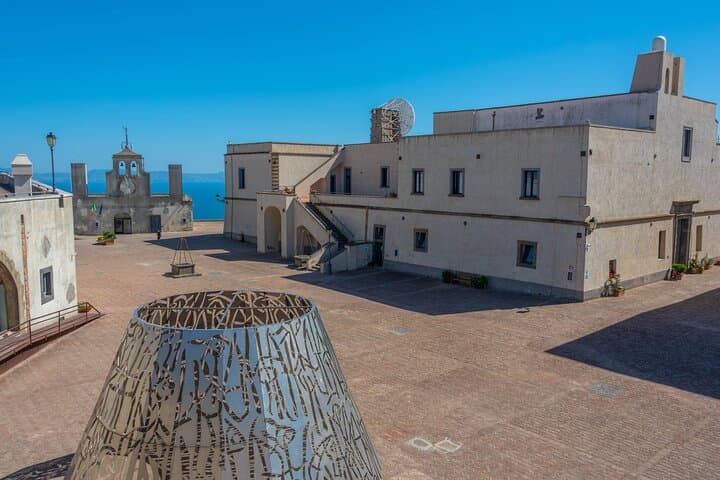

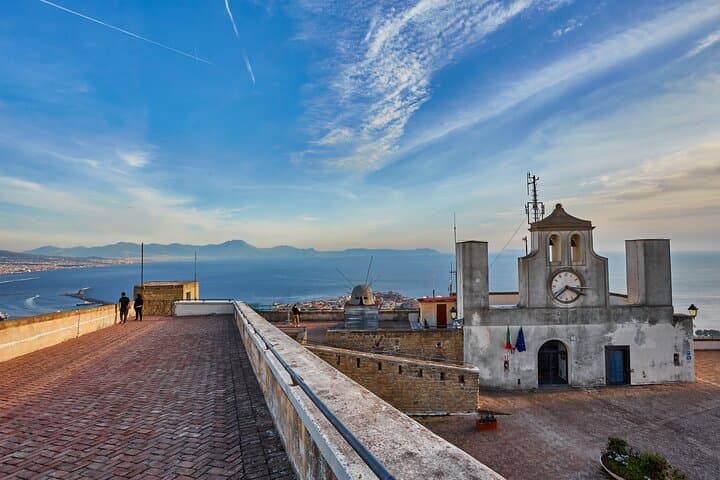
You crest the last cobbled street and the city opens like a map laid flat: terracotta roofs, the blue curve of the bay, and Vesuvius watching from across the water. Castel Sant'Elmo sits on the highest point of Vomero, its angular bastions slicing into the sky. Up close the stone smells faintly of salt and old gunpowder; the ramparts demand you slow down and look outward — at harbors, neighborhoods stacked on hills, and the tide of people below.
You crest the last cobbled street and the city opens like a map laid flat: terracotta roofs, the blue curve of the bay, and Vesuvius watching from across the water. Castel Sant'Elmo sits on the highest point of Vomero, its angular bastions slicing into the sky. Up close the stone smells faintly of salt and old gunpowder; the ramparts demand you slow down and look outward — at harbors, neighborhoods stacked on hills, and the tide of people below.
The fortress began as a medieval hermitage but was transformed into the imposing, star‑shaped stronghold you see today during the 16th–17th centuries as artillery redefined military architecture. Over time it served as barracks, a political prison, and a civic space; its layers of plaster, iron hoops and patched masonry read like a history of Naples’ turbulent relationship with power. Geologically, the sentinel sits on volcanic ground—pozzolana ash has shaped the building materials and the very contours of the hill. Culturally, the castle is both a lookout and a stage: exhibitions rotate through its halls, while locals come up for sunset and the ritual of the city lighting up.
The visit is compact and practical. Expect two hours to move from the entry security through the courtyard, the historical chambers and up onto the ramparts. The climb includes stepped passages and level ramparts; there are accessible routes to lower exhibitions, but reaching every terrace involves stairs. Audio guides and interpretive panels orient you to the fortress’ strategic geometry and the panoramic relationship between Naples and the Bay.
Planwise: arrive early to avoid mandatory security lines, or aim for late afternoon when the light softens and Vesuvius glows. Public transport—funiculars and buses—will deliver you to Vomero without the parking hassle. This ticket is mobile-friendly; bring an ID and the emailed voucher. Wear sensible shoes for uneven stone and a wind layer for the ramparts. Photography is excellent from the western bastions and the central courtyard; if you’re shooting sunset, allow twenty minutes to get from the lower gate to the best viewpoint.
Practical rhythms: move from gallery to terrace, give the audio commentary a listen in at least one chamber, and leave time to descend into the surrounding streets of Vomero — cafés here keep the evening slow. Above all, treat the site like a working historical landscape: stick to marked paths, respect conservation signage, and let the fortress guide your view of a city that always seems to be in motion.