THE ADVENTURE COLLECTIVE® · Independent discovery and booking for outdoor travel

Walk the star-shaped bastions of Castel Sant'Elmo, listen to a multilingual audio guide, and take in panoramic views of Naples and Vesuvius. This combined castle and Museo del Novecento ticket pairs history, geology, and art in a compact, visitor-friendly experience.
Walk the star-shaped bastions of Castel Sant'Elmo, listen to a multilingual audio guide, and take in panoramic views of Naples and Vesuvius. This combined castle and Museo del Novecento ticket pairs history, geology, and art in a compact, visitor-friendly experience.
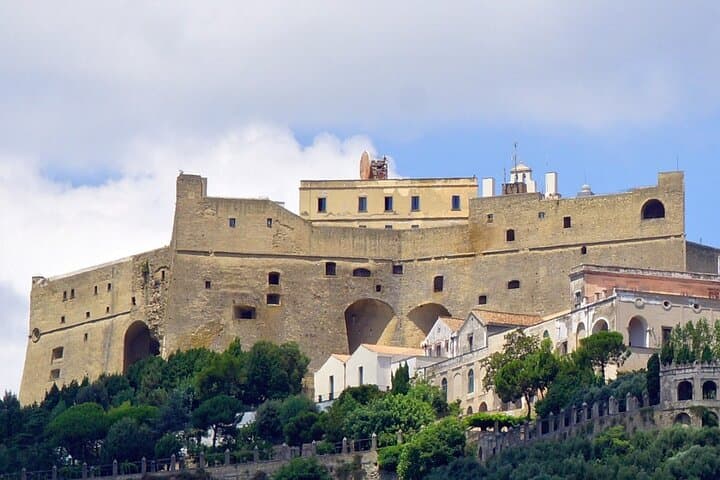
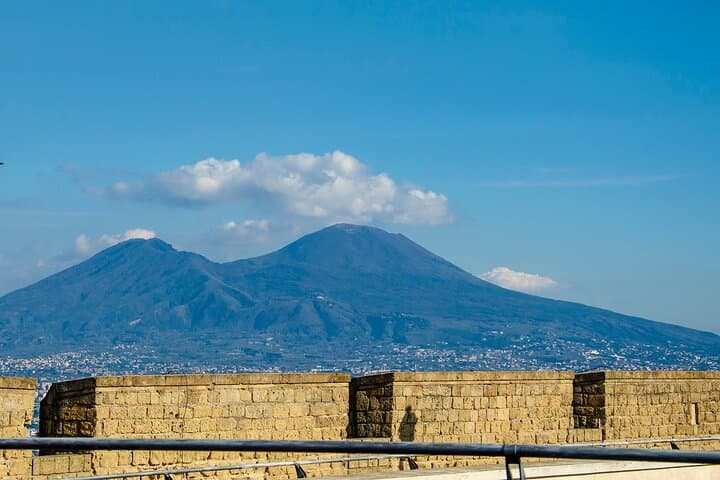
You climb out of the funicular into a wind that seems to have been carved by the sea. The city below unfolds in a grid of terracotta roofs and narrow alleys; beyond it, the Gulf of Naples shines like a coin and Vesuvius pins the horizon. Castel Sant'Elmo sits on the crown of Vomero hill, a star-shaped bastion of volcanic stone that has watched the city shift beneath it for centuries. The audio guide greets you, and the ramparts invite a slow circuit—each bastion a frame for a different angle on Naples.
Verified experiences and guided adventures in the surrounding area.
Operated by Vox City International Ltd · Naples, Campania
You climb out of the funicular into a wind that seems to have been carved by the sea. The city below unfolds in a grid of terracotta roofs and narrow alleys; beyond it, the Gulf of Naples shines like a coin and Vesuvius pins the horizon. Castel Sant'Elmo sits on the crown of Vomero hill, a star-shaped bastion of volcanic stone that has watched the city shift beneath it for centuries. The audio guide greets you, and the ramparts invite a slow circuit—each bastion a frame for a different angle on Naples.
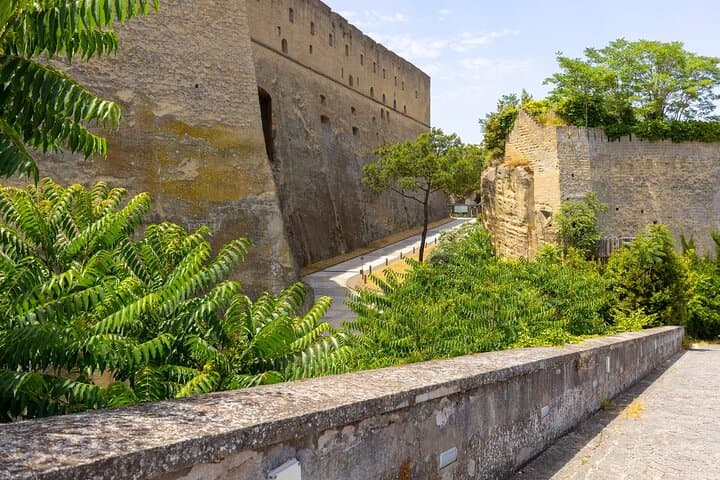
Originally built in the 14th century and rebuilt into its current star plan in the 16th century, Sant'Elmo was designed to dominate approaches to the city. Its thick walls of local tuff and volcanic stone are not just defensive architecture; they are geology written large—layers of ash and lava compressed into the very fabric of the fortress. Over time the castle evolved from medieval stronghold to prison, and today it houses exhibitions and the Museo del Novecento, where 20th-century Neapolitan art replaces muskets and powder.
Culturally, the castle feels less like a museum and more like a stage for the city. Street vendors climb the hill to sell sfogliatella and espresso to visitors; students come for sketching classes; older residents head to the terraces at dusk to check the weather out to sea. The audio guide and digital map orient you to these human rhythms, pointing out key defensive features, anecdotes about sieges, and the exact spots where photographers line up for sunset.
Practicalities are straightforward. The site sits roughly 240 meters above sea level and the full self-guided visit runs about two to three hours if you include the Museo del Novecento. Surfaces are paved but uneven in places—expect cobbles, stone steps, and ramps. The castle opens early and stays late enough for golden-hour photography; the museum has shorter hours, so plan the sequence of your visit. Public transport drops you within ten minutes; if you prefer a direct route, the Vomero funicular is the fastest, followed by a short uphill walk.
Bring good walking shoes, a charged phone for the audio download, and headphones to keep the commentary crisp. Start on the outer walls and work inward—views of the bay, the city’s mosaics of color, and framed glimpses of Vesuvius shift with each bastion. If you have time, extend the walk to nearby Certosa di San Martino for another layer of Naples’ history.
This is a compact, visitor-friendly experience that rewards curiosity: listen closely, look down the staircases and into the courtyards, and let the fortress reframe your sense of Naples—both as a strategic harbor and as a living, noisy, astonishing city.
easy.
2–3 hours.
Suitable for travelers with basic mobility; involves walking on uneven surfaces and climbing stairs.
Plan on about 2–3 hours to tour Castel Sant'Elmo and the Museo del Novecento at a relaxed pace.
No — e-tickets will be available via QR and sent through WhatsApp; have them ready on your phone for entry.
Yes — the Vomero funicular and local buses drop you within a short walk of the castle entrance.
The tour offers multilingual commentary (English, Spanish, Italian, French, German) selectable in the app or audio file.
Yes — admission to the Museo del Novecento is included, but note the museum’s earlier closing time compared with the castle.
The castle has paved ramps and some accessible areas, but uneven surfaces and stairs may limit access to certain viewpoints—contact organizers for specific needs.
Castel Sant'Elmo originated in the 14th century and was redesigned into a star fort in the 16th century; its volcanic stone and position made it a key military lookout over Naples.
Preservation focuses on stabilizing volcanic tuff and managing visitor flow; please stay on marked paths and avoid touching fragile masonry and exhibits.
Vox City International Ltd operates guided outdoor trips and adventures with an emphasis on safety, stewardship, and memorable experiences.

You climb out of the funicular into a wind that seems to have been carved by the sea. The city below unfolds in a grid of terracotta roofs and narrow alleys; beyond it, the Gulf of Naples shines like a coin and Vesuvius pins the horizon. Castel Sant'Elmo sits on the crown of Vomero hill, a star-shaped bastion of volcanic stone that has watched the city shift beneath it for centuries. The audio guide greets you, and the ramparts invite a slow circuit—each bastion a frame for a different angle on Naples.
You climb out of the funicular into a wind that seems to have been carved by the sea. The city below unfolds in a grid of terracotta roofs and narrow alleys; beyond it, the Gulf of Naples shines like a coin and Vesuvius pins the horizon. Castel Sant'Elmo sits on the crown of Vomero hill, a star-shaped bastion of volcanic stone that has watched the city shift beneath it for centuries. The audio guide greets you, and the ramparts invite a slow circuit—each bastion a frame for a different angle on Naples.
Originally built in the 14th century and rebuilt into its current star plan in the 16th century, Sant'Elmo was designed to dominate approaches to the city. Its thick walls of local tuff and volcanic stone are not just defensive architecture; they are geology written large—layers of ash and lava compressed into the very fabric of the fortress. Over time the castle evolved from medieval stronghold to prison, and today it houses exhibitions and the Museo del Novecento, where 20th-century Neapolitan art replaces muskets and powder.
Culturally, the castle feels less like a museum and more like a stage for the city. Street vendors climb the hill to sell sfogliatella and espresso to visitors; students come for sketching classes; older residents head to the terraces at dusk to check the weather out to sea. The audio guide and digital map orient you to these human rhythms, pointing out key defensive features, anecdotes about sieges, and the exact spots where photographers line up for sunset.
Practicalities are straightforward. The site sits roughly 240 meters above sea level and the full self-guided visit runs about two to three hours if you include the Museo del Novecento. Surfaces are paved but uneven in places—expect cobbles, stone steps, and ramps. The castle opens early and stays late enough for golden-hour photography; the museum has shorter hours, so plan the sequence of your visit. Public transport drops you within ten minutes; if you prefer a direct route, the Vomero funicular is the fastest, followed by a short uphill walk.
Bring good walking shoes, a charged phone for the audio download, and headphones to keep the commentary crisp. Start on the outer walls and work inward—views of the bay, the city’s mosaics of color, and framed glimpses of Vesuvius shift with each bastion. If you have time, extend the walk to nearby Certosa di San Martino for another layer of Naples’ history.
This is a compact, visitor-friendly experience that rewards curiosity: listen closely, look down the staircases and into the courtyards, and let the fortress reframe your sense of Naples—both as a strategic harbor and as a living, noisy, astonishing city.