THE ADVENTURE COLLECTIVE® · Independent discovery and booking for outdoor travel

In two focused hours on Naples’ Vomero hill you move from Baroque cloisters to fortress ramparts, tracing Bourbon-era art and coastal geology while standing above the Gulf with Vesuvius on the distant skyline. This guided walk pairs museum access with panoramic payoff.
In two focused hours on Naples’ Vomero hill you move from Baroque cloisters to fortress ramparts, tracing Bourbon-era art and coastal geology while standing above the Gulf with Vesuvius on the distant skyline. This guided walk pairs museum access with panoramic payoff.
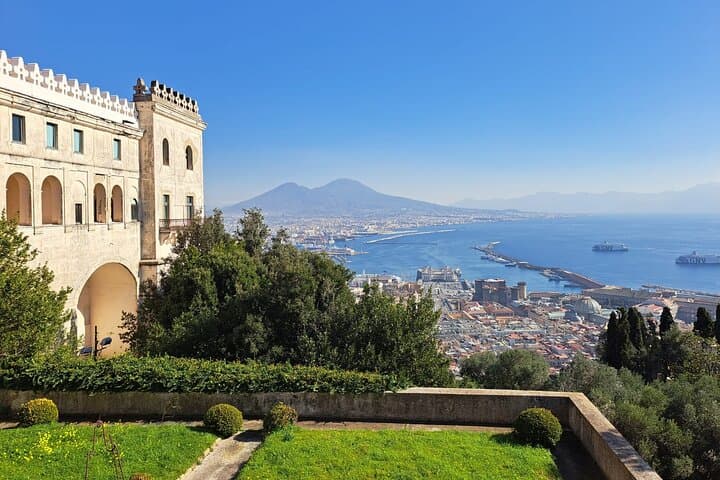
You arrive at Piazzale San Martino with the city’s edge unfolding beneath you: a patchwork of terracotta roofs, the blue arc of the Gulf, and Vesuvius’ profile holding the horizon. The guide—Askos Tours sign in hand—leads the small group through the Certosa di San Martino, an 18th-century Baroque reworking of a medieval charterhouse where carved marble, gilded chapels, and a cloister’s quiet compete with a terrace view that dares you to look away.
Verified experiences and guided adventures in the surrounding area.
Operated by Askos Tours · Naples, Campania
You arrive at Piazzale San Martino with the city’s edge unfolding beneath you: a patchwork of terracotta roofs, the blue arc of the Gulf, and Vesuvius’ profile holding the horizon. The guide—Askos Tours sign in hand—leads the small group through the Certosa di San Martino, an 18th-century Baroque reworking of a medieval charterhouse where carved marble, gilded chapels, and a cloister’s quiet compete with a terrace view that dares you to look away.
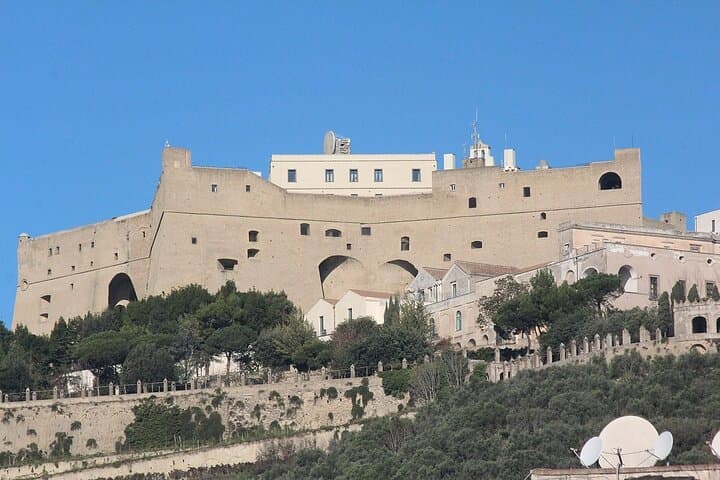
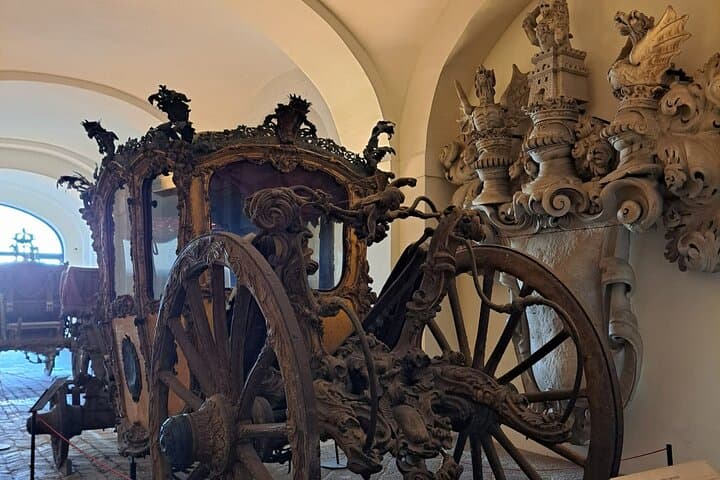
The tour moves with purpose: an hour inside the Certosa to take in the Nativity scenes, Bourbon carriages and the Priory’s quarters, then a climb to the piazzale delle Armi at Castel Sant’Elmo. The fortress’s ramparts are broad enough to walk, offering a sweep of Naples—from the dense alleys of the Historic Center to the distant curve of Posillipo and the unmistakable cone of Vesuvius. The guide threads art-historical notes with urban stories: how monasteries catalogued maritime trade, how fortifications reshaped power on the bay, and how Vomero evolved from defensive rise to elegant neighborhood.
Geology and history are inseparable here. The gulf is a working caldera; the slopes and sediment around Naples tell a story of eruptions, rebuilding and maritime exchange. The Certosa’s Baroque makeover reflects Bourbon-era tastes while the fortress’s angular star-shape is a practical response to gunpowder-era warfare. Both sites function now as lookouts and cultural houses—one preserving devotional art and civic relics, the other hosting modern exhibits and a promenade above the city.
Practicality sits beside romance: the walk is compact—expect roughly 1–2 km of mostly paved and cobbled surfaces with 70–100 meters of elevation gain. There are stairs, terraces and museum galleries, but no technical terrain. The tour is two hours, includes admission to both sites, and finishes at Castel Sant’Elmo—convenient for a coffee at a nearby café or a funicular ride back down.
Plan for sunlight and steps. Mornings or late afternoons give softer light and fewer tour buses; midday brings the harsh southern sun and crowds. Wear grippy shoes for cobbles, bring water and a light layer for wind on the ramparts. Photography rewards wide-angle framing: capture the bay with a human figure on the ramparts for scale, and use the Certosa cloister to isolate architectural details. For travelers wanting compact but rich context on Naples’ art, civic power and spectacular views, this two-hour hilltop tour delivers.
easy.
2 hours.
Suitable for most fitness levels; involves stairs and short uphill walks—basic mobility required.
The tour runs for approximately two hours and includes admission to both Certosa di San Martino and Castel Sant'Elmo.
Meet at Piazzale San Martino, near the entrance of Certosa di San Martino; the guide will hold an Askos Tours sign.
Yes—infants and small children can use a stroller, though some stair sections may require carrying the stroller briefly.
Yes; entry tickets to both Certosa di San Martino and Castel Sant'Elmo are included in the tour price.
Yes—funiculars and buses serve the Vomero hill; many visitors take the funicular down for a quick descent.
The tour is labeled physically easy, but there are stairs and elevated terraces; travelers with mobility concerns should contact the operator in advance.
The Certosa began as a medieval charterhouse and was reworked during the Bourbon period into the Baroque complex visitors see today; Castel Sant'Elmo evolved from a medieval watchsite into a gunpowder-era fortress.
Both sites are managed with conservation priorities—visitors should stick to marked paths, avoid touching artworks, and follow local signage to reduce wear on historic surfaces.
Askos Tours operates guided outdoor trips and adventures with an emphasis on safety, stewardship, and memorable experiences.

You arrive at Piazzale San Martino with the city’s edge unfolding beneath you: a patchwork of terracotta roofs, the blue arc of the Gulf, and Vesuvius’ profile holding the horizon. The guide—Askos Tours sign in hand—leads the small group through the Certosa di San Martino, an 18th-century Baroque reworking of a medieval charterhouse where carved marble, gilded chapels, and a cloister’s quiet compete with a terrace view that dares you to look away.
You arrive at Piazzale San Martino with the city’s edge unfolding beneath you: a patchwork of terracotta roofs, the blue arc of the Gulf, and Vesuvius’ profile holding the horizon. The guide—Askos Tours sign in hand—leads the small group through the Certosa di San Martino, an 18th-century Baroque reworking of a medieval charterhouse where carved marble, gilded chapels, and a cloister’s quiet compete with a terrace view that dares you to look away.
The tour moves with purpose: an hour inside the Certosa to take in the Nativity scenes, Bourbon carriages and the Priory’s quarters, then a climb to the piazzale delle Armi at Castel Sant’Elmo. The fortress’s ramparts are broad enough to walk, offering a sweep of Naples—from the dense alleys of the Historic Center to the distant curve of Posillipo and the unmistakable cone of Vesuvius. The guide threads art-historical notes with urban stories: how monasteries catalogued maritime trade, how fortifications reshaped power on the bay, and how Vomero evolved from defensive rise to elegant neighborhood.
Geology and history are inseparable here. The gulf is a working caldera; the slopes and sediment around Naples tell a story of eruptions, rebuilding and maritime exchange. The Certosa’s Baroque makeover reflects Bourbon-era tastes while the fortress’s angular star-shape is a practical response to gunpowder-era warfare. Both sites function now as lookouts and cultural houses—one preserving devotional art and civic relics, the other hosting modern exhibits and a promenade above the city.
Practicality sits beside romance: the walk is compact—expect roughly 1–2 km of mostly paved and cobbled surfaces with 70–100 meters of elevation gain. There are stairs, terraces and museum galleries, but no technical terrain. The tour is two hours, includes admission to both sites, and finishes at Castel Sant’Elmo—convenient for a coffee at a nearby café or a funicular ride back down.
Plan for sunlight and steps. Mornings or late afternoons give softer light and fewer tour buses; midday brings the harsh southern sun and crowds. Wear grippy shoes for cobbles, bring water and a light layer for wind on the ramparts. Photography rewards wide-angle framing: capture the bay with a human figure on the ramparts for scale, and use the Certosa cloister to isolate architectural details. For travelers wanting compact but rich context on Naples’ art, civic power and spectacular views, this two-hour hilltop tour delivers.