THE ADVENTURE COLLECTIVE® · Independent discovery and booking for outdoor travel

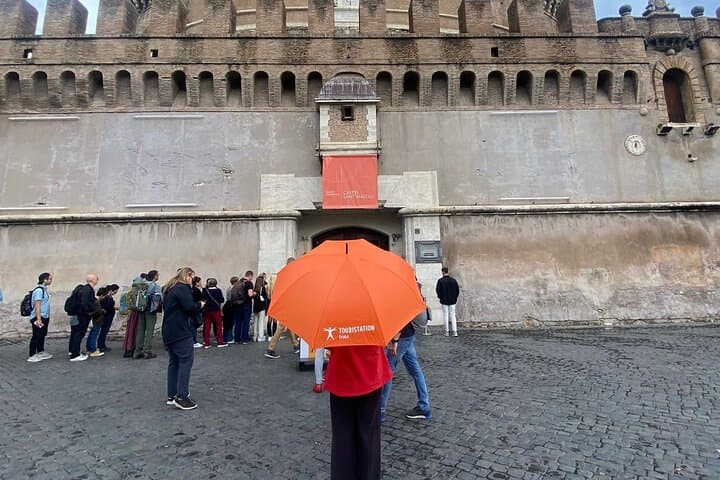
Skip long queues to explore Castel Sant'Angelo’s evolution from Hadrian's mausoleum to papal fortress. Walk vaulted corridors, view Renaissance frescoes and stand on the terrace above the Tiber for one of Rome’s best panoramas.
Skip long queues to explore Castel Sant'Angelo’s evolution from Hadrian's mausoleum to papal fortress. Walk vaulted corridors, view Renaissance frescoes and stand on the terrace above the Tiber for one of Rome’s best panoramas.
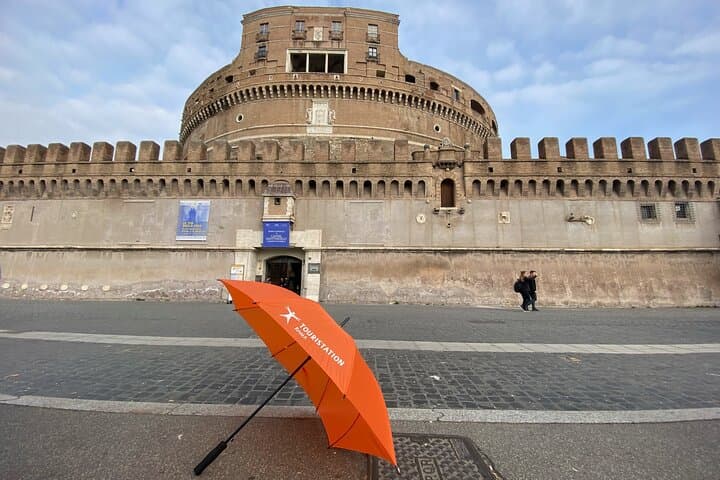
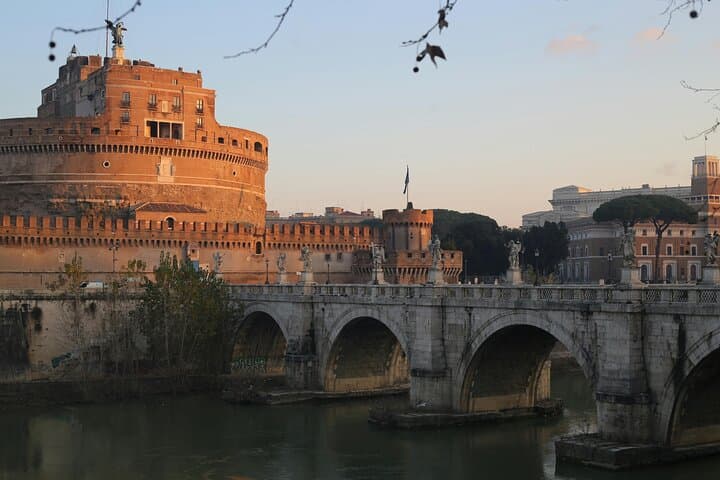
Step off the cobbled Lungotevere and the Tiber pushes a cool ribbon of reflection past Castel Sant'Angelo, where stone and river argue over Rome's skyline. You enter through a fortress that began as Hadrian's mausoleum in 139 CE, later wrapped in ramparts, papal apartments and artillery platforms—each layer visible in the brick, travertine and frescoed rooms you walk through.
Verified experiences and guided adventures in the surrounding area.
Operated by TOURISTATION · Rome, Lazio
Step off the cobbled Lungotevere and the Tiber pushes a cool ribbon of reflection past Castel Sant'Angelo, where stone and river argue over Rome's skyline. You enter through a fortress that began as Hadrian's mausoleum in 139 CE, later wrapped in ramparts, papal apartments and artillery platforms—each layer visible in the brick, travertine and frescoed rooms you walk through.
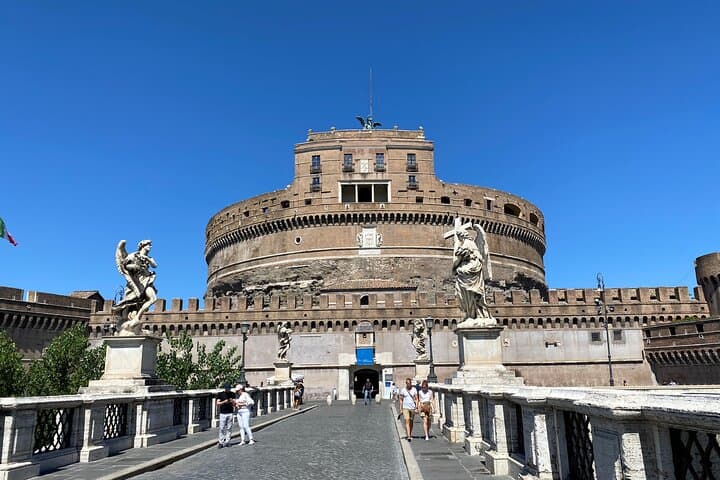
Originally a monumental tomb for Emperor Hadrian and his family, the cylindrical mass was adapted into a military stronghold and a refuge for popes during sieges; a secret passage, the Passetto di Borgo, still links the castle to the Vatican. Architecturally, you notice Roman concrete cores and later Renaissance and Baroque fortifications. The Ponte Sant'Angelo, lined with Bernini’s angels, creates a staged approach to the terrace where Tiber and St. Peter’s dome frame panoramic views.
Expect narrow staircases, vaulted halls displaying armory and decorated living quarters, and frescoes that require a steady eye. The skip-the-line ticket reduces wait time, but touring the upper corridors and terrace still takes focused pacing.
Practical pointers: bring a bottle of water, wear comfortable shoes for uneven steps, and carry ID—admission checks are strict. Respect dress codes if you combine Vatican or Pantheon options. Mornings and late afternoons offer softer light for photos and lighter crowds; mid-day in summer can be hot on the terrace. This visit combines military architecture, papal intrigue and one of Rome’s sharpest city views—efficient, compact and unmistakably Roman.
easy.
2 hours.
Suitable for most fitness levels; requires climbing several flights of stairs and standing while viewing exhibits.
Skip-the-line grants faster entry to Castel Sant'Angelo at the selected time; it does not guarantee immediate access to other sites unless those options were specifically included.
Access is limited: many areas use stairs and narrow passages; contact the operator in advance to arrange assistance or confirm accessible routes.
Yes—some options bundle Vatican Museums/Sistine Chapel or the Pantheon; check your booking details and follow any additional dress-code requirements.
Audioguide devices are offered if selected at booking; otherwise informational panels and curated exhibits guide the visit.
Built as Emperor Hadrian’s mausoleum in 139 CE, Castel Sant'Angelo was converted into a military fortress and later a papal residence and prison before becoming a museum.
Ongoing conservation focuses on stabilizing frescoes and masonry; visitors are asked to avoid touching surfaces and to follow marked paths to protect fragile interiors.
TOURISTATION operates guided outdoor trips and adventures with an emphasis on safety, stewardship, and memorable experiences.
Step off the cobbled Lungotevere and the Tiber pushes a cool ribbon of reflection past Castel Sant'Angelo, where stone and river argue over Rome's skyline. You enter through a fortress that began as Hadrian's mausoleum in 139 CE, later wrapped in ramparts, papal apartments and artillery platforms—each layer visible in the brick, travertine and frescoed rooms you walk through.
Step off the cobbled Lungotevere and the Tiber pushes a cool ribbon of reflection past Castel Sant'Angelo, where stone and river argue over Rome's skyline. You enter through a fortress that began as Hadrian's mausoleum in 139 CE, later wrapped in ramparts, papal apartments and artillery platforms—each layer visible in the brick, travertine and frescoed rooms you walk through.
Originally a monumental tomb for Emperor Hadrian and his family, the cylindrical mass was adapted into a military stronghold and a refuge for popes during sieges; a secret passage, the Passetto di Borgo, still links the castle to the Vatican. Architecturally, you notice Roman concrete cores and later Renaissance and Baroque fortifications. The Ponte Sant'Angelo, lined with Bernini’s angels, creates a staged approach to the terrace where Tiber and St. Peter’s dome frame panoramic views.
Expect narrow staircases, vaulted halls displaying armory and decorated living quarters, and frescoes that require a steady eye. The skip-the-line ticket reduces wait time, but touring the upper corridors and terrace still takes focused pacing.
Practical pointers: bring a bottle of water, wear comfortable shoes for uneven steps, and carry ID—admission checks are strict. Respect dress codes if you combine Vatican or Pantheon options. Mornings and late afternoons offer softer light for photos and lighter crowds; mid-day in summer can be hot on the terrace. This visit combines military architecture, papal intrigue and one of Rome’s sharpest city views—efficient, compact and unmistakably Roman.